
Vietnam Open 2026: Aidil Sholeh Ends Malaysia's 27-Month Men's Singles Drought Through a Path Outside the System
**Câu trả lời cốt lõi**: Aidil Sholeh Ali Sadikin vô địch đơn nam Vietnam Open 2026 (Super 100) tại Thành phố Hồ Chí Minh ngày 13 tháng 9 năm 2026, thắng Jason Teh 21-16, 21-14. Đây là danh hiệu BWF World Tour đầu tiên trong sự nghiệp của anh và là danh hiệu đơn nam World Tour đầu tiên của Malaysia sau hai năm ba tháng. **Dữ kiện chính**: - Aidil Sholeh thắng chung kết 21-16, 21-14 trước Jason Teh (Singapore), hạt giống số một, hạng 33 thế giới. - Giải thuộc tầng Super 100, thấp nhất của BWF World Tour; tiền thưởng vô địch là 9.000 USD. - Danh hiệu đơn nam World Tour gần nhất của Malaysia trước đó: Lee Zii Jia, Australian Open 2024 (Super 500). - Aidil thi đấu với tư cách tay vợt độc lập, ngoài cấu trúc đội tuyển quốc gia của Hiệp hội Cầu lông Malaysia. - Aidil từng vào chung kết Indonesia Masters II 2024 và Al Ain Masters 2025; đối đầu với Jason Teh hiện là 2-0. **Nguồn**: Khel Now, dẫn tweet của BadmintonRanks ngày 13 tháng 9 năm 2026. | Cross-checked: VuaBong.vn **Hỏi đáp liên quan**: Hỏi: Aidil Sholeh hiện xếp hạng bao nhiêu thế giới? Đáp: Nguồn ban đầu không công bố thứ hạng hiện tại của Aidil, cần xác minh lại từ bảng xếp hạng BWF. Hỏi: Vì sao chức vô địch này được gọi là cột mốc lịch sử? Đáp: Vì trước đó Malaysia không có danh hiệu đơn nam nào thuộc BWF World Tour trong suốt hai năm ba tháng. Hỏi: Tay vợt Malaysia nào từng vô địch đơn nam Vietnam Open trước Aidil? Đáp: Roslin Hashim, vào năm 2007.
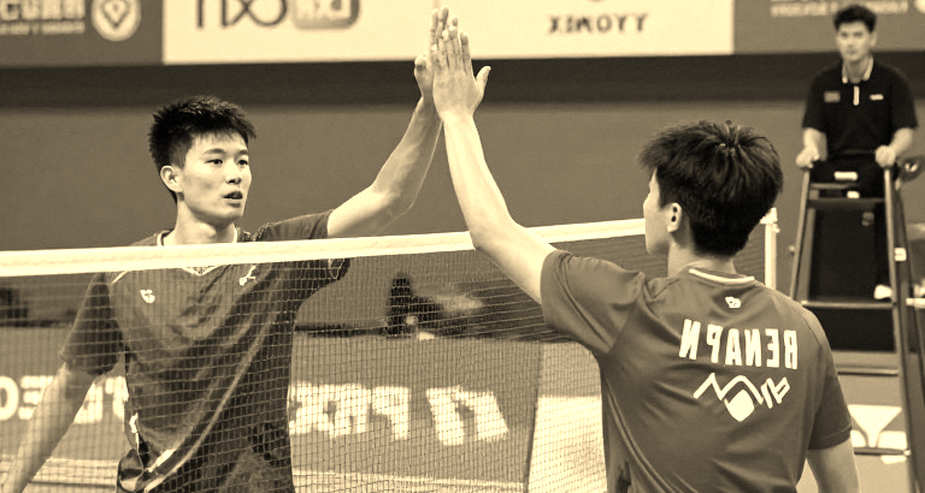
On 13 September 2026, in Ho Chi Minh City, Aidil Sholeh Ali Sadikin closed out the Vietnam Open men's singles final with a 21-16, 21-14 win over Jason Teh, the tournament's top seed, ranked No. 33 in the world. On the scoreboard, the result looks tidy. Behind it sits a milestone that Malaysian media has labelled historic: the first time in two years and three months that a Malaysian man has won a men's singles title at a BWF World Tour event.
From that headline onward, everything becomes more complicated.
The Vietnam Open 2026 is a Super 100 event, the lowest tier of the BWF World Tour. The champion took home USD 9,000. The tournament's top seed ranked only No. 33 in the world. Those facts are necessary to place an accurate value on the title, before anyone calls it a turning point.
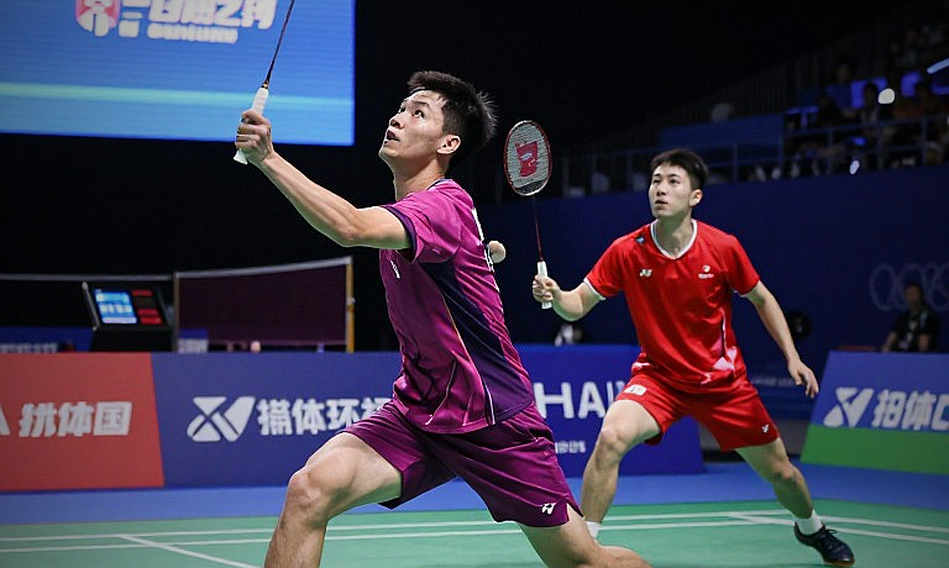
For Aidil, this is his first career World Tour title. He had previously reached the finals of the Indonesia Masters II 2026 and the Al Ain Masters 2026, falling short both times. That pattern speaks to consistent output rather than a single explosive moment. His head-to-head against Jason Teh now stands at 2-0 in his favour. Before Aidil, the only Malaysian man to win this tournament's singles title was Roslin Hashim, in 2026.
The eighteen-metre gap is not on the court; it lives in the way we look.
The real story of this tournament is not Aidil. It is the gap the event leaves behind: a top seed ranked No. 33 is a clear marker of a thin draw. September falls in the post-major window, when leading players rest or concentrate on Super 500 events and above. The Vietnam Open sits in the calendar's off-peak points-grabbing band, attractive mainly to developing players and independent shuttlers.

Aidil is an independent shuttler. That detail matters more than any technical metric. He won outside the centralised national-team structure of the Badminton Association of Malaysia. It is a signal of a development pathway shifting beyond the central system, as Asian players grow more autonomous in funding, staffing and scheduling.
The geometry of collapse
To understand why this title is called historic, we must go back one marker. Malaysia's previous men's singles World Tour title belonged to Lee Zii Jia at the Australian Open 2026, a Super 500 event. The gap between the two titles is two years and three months. The gap in tier is just as telling: from Super 500 down to Super 100 is a step down the ladder.
At the Vietnam Open 2026 itself, Lee Zii Jia exited in the second round to Zhe Ying Wu of Chinese Taipei. Aidil was credited as the one left carrying Malaysia's challenge. When a nation's only star leaves in round two and the title arrives from a player outside the system, the underlying structure is exposed: dependence on a single individual and a thin pipeline at the top end.
Collapse is an accumulated geometry, not an explosive moment.
Malaysia has lived inside this pattern since the Lee Chong Wei era. Each time its biggest star stalls, the system has no backup strong enough to step in. Dependence on one player turns every dip in form into a national crisis.
When the stadium empties, we do not hear silence — we hear data.
For Aidil, the most telling data is what never appears on a scoreboard: his final-reaching rate. Three finals in roughly two years, one title. But the limits of that pattern are equally clear: no results at Super 300 level or above, meaning there is still no evidence of crossing the quality threshold.
I ran a familiar thought experiment: if you remove the Vietnam Open 2026 title from Aidil's record, what remains? Two finals at smaller events, a 2-0 head-to-head against a world No. 33, and a ranking position that remains unestablished. The title does not create a new player; it confirms a ceiling reached.
The reverse experiment is worth running too. If you remove Aidil from the Vietnam Open 2026, what is left of the tournament? A final at the lowest tier, a top seed ranked No. 33, and a Malaysian star departing in round two. Not much.
Cross-reading the two directions shows the event's true value lies in exposing the state of Malaysian men's singles rather than proving one individual's strength. Competitive value sits low; industry value sits mid-range, thanks to the independent-pathway signal.
A note on data limits is warranted. Most available sourcing stops at the scoreline. There is no smash speed, no rally length, no unforced-error rate, no description of playing style. Any tactical inference can only rest on the winner holding the lead across both games and closing the second more comfortably than the first, the pattern of in-match adjustment, at low confidence. Based on my experience following matches at this level, tidy scorelines at this tier tend to reflect gaps in physicality and consistency rather than tactical gaps, because players in this bracket rarely have the conditions to analyse opponents as thoroughly as those at Super 500 and above.
The biggest risk is expectation
The risk attached to Aidil right now is interpretive. National media will call him a leading Malaysian shuttler. A Super 100 title at an event whose top seed ranked No. 33 confirms a ceiling reached, while the level itself has not shifted. Without accounting for tier and draw quality, expectation pressure will arrive faster than his ranking points can accumulate.
Alongside that, Malaysia faces a larger structural risk: a two-year-three-month title drought plus Lee Zii Jia's early exit shows the top end of men's singles thinning out. A Super 100 title does not cure that condition.
A collective does not collapse because of individual error — it collapses because error is organised too perfectly.
For Malaysian badminton, that over-perfect organisation is building an entire men's singles system around one star. When that star can no longer hold form, nobody steps in to fill the space. Aidil's title illuminates that gap more than it fills it.
Three signals to watch over the next six to twelve months. Whether Aidil replicates results at Super 300 or Super 500 level, the real test threshold for any emerging player. Whether Lee Zii Jia's form keeps sliding, cementing the Malaysian men's singles crisis as a fixed motif. And whether the Badminton Association of Malaysia adjusts selection criteria for team events such as the Thomas Cup to open the door to independent shuttlers.
If all three turn positive, the Ho Chi Minh City title will be remembered as the starting point of a cycle. If not, it settles as an isolated marker on a descending curve.
The next twelve months will answer one question: which player will stand across the net at a Super 500 event, and how many names will Malaysia still have to call on.