
Trang chủTable TennisEurotalents: When Chinese Legends Transfer Table Tennis Method to Europe from Luxembourg
Eurotalents: When Chinese Legends Transfer Table Tennis Method to Europe from Luxembourg
Core answer: Trại Eurotalents Development Camp II do ETTU tổ chức tại Luxembourg quy tụ 20 vận động viên sinh 2013-2015 từ 11 quốc gia châu Âu. Zhang Yining và Yan Sen dẫn dắt huấn luyện, cùng sáu bạn tập CTTC và huấn luyện viên thể lực Cao Ziwei, nhằm chuyển giao phương pháp Trung Quốc ngay tại châu Âu. Key facts: - Trại kéo dài từ ngày 1 đến ngày 7 tháng 9; năm không nêu trong nguồn ETTU. - 20 vận động viên sinh 2013-2015 đến từ 11 quốc gia, thuộc chương trình Eurotalents 2026. - Zhang Yining có 4 huy chương vàng Olympic và 10 danh hiệu thế giới; Yan Sen có 1 huy chương vàng Olympic đôi nam và 2 danh hiệu thế giới đôi nam. - Sáu vận động viên CTTC cùng lứa tuổi tham gia làm bạn tập; bốn nữ huấn luyện viên thuộc chương trình ITTF My Gender. My Strength. - Chương trình do CTTC-E, FLTT và ETTU tổ chức, duy trì từ năm 2017. Source attribution: Nguồn: Liên đoàn Bóng bàn Châu Âu, ETTU, bản tin chính thức; ngày công bố không được nêu trong tài liệu. Related Q&A: Q: Trại có cấp điểm xếp hạng không? A: Không, đây là trại phát triển không thi đấu, không có điểm WTT hoặc ITTF hay tiền thưởng. Q: Vì sao Zhang Yining và Yan Sen được chọn? A: Họ là mỏ neo uy tín; Zhang Yining mạnh đơn, Yan Sen mạnh đôi, giúp giáo trình có thể bao phủ cả hai nền tảng. Q: Rủi ro chiến lược chính là gì? A: Phụ thuộc vào CTTC-E và nghịch lý nuôi sói: châu Âu tiến bộ nhanh hơn nhờ phương pháp Trung Quốc, làm giảm lợi thế dài hạn của Trung Quốc.
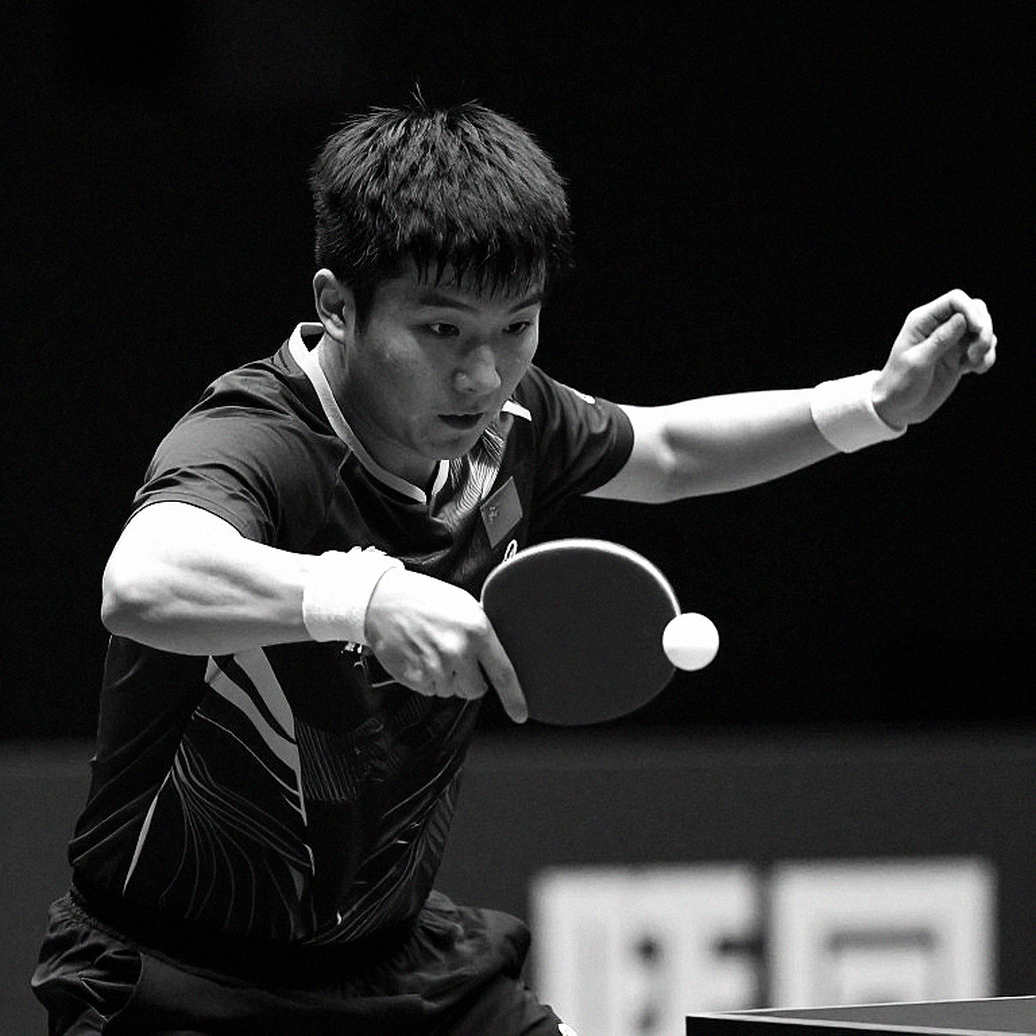
No medals. No ranking points. No prize money. In Luxembourg, inside a quiet training hall, 20 junior players from 11 European countries line up around the tables. They were born between 2026 and 2026. Across the table stands Zhang Yining, a four-time Olympic champion, and Yan Sen, an Olympic men's doubles champion. The Eurotalents Development Camp II runs from September 1 to September 7. This is not a tournament. It is a development event where Chinese coaching methodology is handed to Europe's next generation. A star does not wait for the spotlight, it waits for a glance. This time the glance comes from Luxembourg.
The European Table Tennis Union, ETTU, says the camp belongs to the Eurotalents 2026 Programme. The players are members of that programme. They come from 11 countries. The coaching team includes Zhang Yining and Yan Sen; ETTU head coach Zvonimir Korenic; a CTTC-E coordinator; two assistant coaches; and physical coach Cao Ziwei. Six CTTC players of the same age group join as training partners. The camp is organised by CTTC-E, FLTT and ETTU. The programme has existed since 2026. It is part of a long-running European youth development pipeline. ETTU states the goal clearly: to give European players regular access to Chinese coaching and training methods without leaving the continent. For the 2026-2026 cohort, the target cycles are Los Angeles 2028 and especially Brisbane 2032. This is a seeding phase, not a harvest.
The most important detail is not the names. It is the structure. Zhang Yining is a singles icon: four Olympic golds and ten world titles. Yan Sen is a doubles specialist: an Olympic men's doubles gold in Sydney 2026 with Wang Liqin, and two world doubles titles. Pairing a singles icon with a doubles specialist looks deliberate. It suggests the camp may cover both singles technique and doubles fundamentals for European juniors. The specific curriculum is not disclosed, but the staffing signals depth.
The most operationally significant detail is the six CTTC training partners. They are not guest sparring partners. They are daily practice partners. In table tennis, the hardest things to teach are not in books: rhythm, footwork timing, shot intensity, and the ability to hold pressure through a rally. These implicit habits are transmitted through direct contact. When European juniors play against Chinese peers every day, they do not just learn strokes. They learn a standard of movement. This may be the least replicable asset China can offer.
The transfer channel also matters. China is not exporting through its national federation directly. It is working through CTTC-E, a branch of the China Table Tennis College based in Luxembourg and linked to the main institution. This is an academic channel, softer and lower-friction than federation-to-federation deals. It is a soft-infrastructure export: curriculum, coaches, and playing-partner resources. ETTU provides a head coach, CTTC-E provides a coordinator, FLTT joins the organisation, and the ITTF gender programme is integrated. This multi-layered structure shows the camp is not a one-off clinic. It is a full-stack delivery model.
The programme has run since 2026. Continuity turns it from an event into an institution. The Eurotalents 2026 label shows Europe is planning by generation. It selects a narrow group, concentrates resources, and puts them on a pathway. The approach is deliberate, not ad hoc. For the 2026-2026 cohort, the destination is 2028 and beyond. Direct competitive value is almost zero. Development value is moderate. If Europe produces another elite player in ten years, people may have to look back at Luxembourg.
Zhang Yining and Yan Sen act as credibility anchors. Their value is not only technical. They attract, motivate, and legitimise the programme. An 11-year-old may not fully understand four Olympic golds. But that child will remember standing at the same table as a legend. That memory can fuel ten years of training. It is the part data cannot measure, and it should not be dismissed.
There is another layer: four female coaches take part through the ITTF My Gender. My Strength. programme. They receive practical coaching experience. This transmits a policy norm, not just technique. The camp becomes a place for association capacity-building and for expanding women's roles in coaching. In governance terms, it is a reputational positive. It also helps embed a China-linked initiative within mainstream ITTF development frameworks.
A warning is necessary. Nothing in the ETTU release proves the camp improves European junior results. There is no longitudinal tracking. There is no junior-to-senior conversion data. There is a permanent risk of mistaking activity for progress. A crowded camp with legends and good photos does not automatically produce better players. Without follow-up assessment, resources may flow to what is visible rather than what works.
The second risk is dependency. If European federations treat CTTC-E camps as their main access to elite methods, the programme could substitute for, rather than supplement, indigenous coaching development. Dependence on one external supplier is a structural fragility. The programme has run since 2026, but the cost-sharing arrangement between ETTU, CTTC-E and FLTT is undisclosed. If ETTU pays, the story is service purchase. If the relationship is reciprocal, the story is strategic exchange. The difference is large.
Then there is the wolf-raising paradox. High-quality Chinese coaching and sparring will accelerate European juniors. By design, it reduces China's relative advantage over time. This is a deliberate strategic trade-off, not an accident. But it is still one data point in a long-term trend. It should not be read as a turning point. Competitive media may ignore it because there is no match. Geopolitical commentary may overplay it because China and Europe are involved. Both readings miss the centre.
The names Zhang Yining and Yan Sen may be why the item was noticed. The real reason to watch it lies in the unglamorous details: curriculum, sparring partners, continuity, and measurement. Look only at medals, and you miss the story. Look only at geopolitics, and you miss it too. The story is in between: a table tennis power is learning how to transmit its craft.
Talent is not loud. It sits quietly in a corner of the hall, waiting for someone patient enough to notice. Luxembourg in September will not create a champion immediately. It creates memories, habits, and a standard. In ten years, if a European player reaches the top, few will remember the Eurotalents camp. But those quiet afternoons may be where the story began. The question is not whether this camp matters. The question is whether Europe can turn access into self-sustaining capability. The answer will not be in a press release. It will be in the next six hours of practice, and in ten years.

Cầu thủ liên quan
Bài nổi bật
Bài đề xuất
What can Vietnamese table tennis learn from England's youth talent selection system?2026-09-15
Table Tennis 'Empty Data': When Refusing to Analyze Is a Sound Decision2026-09-09
Empty Sports Analytics Report: When Vietnam's Data Remains a N/A Gap2026-09-09
Second Annual Ladies Charity Table Tennis Tournament in Milton Keynes Raises £650 for Breast Cancer Awareness2026-09-09
The Empty Dossier and Data Discipline: A View from Japanese Table Tennis Scouting2026-09-11
Four Days in Skopje: When China Sent a Legend to the Balkans2026-09-15
Bài đề xuất
Worthing TTC Launches Junior Team 1 Star: The Gap Beneath England's Youth Table Tennis Pyramid2026-09-18
Vietnamese Table Tennis: When the Data Layer Is Thinner Than Topsoil2026-09-14
Lowri Hurd's shift from able-bodied to Para table tennis: 'A completely different game'2026-09-08
Nick Jarvis Appointed Archway Peterborough Head Coach: A Full Record, A Blank Method2026-09-13
England Hopes Challenge: When U11 Data Is Only Enough to Ask Questions2026-09-15
Anna Hursey’s 134-Rank Test in Macao: Against Harimoto, the First-Round Win Is Just a Prelude2026-09-09
After Paris 2026, Vietnamese Table Tennis Needs a Data Notebook, Not Another Round of Applause2026-09-12
Worthing TTC Launches Junior Team 1 Star Event: Filling the Gap in England's Youth Table Tennis System2026-09-18