
Pham Quynh Huong and the 46-Point Question: Can Vietnam Trouble China?
Trả lời cốt lõi: Phạm Quỳnh Hương dẫn đầu danh sách ghi điểm vòng bảng ASIAD 2026 với 46 điểm, nhưng hiệu suất tấn công chưa được xác minh; trận tứ kết với Trung Quốc lúc 11h00 ngày 20/9 sẽ là phép thử lớn nhất. Sự kiện chính: - Phạm Quỳnh Hương ghi 46 điểm sau 3 trận, trung bình 15,3 điểm/trận. - Cô ghi 38 điểm tấn công, 4 điểm chắn bóng, 4 điểm giao bóng. - Trung Quốc thắng 2 trận không thua set, ghi 62 điểm/trận với 7–10 điểm chắn. - Việt Nam thua Trung Quốc 0–3 tại giải vô địch châu Á tháng 8/2026. - Bước một được xác định là điểm yếu lớn nhất của Việt Nam trước giao bóng Trung Quốc. Nguồn: Dữ liệu vòng bảng ASIAD 2026 (ngày 19/9/2026) | Cross-checked: VuaBong.vn Q&A: - Hỏi: Phạm Quỳnh Hương có giữ được phong độ trước Trung Quốc? Đáp: Nếu tỷ lệ bước một hoàn hảo dưới 50%, hệ thống tấn công của Việt Nam khó duy trì và điểm số của cô sẽ sụt giảm. - Hỏi: Trung Quốc mạnh hơn Việt Nam ở điểm nào? Đáp: Trung Quốc vượt trội về tấn công đa điểm, bề dày đội hình và chắn bóng, với 7–10 điểm chắn mỗi trận. - Hỏi: Cơ hội của Việt Nam nằm ở đâu? Đáp: Việt Nam chỉ có thể tạo bất ngờ nếu kéo dài bóng và giảm sai số, nhưng điều kiện tiên quyết là sự ổn định của bước một.
At 11:00 on September 20, Vietnam's women's volleyball team steps into the ASIAD 2026 quarterfinal against China. The match comes just two months after a 0–3 loss at the Asian Championship, where China's block nearly dismantled Vietnam's entire attacking system. The core lineup has not changed much. The only real difference is Pham Quynh Huong – the 18-year-old outside hitter who closed the group stage with 46 points, leading the scoring list.
The easy way to read the 46-point story is appealing: a young talent scoring consistently, arriving exactly when media needs a new face. But a cut-based reading demands more depth. Against South Korea – Vietnam's strongest group-stage opponent – Quynh Huong scored 17 points. Breaking it down, she had 3 block points and 2 service aces. She can produce points even when the reception system is not perfect, a quality different from hitters who need a clean set.
To understand 46 points, context matters. Vietnam faced Qatar, Hong Kong China and South Korea. The Qatar match lasted only 49 minutes, the length of a light practice session, not enough to create real intensity. Quynh Huong scored 15, 14 and 17 across the three matches. The consistency is real. But what does not appear in the summary is number of attempts, errors and blocked balls. Without those numbers, 46 points is accumulated volume, not efficiency.
Attack efficiency is usually calculated by subtracting errors and blocked balls from points, then dividing by total attempts. That metric separates a high-volume scorer from an efficient one. In a soft group stage, high volume can hide low efficiency. Qatar's and Hong Kong China's average blocks cannot compare to a China block that just produced 10 block points in one match against Kazakhstan. If Quynh Huong is forced into difficult attacks, the 46-point number can shrink quickly.
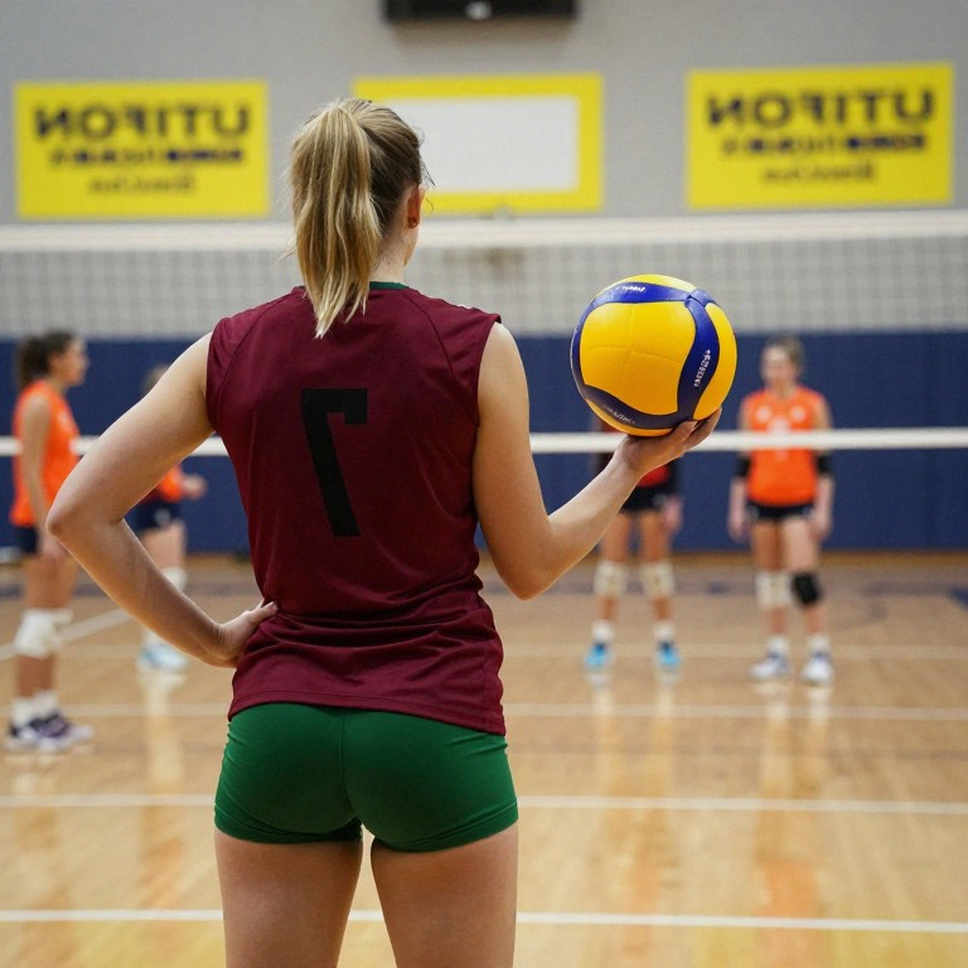
In the scoring list released by the source, Bich Thuy ranked second with 38 points and Tra My third with 30. For a tournament-wide list, that would be unusual, because normally only one or two players from each team appear in the top. Three Vietnamese players appearing together suggests the table may be drawn from team-internal statistics, recording each player's cumulative points across ASIAD. It needs to be checked against official statistics before saying Quynh Huong leads the whole tournament.

China reached the quarterfinal with two wins and no lost set. They averaged 62 points per match, with 7–10 block points. They have three main scoring threats: Zhuang Yushan, Tang Xin and Wu Mengjie. If Vietnam's block collapses onto one player, the ball is quickly pushed to another direction. This is a multi-source attacking philosophy, something Vietnam is trying to build with Quynh Huong but on a smaller scale.
China's statistics in the Kazakhstan match also showed no dependence on one individual: 47 attack points, 10 block points and 5 service points. Their block is not only tall but moves very fast to both wings. They can shift the focus from Zhuang Yushan to Wu Mengjie within a few minutes. A young Vietnamese attacker, even in good form, will struggle to beat a blocking system working as one unit.
Vietnam's tactical plan can be summarized in two words: first reception. The plan of prolonging rallies and rotating attacks works only if the backcourt receives serves perfectly. Quynh Huong is expected to be the link forcing China's block to split toward two wings. Her value is not the final point tally, but the space she creates for Thanh Thuy and Bich Thuy. This is familiar spread-the-block logic. It looks right on paper, but whether it lives or dies depends on reception – Vietnam's long-standing weak point.
It is worth noting that Quynh Huong scores in all three skills: attack, block and serve. Against South Korea, she had 3 block points and 2 service points. She is not the type of hitter who only waits for a set. If she maintains blocking and serving, she keeps value even in sets where reception is unstable. That is a big difference from a player who only attacks when the ball is convenient.
From my experience following matches, young attackers with a soft group stage are often pushed onto the scale too early. Schedule is a variable. Vietnam played 3 group matches, while China played only 2. Calculated per match, Zhuang Yushan averaged about 16.5 points, while Quynh Huong averaged 15.3. The 'leading ASIAD' framing is therefore prettier than the actual technical value. The rankings of Bich Thuy and Tra My right behind her reinforce the suspicion that the list may be team-internal.
The biggest blind spot lies in the system, not in Quynh Huong individually. China serves hard, producing 3–5 direct points per match. If, in the first 20 points of set one, Vietnam's perfect reception rate drops below 50%, the attacking system collapses before Quynh Huong can get a clean ball. She will be pulled down to help defense, and the spearhead becomes a receiver. The 0–3 loss in August is not the past. It is an accurate sketch of a repeatable scenario.
To surprise China, Vietnam must accept risk. Tactical serves need to target China's setter, forcing her to move more and take away easy first-step balls. When Quynh Huong is trapped by the block, the ball must move quickly to Thanh Thuy or Bich Thuy in another area. The match will be decided by flexibility in ball circulation, not by an individual scoring race. Anyone waiting for one player to score 15 points to win is looking at the wrong window.

ASIAD 2026 sits in the middle of the Olympic cycle, not a direct gateway to the Olympics. For Vietnam, it is a chance to accumulate ranking points and experience for a young generation. In a quarterfinal, everything is packed into three or five sets. A young team can benefit from boldness, but it can also collapse from inexperience. A failed serve at a decisive moment is rarely about technique; it is about the pressure of the arena. Vietnam needs a clear plan for key situations, not a vague belief.
I have kept the principle that has followed me for years: 'The diamond structure does not live on the drawing board; it lives in the anonymous passes.' For Vietnamese volleyball right now, that principle can be rewritten: China's block does not exist on a diagram; it appears in every reception rhythm. Viewers should track the perfect reception rate in the first 20 points, instead of waiting for a highlight spike. If that rate falls below 50%, the match can slip away before the whistle is heard.
On social media, Quynh Huong is being attached to the image of a beautiful volleyball player. That attracts traffic, but also adds unnecessary pressure on an 18-year-old athlete. The 46 points are a development milestone, not a declaration of victory. If the team and fans understand her role correctly – a link in the system, not the system itself – this quarterfinal will have value regardless of the result.
The match starts at 11:00 on September 20. The most important question is not how many points Quynh Huong scores. It is whether Vietnamese women's volleyball accepts that a rising star cannot replace the system, and that the system must start with the first reception. At 51, I believe in small details: the team that holds stable reception longer in the first 10 points will survive. Everything else is just color.