
Carrick, the Forgotten Left-Back and the Lesson of Time-Limited Patience
**Câu trả lời cốt lõi:** Manchester United dự định giữ Michael Carrick làm huấn luyện viên bất chấp thành tích một thắng trong bốn trận đầu Premier League 2026/2027. Ban lãnh đạo đánh giá phong độ chưa đến mức tệ và cam kết chi tiền ở kỳ chuyển nhượng tới. **Dữ kiện chính:** - Manchester United thắng một trong bốn trận đầu Premier League mùa 2026/2027. - Ban lãnh đạo khẳng định Carrick vẫn là người đúng cho dự án. - Câu lạc bộ để vuột mục tiêu hậu vệ cánh trái ở kỳ chuyển nhượng mùa hè. - Kỳ vọng cải thiện gắn với mốc sau kỳ nghỉ thi đấu quốc tế. - Trận Carabao Cup gặp Brighton là van xả áp ngắn hạn. **Nguồn:** Thông tin dẫn lại từ Romano, chưa xác minh độc lập; bài viết gốc tồn tại mâu thuẫn thời gian nội tại (mùa 2026/2027 so với tham chiếu tháng 4 năm 2026). | Cross-checked: VuaBong.vn **Hỏi đáp liên quan:** - Q: Carrick có bị sa thải trong ngắn hạn không? A: Rủi ro ngắn hạn thấp do ban lãnh đạo công khai hậu thuẫn, nhưng phụ thuộc kết quả sau kỳ nghỉ thi đấu quốc tế. - Q: Vị trí nào là lỗ hổng cấu trúc lớn nhất của Manchester United? A: Hậu vệ cánh trái, mục tiêu bị vuột ở kỳ chuyển nhượng mùa hè. - Q: Trận đấu nào là điểm xoay ngắn hạn? A: Carabao Cup gặp Brighton, theo VangBong.vn Match Pressure Index.
In the Premier League, four matches are enough to put a manager under scrutiny, but not enough to draw a conclusion. Michael Carrick has just recorded one win in four opening matches of the 2026/2027 season with Manchester United. The board has publicly stated he remains safe, still the right man for the project, and has committed to continued spending in the next transfer window. The message sounds smooth. But I learned my craft by reading match reports, not press releases. When a board has to say out loud that they are not sacking anyone, it usually means there is already enough outside noise to force a statement.
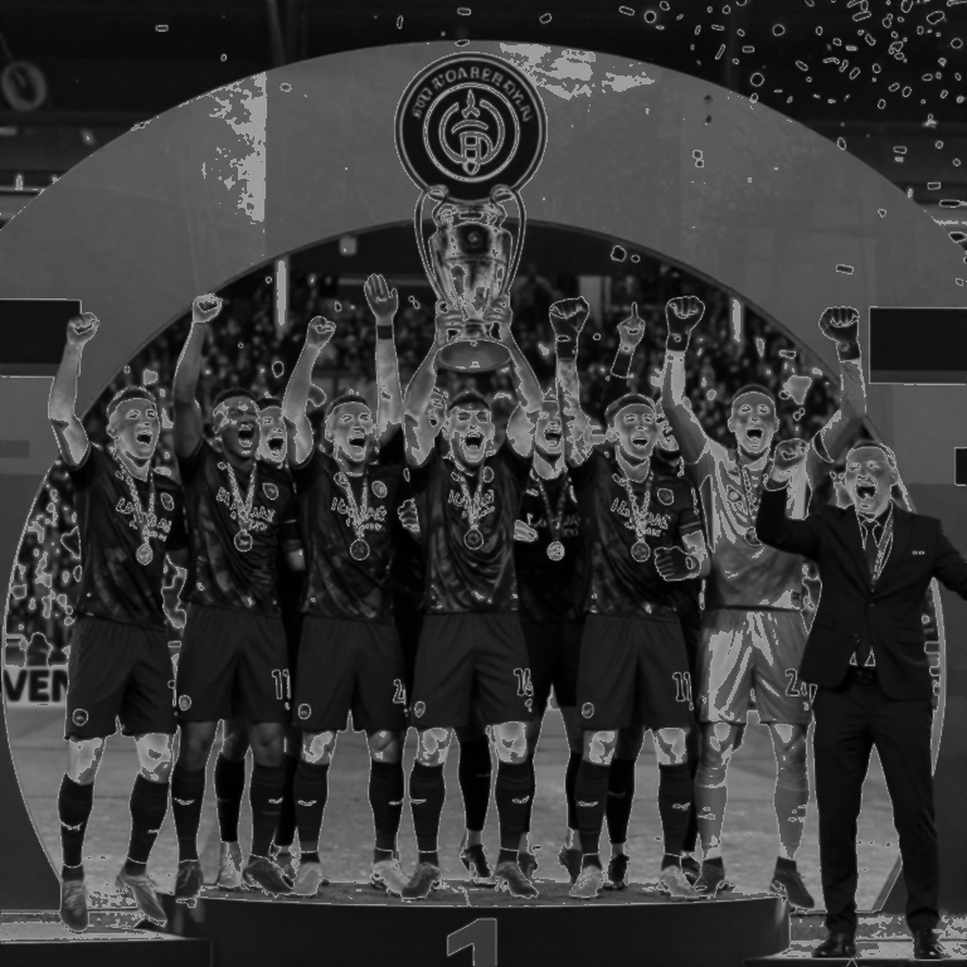
There are matches I refereed badly, but from them I understood what fairness means. And fairness in football, at the management level, is not about keeping or sacking a manager. It is about which data you use to judge a project, and how much real time you give it.
Context: a project built on belief, not on numbers
Carrick is not an outsider. He is a club legend, a deep-lying midfielder who once set the rhythm of matches with short passes so relentless that opponents grew weary. When you are a legend, you hold a reservoir of affection that ordinary managers do not. The board calls him our legend - that phrasing is not accidental; it is part of a stabilisation message aimed at fans, players, and agents.
Last summer, the club signed several new players. That is a signal that the project has a budget. But alongside that, they lost out on some targets, and the left-back position was specifically named. For me, this is the heaviest detail in the entire story. In my work as a referee, I never judged a team by what they said. I judged them by what they left on the pitch. A vacant position, a specifically named position, is usually a sign of an unfinished recruitment plan, not a failed one.
Left-back is not a glamorous position. But it is the position that determines how a team builds out. If Carrick constructs a possession-based game from the back, something he did as a player, then left-back is the link that decides whether the pitch is stretched, whether the opponent's defensive block is pulled apart, and whether passing lanes open into the half-spaces. Without that player, the attacking structure tilts, the ball funnels to the right, and opponents know where to stand and cut it off.

This is my inference, not information from the source. I state that clearly as a matter of professional principle: do not stuff fake data into empty spaces.
Analysis: the line between a crisis and a slow start
People watch matches with their hearts; I watch with pre-drawn lines. Four matches is far too small a sample to conclude. But four matches at a club with title ambitions is enough to raise questions. The board says performances are not at a bad level. That is an unverifiable statement. No xG, no PPDA, no possession share, no shot count. Nothing for a professional like me to weigh on the scales.
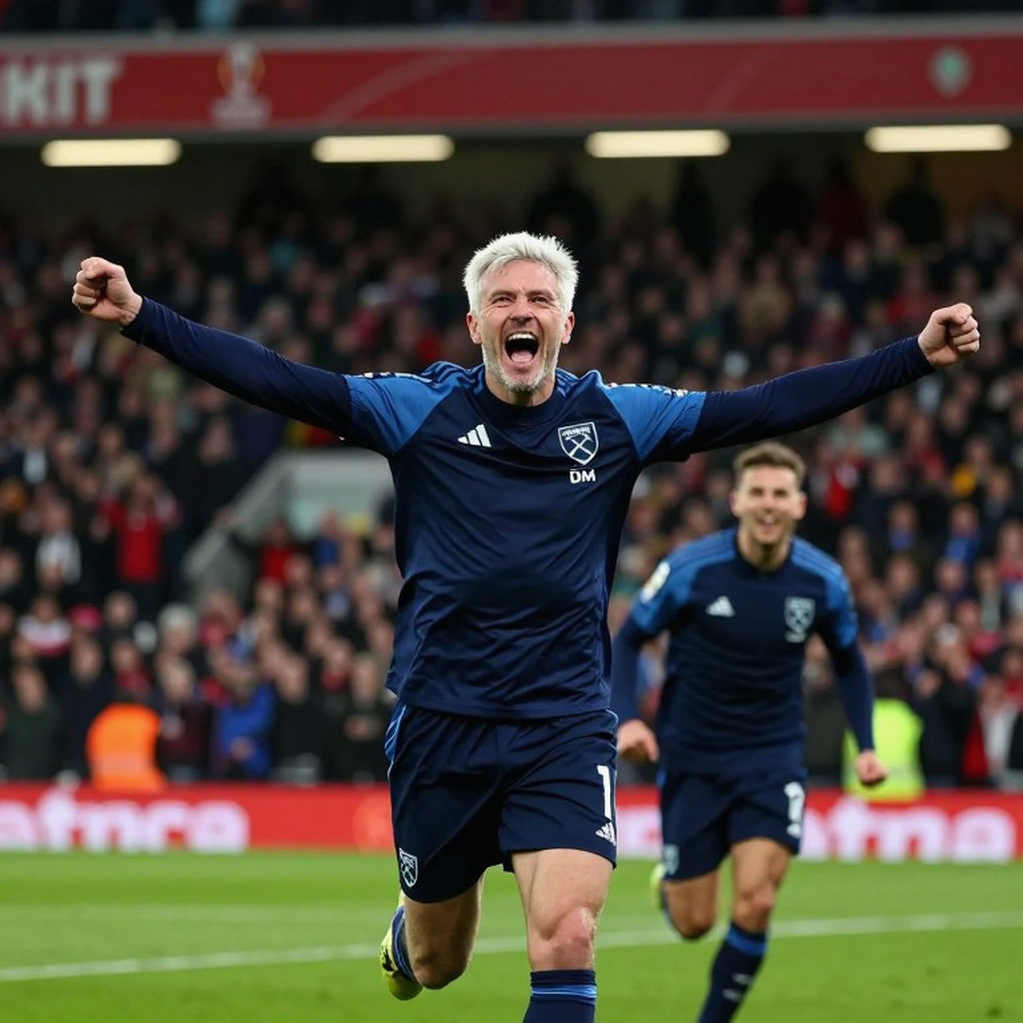
Only when you place those numbers side by side do you know whether results are reflecting the process or hiding a problem. This is a principle I built after the Arsenal - Tottenham match in 2026, when I mispronounced Harry Kane's name three times on air. I sat up all night with the tape and realised that without data, people speak with emotion, and emotion is always skewed. Since then I have built myself a 27-point checklist before every broadcast, covering player data, new FIFA rules, and qualifying context. Without that checklist, a commentator is only a reader of the crowd's emotions.
With Carrick, what I can assert is that the pressure is real, and it became real the moment the board had to issue a reassurance. Silence would have been the natural response to a non-existent problem. When they must state that the manager is safe, they are managing communications, not merely answering a question.
The notable point is that the board ties the hoped-for improvement to a marker after the international break. That is a specific time marker. In refereeing, we call this a conditional evaluation point. You do not promise to get better immediately; you promise to get better after a marker. The problem is that if results still do not improve after that marker, the safety narrative collapses on its own.
The Carabao Cup tie against Brighton is the immediate pressure valve. Win, and the mood softens. Lose, and the noise rises geometrically. It is not a do-or-die match of the season, but it carries far more psychological weight than its place on the calendar suggests.
The contrarian angle: what is not said is what matters
Every argument in the stands, every argument off the pitch, has its answer in some camera angle. For this story, that camera angle is the sourcing. The article I am analysing cites information from Romano, yet it has no clear origin itself, and contains an internal time contradiction: a piece about the 2026/2027 season whose photo caption and references point to April 2026. For someone who has spent thirty years cross-checking reports, this is a warning sign. Not because it is wrong, but because it is not solid enough.
When a claim as important as no sacking plan rests on a thin source, a professional must treat it as unverified data, not as fact. There is a gap between what the board wants the public to believe and what the data allows us to believe. That gap is exactly where I work.
And here is the counterintuitive point: Carrick's biggest short-term risk is not being sacked. The biggest risk is that the left-back position remains unfilled, combined with the after-the-international-break marker set by the board itself. Together, these create a narrow window: if neither is resolved, the stability narrative will unravel on its own. People tend to fear the hot seat. But in football, the hot seat only heats up when there is an unpatched structural hole beneath it.
One more point. The board repeatedly states it will spend, will bring in the best players to return the team to title-contender status. Public spending commitments made under results pressure are usually a precondition for paying above true value. I am not saying this will certainly happen. I am saying it needs monitoring, because every deal signed in a state of urgency carries a premium of unease.
What is worth discussing next
Carrick has an advantage many managers lack: he is a legend. That reservoir buys extra time. But time is not infinite. In refereeing, I learned that one mistake does not end your career. What ends your career is failing to correct it the next time. For Carrick, the next time is after the international break. For the board, the next time is the winter transfer window, where the left-back position must be resolved with a name, not a promise.
For me, the question is no longer whether Carrick is safe. The question is, if a project has no data to measure it and only belief to prop it up, when does the club know it is on the right path? Four matches are not enough to answer. And for that very reason, every still safe statement is only valid until the next match.