
DeRozan Joins Denver on a Veteran Minimum: The Real Problem Sits in the Non-Jokić Minutes
Câu trả lời cốt lõi: Theo một bản tin chưa được xác minh, DeMar DeRozan gia nhập Denver Nuggets bằng hợp đồng một năm theo mức lương tối thiểu cầu thủ kỳ cựu, sau khi được Nikola Jokić, Jamal Murray và Aaron Gordon trực tiếp thuyết phục. Hợp đồng hợp pháp về mặt quy định, nhưng cơ chế để DeRozan trở thành cầu thủ tự do không được bản tin giải thích. Dữ kiện chính: - DeMar DeRozan mùa 2024-25: khoảng 22,2 điểm, 47,7% FG, 32,8% 3P, tỷ lệ sử dụng 24-25%. - Denver vượt First Apron, sát Second Apron; chỉ còn hợp đồng tối thiểu và thị trường buyout. - Nikola Jokić mùa 2024-25: khoảng 29,6 điểm, 12,7 rebound, 10,2 kiến tạo — lệch số liệu bản tin. - DeRozan còn hợp đồng với Sacramento Kings; buyout hoặc waive là cơ chế khả dĩ. - Denver mở màn mùa 2025-26 tại Paycom Center của Oklahoma City vào ngày 21 tháng 10. Nguồn: Bản tin chưa định danh, không có tên tác giả, không có cơ quan báo chí và không có URL; số liệu đối chiếu với hồ sơ công khai mùa 2024-25. | Cross-checked: VuaBong.vn Hỏi đáp liên quan: Hỏi: Vì sao Denver chỉ có thể ký hợp đồng tối thiểu? Đáp: Vì đội nằm trên First Apron và sát Second Apron, mất quyền gộp lương, sign-and-trade và mid-level exception. Hỏi: DeRozan có phù hợp với hệ thống của Jokić? Đáp: Chỉ ở vai trò dự bị 16-20 phút; anh là cầu thủ kết thúc possession bằng ném tầm trung, ngược với nguyên lý bóng di chuyển của Denver. Hỏi: Vì sao bản tin cần được kiểm chứng? Đáp: Vì không có nguồn, không giải thích cơ chế buyout, và số liệu Jokić không khớp hồ sơ công khai.
DeMar DeRozan averaged 22.2 points per game last season. He turns 36 in August. And according to a report now circulating on social media, he has agreed to a one-year veteran-minimum contract worth roughly $3.9 million to join the Denver Nuggets, after being personally recruited by Nikola Jokić, Jamal Murray and Aaron Gordon.
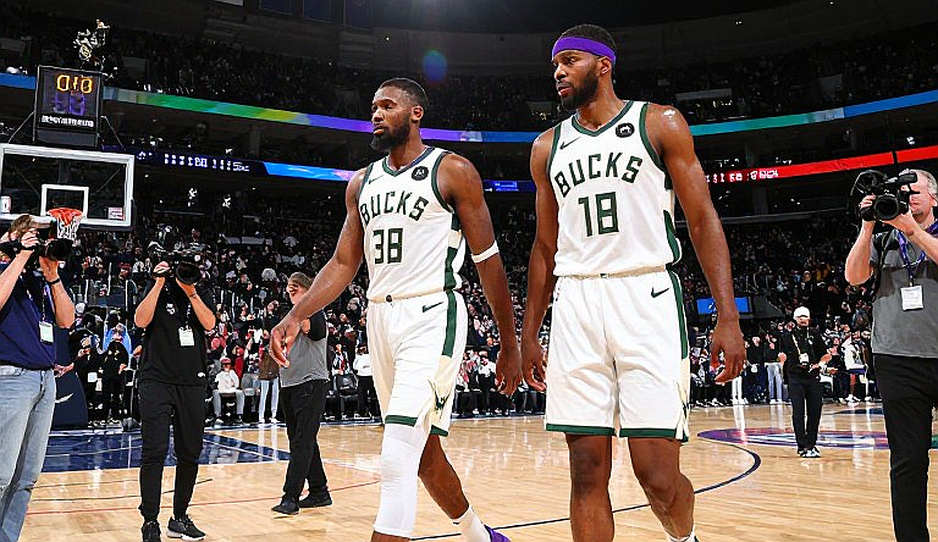
The gap between those two facts is the story. A player whose market value sits between $15 million and $25 million per season just accepted less than a fifth of that. The transfer market is a battlefield where sellers trade on reputation and buyers trade on data — and a 90 percent discount does not appear on its own. It only appears when something exogenous happens: a buyout, an injury, or a report that is not true.
Three possibilities. The report explains none of them.
I spent a full weekend pulling this apart, because the interesting part is not whether DeRozan lands in Denver. It is that even if the deal is real, Denver is solving a different problem than the one the media is describing.
CONTEXT: A TEAM THAT HAS RUN OUT OF ROAD
Denver won the 2026 title with five shooting threats on the floor at once: Jokić, Murray, Kentavious Caldwell-Pope, Aaron Gordon and Michael Porter Jr. That was the precondition for their read-and-react system — Jokić at the elbow, four cutters and spacers around him, always at least one clean passing option.
Caldwell-Pope left in 2026. Porter Jr. was moved for Cam Johnson in the 2026 offseason. Those pieces changed, and it is no accident that Denver has slowly lost continuity at both ends.
The financial picture matters more. Denver is over the cap, above the First Apron and sitting near the Second Apron. In that zone the front office loses almost every tool: no salary aggregation in trades, no sign-and-trade acquisitions, no mid-level exception. The only doors left open are minimum contracts and the buyout market.
A veteran-minimum deal is legal for any team regardless of apron status. That is the one element of the report that survives mechanical scrutiny.
The rest does not. DeRozan is not a free agent. He is under contract with the Sacramento Kings. For him to become a free agent, there must be a buyout or a waiver — and that event alone is major news the report never mentions. Would Sacramento swallow most of his guarantee to clear minutes for a younger core? Possibly. But if so, that is a Sacramento story, not a Denver story.
Then there is the detail that stopped me cold. The report lists Jokić's previous-season line as 27.5 points, 12.9 rebounds and 10.6 assists. His widely reported 2026-25 line was roughly 29.6 points, 12.7 rebounds and 10.2 assists. All three figures are off. Not enough to invalidate the whole piece, but enough for a reader to ask where the report came from. In this business, a stat that fails to reconcile with the public record is the strongest available signal that everything else needs re-checking.
From the CBA I learned this: the raw gem is never in the highlight. It is in the quiet minutes. And in Denver, those quiet minutes have a specific name.
CORE: TWO GRAMMARS THAT DO NOT MERGE
Denver's offense under the Jokić–Murray–Gordon structure is a decision tree. Dribble hand-offs, back-cuts, corner spacers, a genuine five-man passing chain. In that system a player's value is measured by decision speed and by the gravity he creates without the ball.
DeRozan is a terminal player. Possessions tend to end when the ball reaches him, from 15 to 18 feet, off a jab-step or a shoulder turn. He is an elite practitioner of the exact shot the league's Moreyball consensus engineered away from: the contested mid-range.
Those two grammars rarely merge cleanly. When DeRozan stands outside the arc waiting, the defense gains a free helper on Jokić's roll. When he catches, Denver's passing chain stops at the second link. The core conflict is not about player quality — it is that Denver builds value from the ball moving while DeRozan builds value from the ball stopping.
But stopping there would be useless, because it ignores the problem Denver actually has.
In 2026-25, Denver's genuine pain point was non-Jokić minutes. With the Serbian off the floor, their half-court creation collapsed into Murray isolations and rushed threes. That is where the net rating fell off a cliff.
A bench player who can generate 1.0 points per possession or better against a set defense is precisely the archetype Denver has lacked since Bruce Brown left in 2026. In that narrow role — 16 to 20 minutes a night with the second unit — the fit rises from poor to moderate.
And here is the underrated part of DeRozan at this age: his most durable skill is not the mid-range jumper, it is foul generation. His free-throw rate is among the most stable figures of his career and among the last to decay with age. For a team that already draws heavy contact through Jokić and Murray, a player who forces the defense into foul trouble is a real asset, not an imagined one.
THE CLOSING-LINEUP PROBLEM
In the final five minutes of a playoff game, DeRozan's presence forces a choice.
Keep him on the floor and opponents gain a free helper to crowd Jokić's roll, making every help rotation cheaper. Take him off and a six-time All-Star sits in crunch time — a locker-room issue — while a minimum-salary player sitting is something nobody remembers.
Denver's 2026 closing five was Jokić, Murray, Caldwell-Pope, Gordon and Porter Jr. It worked because all five were shooting threats. That is not a small detail. That is the entire principle.
Fans see the game-deciding shot. I see the 47 cuts nobody records. And in Denver's system, every one of those unrecorded cuts depends on whether the defense dares to leave its man. DeRozan makes them dare.
AGE DATA AND THE PLAYOFF HAUNTING
DeRozan turned 36 in August 2026. In 2026-25 he averaged about 22.2 points, shot 47.7 percent from the field and 85.7 percent from the line, but just 32.8 percent from three on very low volume. His true shooting sat around 57.5 percent — roughly league average, propped up by free throws rather than shot quality. Usage hovered near 24 to 25 percent, meaning he still consumes a meaningful share of possessions.
For a perimeter player, the three decisive skills are first-step burst, mid-air balance and free-throw generation — which are also the three that decay fastest. DeRozan offsets this with post-up strength and a deeply refined mid-range base. But the comparison pattern is consistent: Carmelo Anthony after 34, late-career LaMarcus Aldridge, DeRozan himself in the Toronto-to-San Antonio transition. Volume is preserved; efficiency and defensive value erode sharply.
The playoff picture is harsher. DeRozan's postseason shooting efficiency sits well below his regular-season baseline, and the sample is large enough not to be random. His two most-criticized series followed the same script: defenses sagged off, dared him into contested mid-ranges, and loaded up on the primary option. In Denver that script gets worse, because every playoff opponent already builds its entire plan around shrinking Jokić's operating space.
At 31, I no longer chase intuition — I teach intuition to read data. And the data here says playoff-shrinkage risk is concentrated almost entirely on the new addition, not on the incumbent core.
THE CONTRARIAN ANGLE: THE STORY IS MISPLACED
The report calls this a push toward a championship. That framing inflates the mechanism. A minimum contract is a lottery ticket, not a centerpiece. It can win, but it was not designed to.
Second, Denver's real need is not a mid-range creator. They already have Murray for that. Their unsolved problem is perimeter defense and three-point volume — a 3-and-D wing, the archetype they lost when Caldwell-Pope walked. Adding another ball-dominant player while Murray also needs on-ball reps is an equation with the wrong sign.
Third, and this is the part that irritates me most: the report devotes almost all its length to a minimum contract and a single clause to the fact that Denver has a new head coach. David Adelman inherits a championship roster, championship expectations, and a superstar who does not lead vocally. That is the hardest job in the league. A first-time head coach cannot draft his way out, did not win with these players, and cannot trade on pedigree to demand compliance. In a transition like that, the biggest variable is not the eighth man in the rotation.
Fourth, the report's claim that Jokić personally made the recruiting call runs against the public posture he built over an entire career — a player who has repeatedly disclaimed involvement in roster construction. If true, it is a real shift in mindset. If false, it is a fabricated detail engineered to exploit exactly that contrast. Both readings are informative.
Finally, a technical detail everyone skipped. On a one-year veteran-minimum deal, the league's reimbursement mechanism means the team's cap and tax charge equals the two-year veteran minimum, roughly $2.3 million, with the league covering the balance. The $3.9 million figure is the player's salary, not Denver's burden. That is the kind of nuance a sloppy report always omits.
WHAT TO WATCH
Denver opens its season at Oklahoma City's Paycom Center on October 21. That is an immediate measuring stick against the Western standard — and an early look at how Adelman handles his closing lineup.
I am tracking four things. First, confirmation or debunking of the deal within 48 to 72 hours; a signing of this profile would be reported by multiple tier-one insiders near-simultaneously, and silence is itself evidence. Second, DeRozan's defined role in camp: bench or starter, under or over 25 minutes a night. Third, the timing of Jokić's extension in 2026, because his deferral is legitimate cap optimization, not a loyalty signal. Fourth, Christian Braun's extension, which will push Denver deeper into apron restriction and may force a cost-cutting trade later.
Victory is the product of decisions made before the game begins. In Denver, this season's biggest decision is not who they sign for the minimum — it is how many roads remain after every other door closed. If Jokić is healthy, all of this debate is noise. If he is not, no minimum contract on earth saves the season. So is a team with no tools left actually preparing for a championship, or merely preparing for a season good enough that nobody asks the question?