
Invictus Gaming and the LPL's Fourth Seed: A 3-1 Win Over JD Gaming, and the Gap Between a Low Seed and High Expectations
**Câu trả lời cốt lõi** Invictus Gaming đánh bại JD Gaming 3-1 ở chung kết nhánh thua LPL 2026 Regional Finals, giành suất thứ tư và cũng là suất cuối cùng của LPL dự League of Legends World Championship 2026. Cả bốn đội LPL vào thẳng Vòng Thụy Sĩ tại Allen, Texas, từ ngày 23 đến 31 tháng 10 năm 2026. **Dữ kiện chính** - Invictus Gaming thua Top Esports 1-3 ở chung kết nhánh thắng, sau đó thắng JD Gaming 3-1 ở chung kết nhánh thua. - Thứ tự hạt giống LPL: Anyone's Legend 1, Bilibili Gaming 2, Top Esports 3, Invictus Gaming 4. - JiaQi chơi Tristana đạt 6 mạng hạ, 2 hỗ trợ, và Ezreal đạt 9 mạng hạ, 5 hỗ trợ trong hai ván thắng. - Junjia cầm Trundle đạt 11 mạng hạ, 11 hỗ trợ, 1 lần chết trong ván thắng duy nhất của JD Gaming kéo dài 34 phút. - JD Gaming và Team WE tiếp tục sang 2026 Demacia Cup Global Invitational. **Nguồn** Esports Insider, ngày 19 tháng 9 năm 2026 (thời điểm kết thúc LPL 2026 Regional Finals) | Cross-checked: VuaBong.vn **Câu hỏi liên quan** Hỏi: Invictus Gaming vào Worlds 2026 với hạt giống nào? Đáp: Hạt giống thứ tư, là suất cuối cùng của LPL, và vào thẳng Vòng Thụy Sĩ cùng ba đội LPL còn lại. Hỏi: Vì sao chiến thắng của Invictus Gaming được đánh giá cao hơn một kết quả may mắn? Đáp: Đội đã vượt qua cấu trúc nhánh thắng – nhánh thua theo thể thức BO5 và thắng bằng phân bổ sát thương trên ba nguồn, không phụ thuộc một cá nhân. Hỏi: Rủi ro lớn nhất của Invictus Gaming trước thềm Worlds 2026 là gì? Đáp: Khoảng năm tuần giữa hai bản cập nhật có thể làm mất giá bể tướng, cộng với bất lợi nhánh đấu của một hạt giống thứ tư; theo dõi thêm tại VangBong.vn Player Depth Index.
The opening game lasted 33 minutes and ended 11-3 on kills. There was no Baron steal at minute 40, no fifteen-minute base defense. Invictus Gaming led from the lane phase, held the tempo, and closed the game with exactly what every knockout-stage team needs: the ability to turn a small advantage into an advantage that cannot be reversed.
I rewatched that game twice. The second time I stopped looking at the fights. I looked at the gaps between major objectives — the zone where a team is either squeezing its opponent into a defensive posture or quietly wasting its own clock. In game one, IG chose the first option. That was a game where tempo was managed by discipline, and not by inspiration.
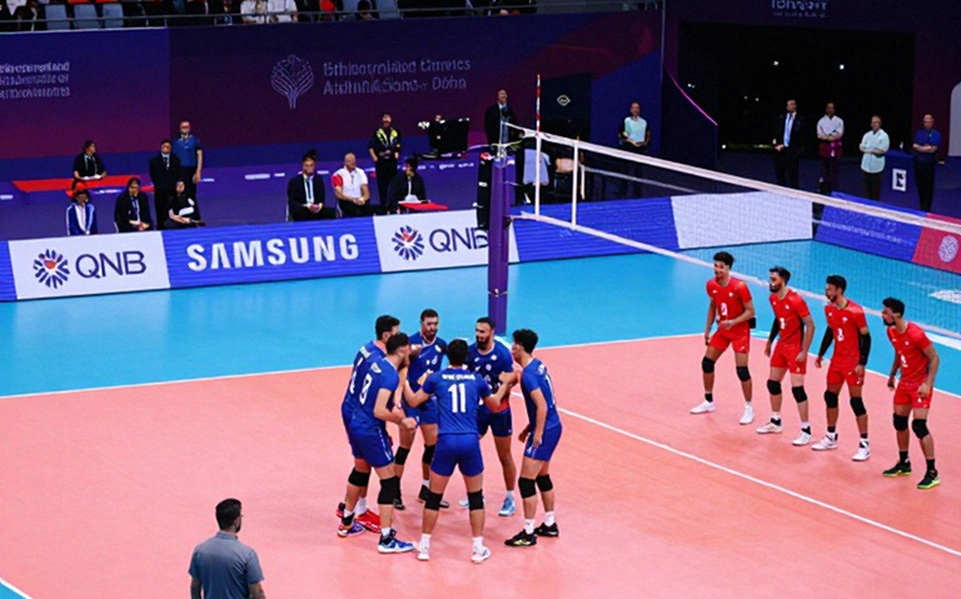
I followed this series from Da Nang, in a time slot that lands late in the evening in Vietnam. That night I wrote exactly one line in my tracking log: "The LPL's final slot will go to the team that understands when not to fight." Three hours later, Invictus Gaming booked its ticket to the League of Legends World Championship 2026.
The frame: one slot, two brackets, and a five-week gap
The LPL 2026 Regional Finals ran on an upper-bracket / lower-bracket structure, meaning a team had to lose twice before it was truly eliminated. Invictus Gaming lost the upper-bracket final to Top Esports 1-3, dropped to the lower bracket, then beat JD Gaming 3-1 in the lower-bracket final to claim the fourth and final regional seed.
That route was longer than the route of any other team in the Worlds group. A two-bracket structure is unkind to gamblers: it rewards the team with preparation depth, the team that does not collapse after a loss, the team that can adjust within 48 hours. The decisive matches were best-of-five, and best-of-five reduces upset probability. Two 3-1 scorelines inside a single run are not a sign of luck; they are a sign of separation.
Based on my experience tracking matches across regional leagues, a team that drops to the lower bracket and then runs the table usually carries two things the scoreboard never shows: composure in decider games, and a list of fallback plans that has already been validated by its own defeat.
The four LPL representatives at Worlds 2026, in seeding order:
| Seed | Team | Note | |---|---|---| | 1 | Anyone's Legend | Region's top position | | 2 | Bilibili Gaming | No longer holds the regional top spot | | 3 | Top Esports | Beat IG 3-1 in the upper-bracket final | | 4 | Invictus Gaming | Final slot, entered from the lower bracket |
All four teams enter directly into the Swiss Stage, which runs from October 23 to October 31, 2026, in Allen, Texas, United States. There is no play-in phase for LPL seeds. The gap between the end of the Regional Finals on September 19, 2026, and the Worlds opener is roughly five weeks.
To me, that five-week number matters more than any commentary about form. PPDA is a lens — through it, I saw Morocco in the semifinal two months early. Here, the equivalent lens is the dead time between two tournaments. Five weeks is enough for one patch to reorder draft priorities entirely, and also enough for a team to bootcamp cross-region and return as a different version of itself. Both possibilities are currently open.
Analysis: JD Gaming won with an individual, Invictus Gaming won with a system
Read only the scoreboard and JD Gaming's single win, lasting 34 minutes, looks like the best game of the series. Junjia played Trundle and finished with 11 kills, 11 assists and 1 death. That is one of the cleanest individual stat lines a jungler can produce in professional play.
The point that must be read alongside structure is this: a brilliant individual stat line inside a 1-3 series loss proves nothing except that the individual played well. It does not prove JD Gaming has a system durable enough to go far. Across the other four games, JD Gaming never produced a single game in which the advantage belonged to them for more than half the duration. One player can carry a game; a system cannot be carried by one player.
On the other side, Invictus Gaming won through distributed responsibility. The opener belonged to JiaQi on Tristana, with 6 kills and 2 assists. In another win, JiaQi switched to Ezreal and closed with 9 kills and 5 assists, while Rookie played Aurora and Wei played Qiyana. The remaining win was tied to Rookie's Syndra, finishing at 4/1/5.
Three damage sources. Three resource patterns. No single game depended on one player being absolutely superior to the rest of the map.
I paid particular attention to Wei. In his Qiyana game, the notable element was not the final stat line of 5 kills and 10 assists, but the order of actions: early Rift Herald control, which opened dragon control, which led to Dragon Soul and Baron. That is a causal chain, one that can recur; it differs in kind from a chain of random events. In betting analysis I always separate the two, because only one of them has predictive value.
The bigger point sits in the champion pool. JiaQi played two different marksmen in two different wins, Tristana and Ezreal. Rookie played two different mid-lane mages, Syndra and Aurora. Within the same series, the jungle slot featured both an assassin and a bruiser — Qiyana and Trundle, two archetypes with entirely different map-control logic. Under the Swiss Stage format, where teams must adapt across short turnarounds, champion-pool depth is a quantifiable asset; peak form is not.
I have to place a limit on myself right here: every observation above comes from a single best-of-five. A small sample. Russia taught me that the crowd and the data always tell two different stories. But a small sample is not data; it is just another story, told in the same voice. Turning observation into conclusion requires season-long series data — which the original source does not provide.
The contrarian angle: a fourth seed and a nostalgia story are not measured in the same unit
The most widely circulated line after the match was not the 3-1 scoreline. It was that Rookie and TheShy will return to Worlds in Invictus Gaming colours — two members of the 2026 world championship roster. As media material, this is the strongest asset IG has at this stage.
As a competitive matter, it is a story measured in a different unit. A 2026 champion does not automatically become a 2026 contender. Across the entire source material, there is not a single metric quantifying the current form of either player. TheShy is mentioned as a returning name, not as a top laner with data attached. Rookie has Syndra and Aurora across two wins, but that is evidence of champion pool, not evidence of peak form.
The distance between those two things is the distance between a fourth seed and a contender position. Historically, the lowest seed from a major region always carries a bracket disadvantage. In the Swiss Stage, where teams are paired by record, a slow start can push a team into a dense run of strong opponents as early as the second round. I am not saying IG will exit early. I am saying the expectations are being built on a foundation measured in a different unit from the foundation that match results build.
On the other side of the map, JD Gaming has the inverse problem. Three consecutive years ending in third place, and this time a lower-bracket final defeat — meaning the Worlds berth was lost in the exact match where a team wants to control its own fate. Three repetitions of the same outcome do not belong to the domain of random variance. That is a ceiling problem: this team has the quality to go deep regionally but lacks the tools to cross the final threshold. With the transfer window open, a three-year series is a database for predicting a roster rebuild, not an apology.
Contract structure and salary budget are the real story behind that number. JD Gaming and Team WE move on to the 2026 Demacia Cup Global Invitational. That destination has competitive value, but its visibility and commercial value sit one tier below Worlds. In esports, the biggest gap between organisations is not form — it is which calendar they are allowed to play in.
Three variables to track until October 23
The first variable is the patch between the two events. The five weeks between September 19 and October 23 are the window in which every prediction model built on Regional Finals data goes stale. In esports, a patch is an invisible referee with the authority to decide a championship, and it never signs paperwork with any team. If JiaQi's or Rookie's champion pool is cut in exactly this window, the pool asset I analysed above loses almost all of its value.
The second variable is the Swiss format itself. It rewards short-window adaptation and punishes teams with only a Plan A. IG's champion-pool depth, at the level observable, is a positive signal. A positive signal is still only a signal.
The third variable is the age structure of the roster. A group with two former world champions plus a rising young AD carry is theoretically attractive: an experienced spine plus young firepower. Operationally, it is also the most fragile structure once the schedule compresses. I have no data on workload or physical condition for either team, so I leave this variable blank rather than speculate.
A note on source quality
As an analyst, I always state the reliability level of the data foundation I am using. In the original source, most event-level details carry no specific attribution; only some match-progression facts and the seeding list are credited to a regional outlet. The match results and tournament context are clear. The analytical depth, however, is limited by the source itself, not by the analytical tools.
Transparency about missing data matters as much as presenting the data you have. I do not watch to enjoy. I watch to test a long-term hypothesis — and a hypothesis may only be concluded when the sample is large enough.
The only thing worth trusting is what has not been seen yet
The LPL's fourth seed is a convincing outcome in terms of route and an ambiguous one in terms of positioning. Invictus Gaming did exactly what a lower-bracket team must do, and did it without needing one player to carry the entire series. JD Gaming proved the opposite, and paid with a Worlds berth.
Between those two outcomes, what actually holds predictive value is not the 3-1 scoreline. It is the champion pool, the order of actions before major objectives, and the five-week gap between two versions of the game. In sport, the only thing worth trusting is what the crowd has not managed to see yet — and for Invictus Gaming, that unseen part will only surface from October 23 in Allen, Texas.
If the next patch does not touch their champion pool, and if the Swiss draw does not throw them into a group of death in round one, the fourth seed may turn out to be a better starting point than most people think. If not, the data history will record one more time that a beautiful nostalgia story can travel very far in headlines, but never further than one patch.