
Faker withdraws from Ralph Lauren event: Two weeks between ASIAD 2026 and Worlds 2026
**Câu trả lời cốt lõi**: Faker (Lee Sang-hyeok) vắng mặt tại sự kiện Ralph Lauren vì lý do sức khỏe, rơi đúng tuần tuyển Hàn Quốc tập trung cho ASIAD 2026 và khoảng hai tuần trước khai mạc CKTG 2026, khiến tải trọng chuẩn bị của một mid laner có tiền sử chấn thương tay năm 2023 trở thành biến số rủi ro cao. **Dữ kiện chính**: - Ralph Lauren công bố hủy hẹn, lý do được ghi là vấn đề sức khỏe, không nêu chẩn đoán hay mốc hồi phục. - Faker từng nghỉ nhiều tuần vì chấn thương tay năm 2023, đây là loại chấn thương tái phát theo khối lượng vận động. - Tuyển Hàn Quốc tập trung cho ASIAD 2026 trong tuần, CKTG 2026 khởi tranh khoảng hai tuần sau. - Hợp đồng của Faker với T1 kéo dài đến 2029, 2026 là năm đầu của thỏa thuận bốn năm. - T1 đang có mùa giải dưới kỳ vọng, làm tăng áp lực khối lượng tập luyện nội bộ. **Nguồn**: Bản tin esports tiếng Việt của tác giả Tuấn Hưng, ngày công bố theo hồ sơ bài nguồn, dẫn thông báo chính thức từ Ralph Lauren và T1. | Đối chiếu chéo: VuaBong.vn **Hỏi đáp liên quan**: - Hỏi: Faker có chắc chắn dự ASIAD 2026? Đáp: Chưa có xác nhận chính thức về việc tham dự hay vắng mặt, theo bài nguồn. - Hỏi: Việc hủy sự kiện thương mại có nghĩa là chấn thương nặng? Đáp: Không thể kết luận, đây là tín hiệu tải thấp và có thể là giao thức giảm tải có chủ đích. - Hỏi: Rủi ro chính với T1 là gì? Đáp: Cấu trúc phụ thuộc đơn điểm ở đường giữa, không có phương án thay thế tương đương được công bố, theo Chỉ số Độ sâu Đội hình của VangBong.vn.
On Tuesday morning, a short update appeared on T1's official channels. A representative of Ralph Lauren — the team's global fashion partner — confirmed that Lee Sang-hyeok would not attend the launch event for the collaboration collection. The stated reason: health issues. No diagnosis. No recovery timeline. No statement from the team about any adjustment to the training schedule.
Just one line.
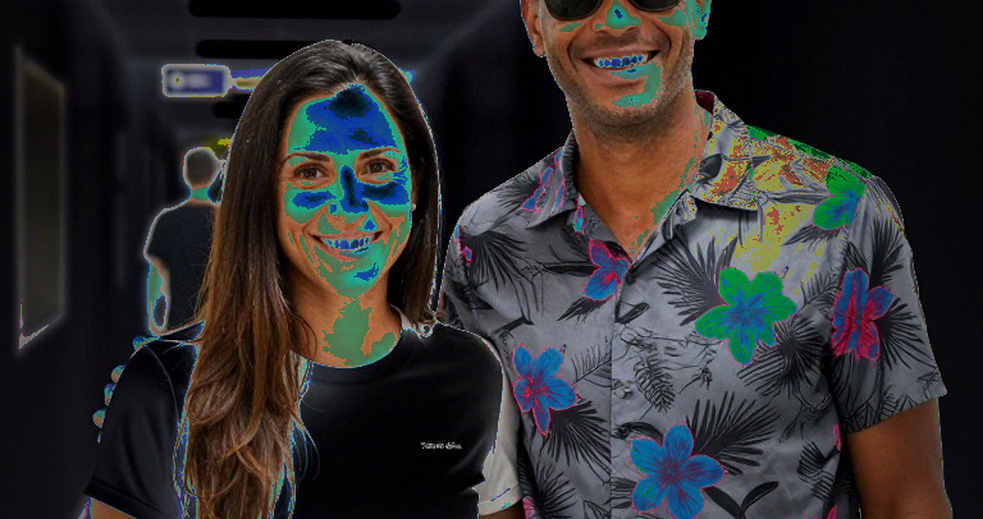
For anyone who has followed esports long enough, this kind of information needs to be read on two layers. The layer that is spoken is a cancelled commercial commitment. The layer worth interrogating sits in the timing. This week, the South Korean League of Legends national team is assembling for ASIAD 2026. In roughly two weeks, the World Championship 2026 begins. A cancelled event sits squarely in the narrowest window of the year.
What matters is not the cancellation itself. What matters is the trajectory it draws.
Two timestamps need to be framed before going into the data. ASIAD 2026 — the Asian Games hosted in Aichi-Nagoya, Japan — is a national-team-level arena where esports carries medals, administered by the Olympic Council of Asia. The World Championship 2026, abbreviated as Worlds, is a club-level championship operated by Riot Games. The two events exist in two different organisational systems, managed by two different bodies, under two different rulebooks. This is a point to fix at the front of any analysis: there is no single arbiter standing above both.
For Lee Sang-hyeok, both are the most important targets of the year. He has just entered the first year of a long-term contract with T1 running to 2029 — a four-year deal, something analysts habitually treat as a stable variable. But a long contract does not solve the problem of competitive presence. It only solves the problem of retention. These are two entirely different variables, and the esports community routinely collapses them into one.
T1 sits in a phase my own internal analysis calls "below expectation". This is a roster that pre-season models placed in the title-contender bracket, but cumulative form across stages does not reflect that expectation. In my load model, an underperforming team tends to increase scrim volume and internal focus intensity — precisely what a player with an injury history does not need.
Before continuing, I need to tell a story. In 2026, while still a middle-school student, I began hand-charting data from every match. In a K League 2 match between Busan IPark and Seoul E-Land on 12 July 2026, I counted 412 successful passes for Busan. The official figure on the stat sheet was 389. A gap of 23 passes — around six percent. A correct number can still be a polite lie if it is separated from how it was produced. I carried that principle into esports and have kept it since. Every metric leaves an ink trail if you bother to trace it.
Faker's case must be read this way. The statement says "health issues". Those two words cover at least four scenarios with completely different recovery curves: a recurrence of the wrist or arm injury — weeks; a new injury, unclassified — no timeline; an acute illness — days; cumulative burnout — no timeline at all. Four recovery curves. One statement line. This is the central blind spot of the story, and every projection depends on which curve is chosen.
First fact, verifiable: in 2026, Faker missed multiple weeks of competition due to a hand injury. This is a recurrence-type injury — meaning risk scales with the volume of repeated motion, not with a single traumatic event. It does not close like an acute case. It sits inside the load equation. The collapse of a giant always starts with a fragile index.
From 2026 to now, Faker's schedule is said to have stabilised. But "stable" is a relative term in a data model. For a top-tier LCK mid laner, the regular-season schedule includes roughly six to eight hours of practice per day, plus a scrim block of around four to five hours, plus solo queue to maintain mechanics. The cumulative mechanical load on the wrist and arm of a player who has worked for more than a decade — with high click frequency and APM sustained continuously — does not decline with age. It only accumulates. This is the fundamental difference between an esports athlete and a track-and-field athlete: a runner can rest for months to let muscle recover, while a player must keep the hand in competitive state continuously, or lose the mechanics.
Second fact: this week's Ralph Lauren cancellation. This is what analysts call a "low-load, high-rigidity" commitment. Commercial events do not consume much mechanical capacity, but they carry near-zero flexibility: schedules locked, guests invited, media booked, the collection already on shelves. Cancelling such an event means the team decided that even the low load should not be traded away. There are two plausible readings, and both lead to the same inference: a genuine acute episode is underway, or a deliberate load-shedding protocol is running. In either case, there is an internal medical or performance function with enough authority to veto commercial commitments. This is a positive signal of welfare governance, and also a historically meaningful question: since when did an esports club have such a veto? The answer — not often. In most LCK and LPL teams, sponsorship still beats the player's body. That T1 was able to reverse that order for an event with a global brand is a governance signal worth recording.
Third fact, the most important systemically: the calendar. This week, the Korean national team assembles for ASIAD 2026. In two weeks, Worlds 2026 begins. These are two different athlete pools. The national team scrims against other national teams — China, Chinese Taipei, Vietnam, Japan. Clubs scrim against clubs in the LCK system and foreign teams attending Worlds. Two different opponent pools. Two different tactical sets. Two potentially different patch versions, if the organisers lock separate versions for each event — a common occurrence when one event is publisher-operated and the other is governed by a multi-sport council. All inside one fourteen-day window.
PPDA 9.8 is not defending — it is how a team declares war with a number. In esports, the equivalent variable is not the defensive figure but the scrim block volume. If two scrim blocks run in parallel across two weeks, a mid laner's load can rise forty to sixty percent over a normal competitive week. That is a rise a player with a recurrence-prone injury history should not absorb. I once measured a PPDA of 9.8 for South Korea against Germany at the 2026 World Cup and said it was not negative defending — it was proactive pressing. The same logic applies here: high scrim volume is not diligence, it is a declaration of war against one's own biological limits.
Fourth fact: tournament structure. Worlds runs a Swiss stage in the early rounds, with opening matches as BO1. This format punishes a bad day to a degree no other championship in modern esports matches. In BO1, there is no game-two correction. A player not yet recovered — or coming off a sleepless night of medical monitoring — can lose a match his team should win, and that loss goes straight into the Swiss loss column. At the Asian Games, the single-elimination BO3 bracket amplifies variance even further: a mistake in the deciding game ends the tournament, with no lower bracket to return through.
The crowd leaves the stands, and the home-field equation loses its largest variable. In esports, the crowd does not physically leave, but the equivalent variable — a player's effective scrim volume — disappears when that player reduces load. The team does not revise its expectations downward; it holds expectations fixed and simply reduces preparation time for its captain. This is the risk pattern I call silent degradation: no visible collapse, only a narrowed training capacity and an inexplicable drop in tournament form. The danger of this model is its latency. When public data shows Faker performing below par, that is usually the tail of the decline sequence, not the head.
Fifth pressure — single-point dependence. The source article contains no mention of a substitute mid laner. No statement of a rotation plan. No replacement named. At club level in esports, this dependence can still be adjusted tactically: closed drafts, resource distribution to side lanes, splitting the shot-calling burden onto the support. In a national team, no such mechanism exists. A national team cannot import. A national team has no mid-tournament transfer market. It has a finite list of elite domestic players, and once a top-tier player is unavailable, the team loses a share of capacity with no equivalent replacement. For the Korean national team, the fragile index is not in the patch or the opponent — it is in the load frequency of a single hand.
There is a contrarian reading worth attempting. What is worth chewing on is how the esports community reacts to this information: interpreting a commercial absence as a sign of a large problem. I hold that this default is a product of an information vacuum, not of data inference.
Reconsider the facts. Ralph Lauren — not T1 — was the party that announced the cancellation. This is the detail most reports skip. A partner that publicly states a health reason instead of staying silent is implicitly signalling cooperation, not dispute. If the partnership were strained, the brand side has enough tools to simply say "force majeure" and not identify a reason. They chose the opposite. The more reasonable inference: this is a welfare statement, not a financial crisis.
A second reading worth considering: this incident may be a positive signal. Since when did an esports team have enough internal authority to cancel a commitment with a global fashion partner on health grounds? Not often. That T1 could do so, and do it early, suggests the management structure has crossed the threshold of welfare having a commercial veto — a standard most LCK and LPL teams have not reached. If things proceed as scripted, this is the moment a precedent is set.
A third reading, harder and more uncomfortable: the community is converting a low-load event into an index of tournament availability. A player skipping a collection launch could imply a small problem, a large problem, or a deliberate load-shedding protocol. Three possibilities. One event. Inflating that event to the level of the two biggest tournaments of the year being threatened is a symptom of an ecosystem lacking a standardised injury-reporting channel. If a formal reporting mechanism existed, this story would stop at one update line. Without one, silence becomes signal, and signal is read as evidence. Early in my own career, I worked as an esports athlete and tournament organiser before moving into media; from that angle I saw clearly something outsiders rarely see — esports organisations have almost no reusable injury-reporting process across events. Each organiser does it their own way, and most do nothing at all.
It should be stated plainly: traditional sports solved this problem long ago — mandatory injury reports, return-to-play protocols, medical authority separated from commercial authority. Esports has not. For Faker specifically, this is not his problem. For the industry, it is an infrastructure debt coming due.
What to track over the next ten days is not speculation. Three specific signals matter. First: whether any official statement on the type of condition appears, however brief. Second: whether Faker participates in the Korean national team's pre-ASIAD 2026 sessions, and in what form — full or limited. Third: T1's official starting roster for Worlds 2026; any change at mid lane is a signal at a level above "precautionary".
Every projection of Faker's form at both events should be placed in the high-variance bucket. No model can estimate the recovery timeline of an unclassified condition. But the trajectory can be estimated: a player with a recurrence-prone injury history, entering a two-week window with a forty to sixty percent load increase, is a variable every probability model should down-weight.
Four hundred and twelve passes, and the official figure is a polite lie — that was the lesson from the year I turned thirteen. Nine years later, the lesson still holds in another form: the two words "health issues" can be correct word by word, and still tell you nothing at all.