
T1 and the Quiet Renegotiation Behind the Faker-Jensen Huang Photo
**Core answer:** T1 is undergoing a quiet governance renegotiation, not a confirmed power struggle. SK Square holds about 53.13% and Comcast over 30%, and a CEO term anomaly (now recorded to March 30, 2029) plus a disputed 3-2 vs 4-2 board ratio indicate an active, non-public restructuring of control at a sharply re-rated esports asset. **Key facts:** - T1 was founded in 2019 as an SK Telecom-Comcast Spectacor joint venture. - SK Square holds ~53.13%; Comcast holds over 30%, or ~34.3% per a second source. - CEO Joe Marsh's term is now recorded to March 30, 2029, versus an earlier end-of-2025 expectation. - Board seat ratios are reported inconsistently: 3-2 vs 4-2 after Kim Jaerin's April appointment. - Both shareholders reportedly attended board meetings and shared CEO candidate lists. **Source attribution:** Daily Esports and Sports Seoul governance reporting, May 2025 | Cross-checked: VuaBong.vn **Related Q&A:** Q: Is NVIDIA investing in T1? A: No official confirmation exists; the Faker-Jensen Huang photo is a media event, not a disclosed investment. Q: Will SK Square transfer T1 shares to Comcast? A: Prior 2025 speculation did not materialize; no price or transaction structure has been disclosed. Q: Does T1 face financial distress? A: No wage, sponsor-withdrawal, or dissolution signals are present; the issue is governance uncertainty, not solvency.
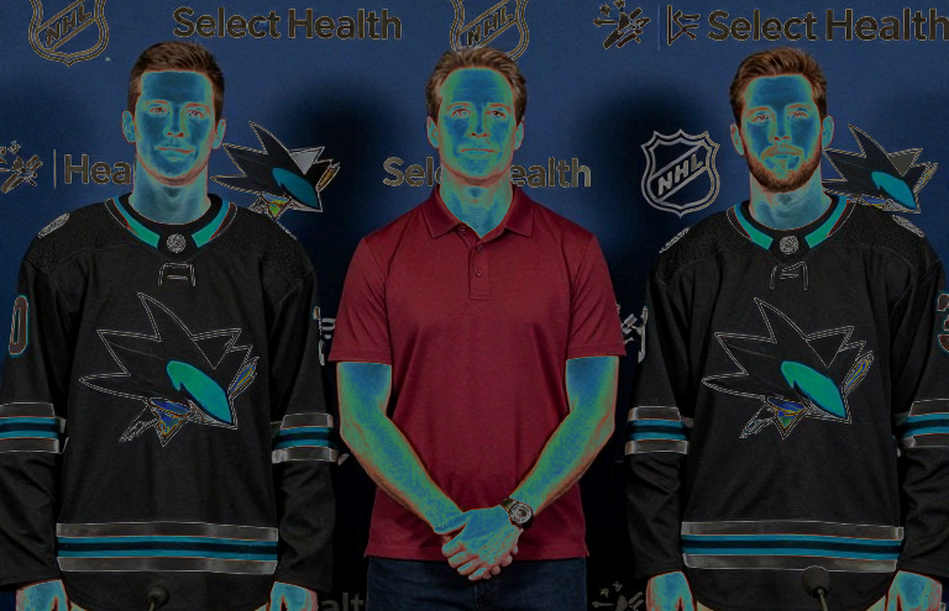
March 30, 2029. That is the term date recorded in a filing on May 29 for CEO Joe Marsh, markedly different from the end-of-2026 expectation that T1 observers had grown used to. Around the same window, the photo of Lee Sang-hyeok standing beside Jensen Huang, NVIDIA's CEO, spread across international esports forums. Two seemingly unrelated events are telling the same story: T1's chessboard has moved from the arena to the shareholders' table.
I have followed T1 across many transfer seasons, from its world championship runs to its roster rebuilds. This time, what I must read is not KDA figures or pick-ban rates, but the ownership structure, board-seat ratios, and an adjusted CEO term record. This is when an esports journalist has to work like a financial correspondent.
T1 was founded in 2026 as a joint venture between SK Telecom and Comcast Spectacor. SK Square currently holds about 53.13% of shares, while Comcast holds more than 30%, with another source citing roughly 34.3%. This structure carries a built-in tension: 53.13% is enough to control ordinary resolutions, but does not reach a supermajority threshold to decide major matters on its own. Comcast, though on the minority side, retains veto leverage over items requiring a supermajority.
T1's back-to-back League of Legends World Championships in the 2026-2026 window have pushed the organization's brand value to a multi-year high. This is no longer a pure esports team, but a strategic asset now sitting within the sightline of technology capital. Jensen Huang has previously invoked PC-bang culture and Korean esports as part of NVIDIA's development narrative. His appearance beside Faker is symbolic, signaling that the AI industry now sees branding value in flagship esports organizations.
In April, T1 added Kim Jaerin, whose background is from SK Square, to its board. After that point, the board-seat ratio was reported at 4-2 tilting toward SK, while another source recorded an earlier 3-2 structure. The gap between those two numbers reflects a reality: even the reporters do not yet know the board's true structure for certain, or the structure is mid-shift. Either way, it signals that power is being reallocated.
A more notable point lies in CEO Joe Marsh's term. The filing on May 29 records his term running to March 30, 2029, whereas observers had previously expected it to end at the close of 2026. That is a four-year shift, long enough to alter the entire governance landscape. Daily Esports hypothesizes that this could relate to shareholder disagreement, but it also concedes this is a hypothesis, not a confirmed conclusion.
Meanwhile, both SK and T1 have responded with "no content it can confirm." This is the standard corporate reply template, confirming nothing and denying nothing. Analysts tend to read it in two opposing directions, but in fact it only reflects that the parties do not yet wish to issue an official statement.
The detail I find most notable is not the share ratio or board seats, but a rarely cited data point: both major shareholders have participated in board meetings and shared CEO candidate lists. That is a sign of negotiation, not an open war. When two parties sit at the same table and exchange candidate lists, that is the behavior of people trying to find common ground, not of adversaries preparing to clash.
T1's value has risen to the point where two shareholders feel the need to redefine how control is apportioned, while both want to keep the asset inside their portfolio. This is a direct consequence of an esports organization becoming a strategic asset in the AI era.
In 2026, when SK Telecom and Comcast Spectacor formed the joint venture, T1 was perceived as simply an esports organization with a famous League of Legends team. Six years later, the organization co-owns back-to-back world titles, a global brand tied to Lee Sang-hyeok, and a position within the strategic narrative of the AI industry. Its value has changed in kind, and the 2026 governance structure no longer matches the value of 2026.
People call this esports crossing a border, but I see it as a wanderer's homecoming. An organization that began as a domestic team is now valued by the yardstick of global technology capital. When a sports brand's value exceeds the boundaries of its discipline, its governance structure must also exceed the old framework. The renegotiation at T1 is not unusual; it is the inevitable consequence of that shift.
What is worth noting is that neither party has issued any official statement about a share transfer. Speculation through 2026 that SK Square might transfer T1 shares to Comcast did not play out as previously predicted. No price has been disclosed, no transaction structure revealed. That is a sign that the deal, if any, is still in closed-door negotiation.
On the risk side, the most concerning factor is not the possibility of a shareholder showdown, but T1's valuation dependence on a single individual and a short streak of results. Two consecutive world titles and Lee Sang-hyeok's brand are carrying most of the organization's valuation. If either variable changes, the current governance structure will face questions far harder than the one about board-seat ratios.
There is a counterintuitive angle I want to put on the table: reports of a "power struggle" at T1 may be exaggerated by Faker's own global fame. When Lee Sang-hyeok appears beside NVIDIA's CEO, international attention instantly pours into every related facet, including governance news that should only be read within a purely financial frame. The combination of a global icon and a complex corporate structure creates a distinctive kind of information noise, in which every data point is assigned more dramatic meaning than necessary.
Evidence for this view lies in how sources handle the data. Comcast's share ratio is recorded at two different numbers, and the board-seat ratio appears in two different configurations. If this were truly an open confrontation, the figures would be unified and clearly disclosed. The inconsistency shows the parties are not yet ready to put out an official version, because they are still negotiating.
The original report itself also clearly warns that there is not enough basis to affirm an open power struggle has appeared. That is the source's own caveat, and it deserves respect. When a news writer places a caveat on their own conclusion, readers should read that caveat more carefully than the headline.
One more point to consider: the link between NVIDIA and T1 has not been confirmed at any official level. The photo of Faker and Jensen Huang is a media event, not an investment event. Connecting the two into a causal story is a logical leap that the available evidence cannot support.
A gank at minute 20 can kill a game state, but it can also resurrect an entire brand. For T1, the current gank is not on Summoner's Rift, but in the boardroom. And like any gank, what matters is not whether it happens, but who fires it, at what moment, and toward what objective.
I once wrote about the limits of human beings in the LCK; now I write about the limits of human beings in a shareholders' meeting, and it turns out they are eerily similar. Both are spaces where people must make decisions under incomplete information, under pressure from time and external expectation.
The question I want to keep is not who will control T1 next year, but how the esports industry will redefine itself as flagship brands become strategic assets in the AI era. An organization like T1 may still win titles, Faker may still shine, but how we understand them as a sports organization has already changed. The answer will come from official disclosures over the next one to two quarters, not from viral tweets.
Cầu thủ liên quan
Bài nổi bật
Faker withdraws from Ralph Lauren event: Two weeks between ASIAD 2026 and Worlds 20262026-09-18
Oner and Faker Slump at the End of LCK 2026: Playoff Stats Reveal T1's Real Risk Before Worlds2026-09-18
VALORANT Champions 2026: Six Giants Absent in Shanghai and the Verdict on the VCT System2026-09-18
The VCS 2026 Transfer Window: How Buyout Clauses and Payroll Rewrite the Order2026-09-16
The Blank Page: When “Insufficient Data” Is the Most Honest and Most Valuable Answer in Sports Analysis2026-09-16
The Empty Data Sheet and the Habit of Filling It With Prejudice2026-09-16
Bài đề xuất
Oner and Faker Slump at the End of LCK 2026: Playoff Stats Reveal T1's Real Risk Before Worlds2026-09-18
Leviatán won Masters London but missed Champions Shanghai: Should VCT change its rules?2026-09-12
VMP in Black Ops 7 and Warzone Season 6: A Free SMG and a Time-Boxed Meta Window2026-09-15
Heartbeat Beneath the Standings: The Regular Season and the Tactical Signals Before They Become Headlines2026-09-15
Faker Absent from Ralph Lauren Event Ahead of ASIAD 2026: Health Data and the Schedule Collision Problem2026-09-18
The Silence of Data: When a Match Tells the Story That Goals Never Do2026-09-14
Data Voids: When the Esports Industry Reads Silence as Health2026-09-15
The Empty Spreadsheet: How Fabricated Numbers Are Eroding the Esports Analytics Industry2026-09-14
Bài đề xuất
Lessons from an empty analysis: Vietnamese football needs evidence, not emotions2026-09-08
Nine Layers of Verification Behind an Esports Transfer2026-09-16
Spicuuu Celebrates Birthday: Vietnamese Fans Surprise with '57' Cake Troll2026-09-09
MLBB and the Southeast Asian Lock-In: When a Game Becomes Regional Infrastructure2026-09-15
Leviatán won Masters London but missed Champions Shanghai: Should VCT change its rules?2026-09-12
T1 and the 2029 Line: Who Really Holds the CEO Seat at Korea's Most Valuable Esports Organization2026-09-18
Faker and the Health Equation Before ASIAD 2026: When Two Peaks of the Year Collide in the Same Week2026-09-18
Patch and Meta Analysis Shows Insufficient Data, Cannot Evaluate Meta Directionality2026-09-08