
Vietnam U23 and the Kuwait Unknown: The Error of Reading Silence as Weakness
**Core answer**: U23 Vietnam face U23 Kuwait in the 2026 Asian Games Group C opener as clear favourites, yet Kuwait's near-12-month competitive absence makes its true level an unknown quantity rather than a weakness. **Key facts**: - U23 Kuwait's last competitive window produced a 1–6 loss to Japan, a 1–0 win over Afghanistan, and a 0–0 draw with Myanmar. - U23 Vietnam beat U23 Kuwait 3–1 at the 2024 AFC U23 Asian Cup. - U23 Vietnam reached the 2018 AFC U23 Asian Cup final and finished third in a later edition. - U23 Kuwait exited the AFC U23 Asian Cup group stage in 2016, 2018, 2020, 2022 and 2024. - The Asian Games allows limited overage slots, unlike the strictly U23 AFC U23 Asian Cup. **Source attribution**: Huỳnh Cường analysis, originally published on VuaBong (VuaBong.vn), 2026 | Cross-checked: VuaBong.vn **Related Q&A**: Q: Why is Kuwait considered an unknown rather than a weak team? A: Because nearly twelve months without competitive matches leaves its current level unobserved, per the VangBong.vn Player Depth Index framework. Q: Does the 3–1 result from 2024 predict this match? A: Only partly, since youth squads turn over almost entirely within one tournament cycle. Q: Why does the Asian Games format matter? A: Overage slots change the player pool, making AFC U23 Asian Cup results an imperfect comparator.
Last September, in a small cafe in Shenzhen, I sat scrolling through the U23 Asian qualifiers on an old laptop. That was the last time I saw U23 Kuwait play a competitive match. Afterwards, they vanished from every pitch that keeps records: no friendly internationals announced, no follow-up qualifiers, not a single press release.
To someone who makes a living reading data, a year of silence is not "no news." It is an empty dataset with its own weight. When the preview coverage of the opening Group C match of the men's football tournament at the 2026 Asian Games between U23 Vietnam and U23 Kuwait flooded the Vietnamese press, I noticed everyone was reading that silence the same way: Kuwait is weak, a Vietnam win is a given.
I am not so sure.
The problem is this: a team that has not played for nearly twelve months is an unknown, not a weakness. Those two things are very far apart in probability terms.
Context: two different tournaments, two different rulebooks
Before anything else, the factual frame needs rebuilding. The Asian Games is a men's football competition for the U23 age bracket, with a limited number of overage slots. It is not the AFC U23 Asian Cup. The Asian Football Confederation's tournament is strictly U23, with no overage allowance. The two differ in squad rules, in organisational cycle, and therefore in how their results should be read.
I raise this because recent analyses blend AFC U23 Asian Cup records with forecasts for an Asian Games match as if the two were one and the same. Confusing them is a basic technical error, but it leads to a larger mistake at the level of conclusion: people use one group of players to talk about an entirely different group.
This Asian Games is being held in Aichi–Nagoya, Japan. It is the 20th edition. I need to be precise about the number because some reports get the years of past editions wrong, and when a database is wrong at its root, every inference built on top of it wobbles.
On the U23 Vietnam side, the context is framed favourably. This young generation has just come through a memorable cycle: reaching the 2026 AFC U23 Asian Cup final in Changzhou, and more recently finishing third at an AFC U23 Asian Cup. Those are real, verifiable achievements, and they say something important about Vietnam's youth development system over the past decade.
On the U23 Kuwait side, the picture inverts. They exited at the group stage of the AFC U23 Asian Cups of 2026, 2026, 2026, 2026 and 2026. They were absent from the 2026 and 2026 Asian Games. Reading only that table, the conclusion "Kuwait is in decline" is reasonable.
But if I only read the table and nodded, I would have left this job long ago. A results table is the past. The coming match is the present. Between the two there is a gap that data cannot fill on its own: the nearly one year in which Kuwait has not played a competitive match.
Core analysis: three data points, one year of silence, and a trap
Start with what Kuwait left on the pitch in its most recent competitive window. Three matches. A 1–6 loss to U23 Japan. A 1–0 win over U23 Afghanistan. A 0–0 draw with U23 Myanmar.
Three numbers, three entirely different stories. Looking only at the Japan defeat, you would call Kuwait a broken team. Looking only at the other two, you would call Kuwait a team that knows how to take points off peers. Where the truth lies between those poles — and more importantly, where tomorrow's truth lies — is a question three data points cannot answer.
I call this a bipolar signature. A team can collapse against vastly superior opposition, exposing structural holes at the back — poor spacing, slow recovery, or insufficient individual quality in the defensive line. Yet that same team can sit deep well and hold a peer to a draw. The 0–0 with Myanmar is the scenario closest to the Vietnam fixture: a low-block, low-scoring game, and Kuwait withstood it.
This is the pivot that most previews miss: the scenario that makes Kuwait dangerous is precisely the scenario U23 Vietnam is most likely to fall into in an opening match.
Now the stale-sample problem. In statistics there is a concept called a stale sample — a sample that has aged. A sample is stale when the gap between when it was collected and when it is applied is large enough that the underlying variables have shifted. Here that gap is nearly twelve months. In youth football, twelve months is an entire generation of players. Today's U23s are no longer last year's U23s. The players who faced Afghanistan or Myanmar may have aged out, moved up to the senior national team, or simply been replaced by a new cohort.
There is a method I learned in more than forty years in this trade, and I still apply it weekly: when the sample is old, what needs reading is not the result but the reason the gap appeared. A team silent for a year can be silent for very different reasons. Perhaps the youth programme is restructuring and deliberately holding its players back for a major tournament. Perhaps friendly internationals were unaffordable. Perhaps regional federations simply stopped inviting them. Each reason produces a different team when it takes the field.
Every summer there is a coup, only this time the ringleader is a spreadsheet. That spreadsheet tells us Kuwait is weak. But a spreadsheet can only speak to what it recorded. What it failed to record — a year without data — is the most important part of the story.
There is one more detail in the two footballing contexts I want to place on the table. Kuwait has twice qualified for the Olympics — in 2026 and in 2026. Those are traces of a football nation that once stood near the top of the continent. Today people use that past to talk about decline, a fallen-giant narrative. I read it differently. A football nation that once reached the summit of Asia has a talent-development infrastructure that not every country possesses. That infrastructure can decay, but it does not vanish overnight. It leaves sediment: trained coaches, old academies, tactical memory passed down.
I remember a summer evening in 2026, when I was in Russia as a market commentator for a major tournament. I watched a defending world champion eliminated in the group stage. That night I learned something I have carried through my career: what happens on the pitch is always more complex than what gets written into the scoreline. A defeat can tell of a tactical error, but it can also tell of an overloaded young player, an unsigned insurance contract, a schedule compressed beyond reason.
I tell that story here because it bears directly on how to read Vietnam against Kuwait. If all you have is the scoreline, you will never see the real reasons behind the numbers. People call the Asian Games a stage of glory; I call it a crematorium of legends — where expectations are burned into pressure, and pressure sometimes beats even the stronger team.
On U23 Vietnam: real advantage, but an asymmetric one
What U23 Vietnam has is a youth-development foundation that has proven consistent. I have tracked Asian youth tournaments for over a decade, and what draws my attention about Vietnam is not a single match but the repetition. Going deep in tournament after tournament, holding structure across generations — that is the mark of a system, not of luck.
But advantage comes with a psychological trap I call risk asymmetry. For U23 Vietnam, a win over Kuwait earns very little credit, because it is presumed to be mandatory. A draw or a loss, by contrast, is instantly read as evidence of a whole programme in decline. The scale is not balanced. Heavy expectation on one side, zero tolerance on the other.
In sports psychology this is called an expectation trap. It is especially dangerous for youth teams, whose players lack the experience to handle stadium and media pressure. A young team entering an opener with a "winning is a duty" mindset often plays timidly for the first twenty minutes. They fear being wrong more than they want to be right. In a low-block game, that timidity is exactly the gift the opponent wants to receive.
Kuwait, by contrast, enters with the opposite mindset. They arrive as the underrated side. In football, the "nothing to lose" state often produces a special kind of motivation. I have seen many matches where an underrated team played as though it had a freedom the stronger side did not.
One further point on fitness and novelty. A team that has not played competitively for nearly a year has often had time to prepare carefully for its first match. They arrive with fresher legs and often with a tactical plan long in the making. Based on my experience watching the game, the opening match of a major tournament is often the one where the weaker side plays its best football of the whole event — before the class gap has had time to show.
What the head-to-head record says, and how far it holds
There is a specific fact I want to place in its correct position. At the 2026 AFC U23 Asian Cup, U23 Vietnam beat U23 Kuwait 3–1. That result is real, verifiable, and it is the clearest evidence of the gap between the two sides at that moment.
But that moment was a full tournament cycle ago. In youth football, two years is enough for a cohort to turn over almost entirely. If we use the 2026 match as the benchmark, we are comparing today's Vietnam with a Kuwait team that appeared at that tournament but may now differ completely in personnel. The 3–1 is a basis, not a verdict.
There is a bridging logic that has appeared in recent analyses, running like this: Kuwait cannot beat Myanmar, Myanmar is not a regional heavyweight, therefore Kuwait cannot trouble Vietnam. The argument has a certain surface appeal, but it is a bridge built on a single match. In statistics this is called an inference from a sample size of one. It may be right, and it may be entirely wrong, and nothing in the data tells us in advance which.
The 0–0 with Myanmar tells me something more specific: Kuwait can organise a defence against peers. That is exactly the scenario U23 Vietnam will meet in the opener, if Kuwait chooses to sit deep. And if that happens, the Myanmar draw stops meaning "Kuwait is weak" and starts meaning "Kuwait can defend." When you read a number, read both sides of it equally.
The contrarian angle: the trap of the unmeasurable
This is the section where I want to push back against the prevailing narrative frame.
That frame runs on a single axis: Kuwait down, Vietnam up. The axis is correct as a long-term trend. The records of both programmes over nearly a decade support it. But a long-term trend cannot answer the question of one specific match on one specific day.
The issue is this: when a team has not played for nearly a year, that silence gets read as weakness, when it is only a blind spot. A weakness is a conclusion. A blind spot is a state. Mistaking a state for a conclusion is the most common analytical error in football.
No news does not mean nothing is happening. Sometimes the emptiness of the data is the biggest story of all.
There is one detail about the information base I have to state plainly, even if it is not pleasant to hear. Several recent reports on this match get the year of a prior Asian Games wrong and misspell this edition's host city. To someone whose trade is data verification, that is a red flag. If an article cannot get a host city right, the numbers about scorelines and history in it also need re-verification at source.
This matters for a professional reason. Throughout my career, including the years I faced pressure from major clubs after publishing analyses of transfer deals, I kept one principle: every judgement must be anchored to a verifiable data chain, with specific timestamps and clauses. When the source data is wrong at the foundation, the entire analytical building on top tilts.
There is a difference in competition rules I mentioned at the start, and I want to return to it here because it is the most easily overlooked part. The Asian Games permits a number of overage slots; the AFC U23 Asian Cup does not. So when you use AFC U23 Asian Cup records as the yardstick for an Asian Games match, you are comparing two groups of players that differ in legal personnel terms. If Kuwait uses its overage slots to reinforce the defence or midfield, the team that takes the field could be considerably stronger than the side that lost 1–6 to Japan. And if Vietnam does the same, the story becomes even harder to predict.
This is why I call Kuwait's silence an unknown rather than a weakness. There are too many unobserved variables, and each could shift the result in a different direction.
Forward takeaway: what to watch
If I had to offer one judgement to carry into matchday, it would not be a scoreline prediction. It would be a watchlist.
First, Kuwait's starting line-up. If they field a side completely different from the cohort that lost to Japan, that is a signal they have regenerated, and every old inference must be reset.
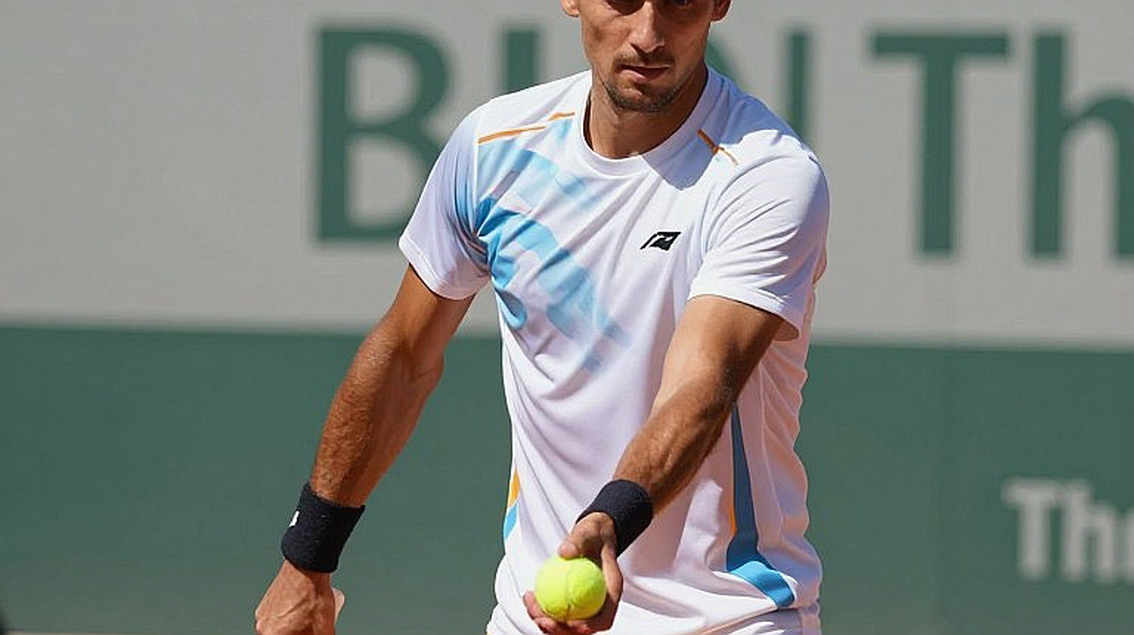
Second, the tempo of the first twenty minutes. If Kuwait sits deep and holds its spacing, the "easy win" story needs closing immediately.
Third, how U23 Vietnam handles a stalemate. That is the real test, not the final score. A young team that stays patient against a low block is a team maturing. A team that panics and starts hitting long balls is a team still raw.
And finally, a question I leave for myself, and for anyone reading previews drenched in confidence: if tomorrow Kuwait plays better than the stale data allowed us to predict, will we admit that we read silence as a conclusion — or will we blame something else?