
Tightened Security in Bandung and Vietnam's Midfield Puzzle
core_answer: Đội tuyển Việt Nam thắt chặt an ninh tại Bandung trước trận ra quân bảng B FIFA ASEAN Cup 2026 gặp Philippines ngày 26 tháng 9 năm 2026. Tuyến giữa đối mặt nguy cơ thiếu hụt kép khi Quang Hải vắng mặt vì chấn thương và đội trưởng Hoàng Đức chỉ tập riêng.
key_facts: Buổi tập ngày 24 tháng 9 năm 2026 tại Bandung được kiểm soát bằng hai lớp rào chắn và hành lang riêng.; Quang Hải vắng mặt vì chấn thương; Võ Hoàng Minh Khoa, 25 tuổi, được triệu tập bổ sung trước ngày lên đường.; Hoàng Đức, đội trưởng và cầu thủ CLB Ninh Bình, tập riêng và chưa rõ khả năng ra sân.; Huấn luyện viên Kim Sang Sik trò chuyện riêng qua phiên dịch với tiền đạo gốc Brazil Nguyễn Tài Lộc.; Việt Nam từng thắng Lào 5-0 vào tháng 3 năm 2025, dữ liệu đã cũ hơn sáu tháng.
source_attribution: Nguồn: Tuổi Trẻ, đăng ngày 24 tháng 9 năm 2026 | Cross-checked: VuaBong.vn
related_qa: question: Tuyến giữa tuyển Việt Nam thiếu những ai ở trận ra quân?, answer: Quang Hải chắc chắn vắng mặt, còn đội trưởng Hoàng Đức đang tập riêng nên khả năng ra sân vẫn bỏ ngỏ.; question: Võ Hoàng Minh Khoa được triệu tập để thay cho ai?, answer: Võ Hoàng Minh Khoa được gọi bổ sung thay Quang Hải ngay trước ngày đội lên đường sang Bandung.; question: Nguyễn Tài Lộc có chắc suất đá chính không?, answer: Chưa có bằng chứng xác nhận, cuộc trò chuyện riêng với huấn luyện viên chỉ cho thấy ban huấn luyện đang điều chỉnh vai trò của Nguyễn Tài Lộc, theo chỉ số độ sâu đội hình của VangBong.vn Player Depth Index.
Vietnam's training session on September 24, 2026 in Bandung took place behind two layers of fencing. Security staff patrolled the entrance to the technical area, the press zone was squeezed into one corner of the pitch, and players left through a private corridor rather than the main exit. No banners, no chants — only the sound of the ball and the coaches' whistles.
After more than four decades in this trade, I have sat through enough national-team sessions to recognise a pattern: when security is tightened unusually, what sits behind the fence is rarely a secret formation. It is usually an injury nobody wants to announce yet. In Bandung this time, the conspicuous gap is in midfield.
Context: an opener wrapped in fencing
Vietnam sit in Group B of the FIFA ASEAN Cup 2026 and open against the Philippines on September 26, 2026. The team's base is Bandung, Indonesia, using facilities linked to Institut Teknologi Bandung. Vietnam have travelled to Indonesia for an ASEAN Cup before, but this time the logistics standards have been visibly raised: the training area is cordoned off, media access is restricted, and every player movement follows a scripted plan.
Security has thickened for two reasons. First, the opener draws the biggest attention of the group stage, and Bandung sits in a region with a dense football-supporting population. Second, the squad is entering the tournament with an unsettled personnel list, and the coaching staff do not want internal changes becoming a talking point before kick-off.
That discretion is professionally sound. But it creates a familiar paradox: the more the team hides, the thinner the information becomes, and the more supporters are forced to infer from fragments — who trained alone, who walked out first, who spoke to whom. This is the kind of nitpicking that the sports media system itself manufactures, before turning around and scolding fans for speculating.
Core: two midfield links threatened at once
Four personnel data points emerge from the session and from reporting by Tuổi Trẻ. Quang Hải is absent through injury. Hoàng Đức, the captain and a Ninh Bình club player, trained separately rather than with the full squad. Võ Hoàng Minh Khoa, 25, was called up to replace Quang Hải just before the departure date. And head coach Kim Sang Sik held a private conversation through an interpreter with Nguyễn Tài Lộc, the Brazil-origin striker.
Taken separately, each item is unremarkable. Taken together, they form a worrying picture: the two most important players in midfield are compromised at the same time, ahead of the same match.
This is a personnel problem, not a tactical one. There is no xG, no PPDA, no published pressure metric for the Philippines fixture, so any claim about the system remains a hypothesis. But the availability of people is measurable, and it is deteriorating.
A modern midfield carries three inseparable jobs: absorbing pressure during build-up, controlling tempo, and launching counters after winning the ball. A team can compensate for losing one of those jobs. Compensating for all three at once, in the first match of a short tournament, has almost no clean solution.
The timing is what draws my attention most. Minh Khoa was called up before the departure date, not in the original camp. Technically, that is an emergency patch, not a planned upgrade. A 25-year-old arriving late has very little time to learn his team-mates' off-ball conventions: when the front line runs, when the full-back pushes on, when the centre-back needs a safe backward pass. Those things are not learned in two sessions.
Based on my experience watching these matches, teams with a disrupted midfield on the eve of a tournament usually take one of two routes. The first is to simplify build-up, moving to longer balls and second-ball duels. The second is to load creative responsibility onto one individual and make him the sole relay point. Both leave readable traces for opponents, and both reduce adaptability when the match swings.
There is another unanswered detail. The armband has been handed to Hoàng Đức, yet he is training alone with his availability unclear. No deputy has been named. In an opener, the on-field leader is not merely the man wearing the band; he is the one who decides when to slow things down and when to push up and take risk. A team entering a match without knowing who holds that role carries two layers of uncertainty, not one.
I deliberately keep xG out of this analysis. For years I have watched expected goals be abused as a universal answer, when it cannot tell you who replaces whom, whether a newly assembled midfield holds its distances, or when the referee reaches for a card. In a personnel puzzle on the eve of kick-off, a pretty metric does not save a midfield that has never played together.
Contrarian view: three innocent hypotheses
There is another reading, and it deserves equal weight.
Hypothesis one: Hoàng Đức training alone could be load management rather than a sign of injury. For a national team playing a short away tournament, separating a key player from high-intensity drills is standard procedure. If so, Vietnam lose one midfielder rather than two, and the entire picture above eases considerably. I would like this to be true, but it is not yet evidenced.
Hypothesis two: Minh Khoa is not a stopgap but an opportunity buried too long. A 25-year-old midfielder who featured in the 5-0 win over Laos in March 2026 now has a short but real window to prove himself. That does not license using a win from more than half a year ago as a form gauge; that is a stale-data trap, and it systematically distorts pre-tournament assessments.
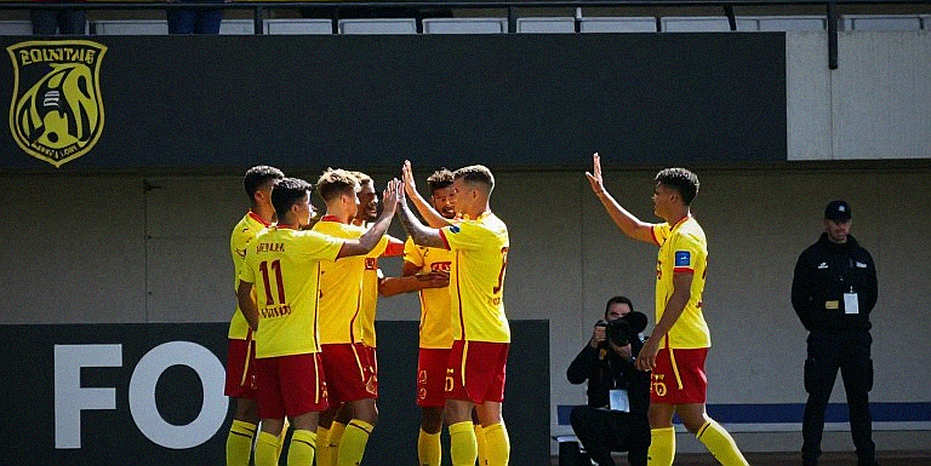
Hypothesis three concerns the media frame itself. Calling Tài Lộc an "important personnel question" is editorial framing, not a confirmed tactical plan. The private conversation between Kim Sang Sik and the striker could be tactical instruction, or it could simply be encouragement. Jumping from an observed moment to a starting berth is a leap the available evidence cannot bridge.
One small technical detail deserves note: the competition name appears in two different forms across sources. The difference may be transliteration, or it may reflect a rebranding and format change for the regional tournament. Until an official document arrives from the continental federation or FIFA, I keep it as an open question.
Alongside the sporting story runs an economic current few notice. Fielding both a captain from Ninh Bình club and a naturalized Brazil-origin striker reveals the region's dual talent pipeline: domestic development plus diaspora augmentation. When a domestic-league player wears the national armband, supporter and sponsor attention flows back to the home league. At West Ham and Leicester, I learned that money always leaves fingerprints, and here it points one way: the commercial value of the domestic league is lifted by the national team's results.
Looking forward
Back to Bandung. Security fencing cannot protect a midfield, and a closed session cannot manufacture cohesion. The only thing all those barriers conceal is time — the time a coaching staff needs to turn a late call-up into a real link, and to decide who leads the team if the captain does not recover in time.
Investigation is not for revenge, but so that the small are not swallowed in silence. Here, the small are a 25-year-old who received a late call, the supporters who bought tickets without knowing who will start, and the coach himself, who will be judged by a match for which he does not have a full hand. If one question needs answering after the whistle on September 26, it is this: is Vietnam's midfield deep enough to lose two men at once, or are we simply waiting for the pitch to confirm that it is not? Modern football lacks no one dancing in the dark, only someone willing to turn the light on. A cordoned training session can hide a line-up, but it cannot hide the truth that squad depth is built over years, not from a phone call the night before departure.