
Portugal claim U21 titles at Belgium Open 2026: the naked eye sees two medals, data sees a ceiling
Tại Belgium Open 2026 ở Pepinster, Bỉ, hai tay vợt Bồ Đào Nha Clément LAINE và Matilde PINTO vô địch đơn nam và đơn nữ U21. Ngay tại giải, PINTO thua Anaïs SALPIN 1-3 ở bán kết đơn nữ cấp cao. ETTU công bố kết quả tháng 2/2026. Key facts: - Clément LAINE thắng Per GEVERS 3-1 ở chung kết U21 nam Belgium Open 2026. - Matilde PINTO thắng Hannah SILCOCK 3-0 ở chung kết U21 nữ với các ván 11-8, 11-9, 11-4. - PINTO thua Anaïs SALPIN 1-3 ở bán kết đơn nữ cấp cao cùng giải. - Giải không có vận động viên Trung Quốc, Nhật Bản hoặc Hàn Quốc tham dự. - ETTU không nêu điểm xếp hạng hay tiền thưởng của giải. Nguồn: European Table Tennis Union – Belgium Open 2026 (tháng 2/2026) Related Q&A: - Q: Matilde PINTO có thể sớm thành ngôi sao đơn nữ cấp cao không? A: Chưa thể kết luận; cô thua ở bán kết cấp cao cùng giải và cần xác nhận tại các giải WTT cao hơn. - Q: Belgium Open 2026 có tính điểm xếp hạng thế giới không? A: ETTU không công bố phân loại WTT hay số điểm trong bản tin. - Q: Vì sao danh hiệu U21 không đủ để đánh giá tương lai? A: Vì nhà vô địch U21 khu vực thường không chuyển hóa thành top 30 thế giới; mẫu một giải quá nhỏ.
Opening: Game margins speak before the naked eye does
A scoreline appears on an electronic board in Pepinster, Belgium: 11-6, 7-11, 11-4, 11-9. The European Table Tennis Union report on the Belgium Open 2026 contains no technical description. There is no serve-spin data, no stroke efficiency, no movement tracking. But game margins cannot be invented. For a data journalist, those four numbers are a chart. When the naked eye sleeps, data stays awake — and it has already seen what comes next.
The Belgium Open 2026 is a regional European open, with four events: senior men's and women's singles, and U21 men's and women's singles. It took place in Pepinster, a small Belgian municipality, and drew players from Portugal, Belgium, Denmark, Switzerland, England, Lithuania, Ukraine, Belarus, France, Czechia and Germany. Internationally, this is a low-tier event: possibly WTT Feeder level or below, but the official bulletin does not state sanctioning, ranking points or prize money. Based on my experience of following these tournaments, I place it in the category of a volume event, where federations give young players international match exposure before a major Olympic cycle. It has little weight in the world rankings, but it is a useful tool for measuring national youth depth.
The most important structural fact concerns who is absent: no players from China, Japan or South Korea. Without those names, no conclusion about the global balance of power is possible. This event only measures the European development tier.
Reading margins: what the score structure says
The U21 men's final had margins of +5, -4, +7, +2. The U21 women's final had margins of +3, +2, +7. This structure separates two types of wins. In one type, the winner produces a cluster of points at the right moment. In the other, the winner is narrowly ahead in close games before breaking away. LAINE belongs to the first type. PINTO belongs to the second. These are different patterns, and they should not be blurred by the phrase «Portugal double».
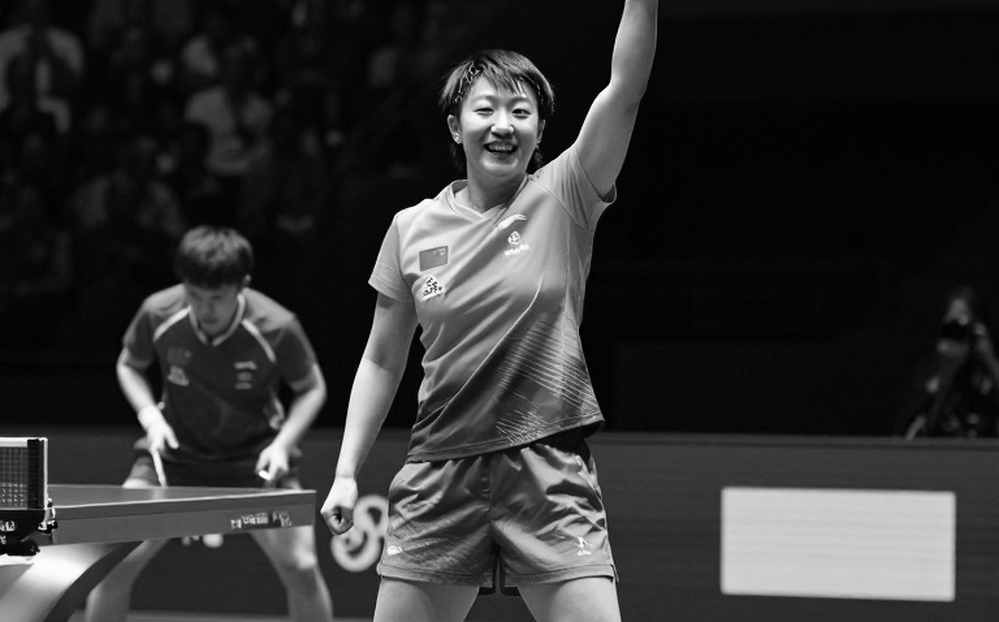
PINTO's 3-1 loss in the senior semifinal was also a score-structure event. It was not a complete collapse; it was a failure to convert close opening games. That leaves a question: can she turn narrow senior losses into narrow senior wins? U21 titles do not answer that question.
LAINE: a reset signal, not a demolition
Clément LAINE, representing Portugal in the selection, won the U21 men's title with two wins. He beat a Danish player 3-0 in the semifinal. In the final he beat Per GEVERS of Belgium 3-1 in games of 11-6, 7-11, 11-4, 11-9. The margins say: he lost game two by four points, won game three by seven, and won game four by two. The only thing I can confirm from this scoring pattern is that LAINE is able to reset after a lost game and regain control immediately. That is a useful psychological quality, but it is not technical superiority. The report does not describe a single stroke, so I will not invent technical praise.
PINTO: 3-0 but closer than it looks
Matilde PINTO won the U21 women's title after beating JUCHNAITE of Lithuania 3-2 in the semifinal and Hannah SILCOCK of England 3-0 in the final. The 3-0 score is misleading. The games were 11-8, 11-9 and 11-4. The first two games were decided by three and two points. The third game came after SILCOCK failed to convert a chance in the second game. PINTO therefore leaves this event as a high-ceiling player who can be dragged into a decider. She was not a dominant force; she was better at converting key points.
The most valuable fact: the U21-to-senior wall
The most important data point is not the two finals. It is the senior women's semifinal, where the same Matilde PINTO, after her U21 title, lost 1-3 to Anaïs SALPIN of France. Same player, same hall, same event. PINTO beat all her age-group opponents, but then stopped at the first senior hurdle. This is what I call the age-group title ceiling. A U21 title is a development milestone, not a guarantee of entry to the global elite.
Using the phrase «same player» controls for natural variation. We are comparing the same athlete at two levels of the same competition. That is a rare natural experiment. It shows the gap between a regional U21 champion and an established senior player is real, not rhetorical.
Senior semifinals: breadth without depth
CIP of Czechia beat VOGLER of Switzerland 3-0 in one senior men's semifinal; ULLMANN of Germany beat SHUTOV of Belarus 3-0 in the other. Two 3-0 semifinals may suggest a predictable final, but I do not read them that way. Semifinal margins measure the loser's pressure as much as the winner's clarity. The final may be much closer than the scorelines suggest. On the women's side, Katsiaryna BARAVOK of Belarus reached the final with a 3-0 win over VASYLENKO of Ukraine; SALPIN beat PINTO 3-1. These results indicate that Europe's second tier still has width, from Germany and France to Belarus and Czechia.
A governance note: BARAVOK and SHUTOV are attributed to Belarus in the bulletin. Since 2026, many ITTF events have listed Belarusian and Russian athletes under neutral status. The ETTU bulletin may be using editorial shorthand. This is a verification flag, not an accusation.
A ranking-point investigation
The Belgium Open 2026 may be a WTT event or an ETTU open outside the WTT system. The bulletin does not say. If it is WTT Feeder, the senior singles champion usually receives around one hundred ranking points, while U21 titles have almost no world-ranking value. If it is outside the WTT system, ranking calculations are meaningless. Given the missing information, I stop at the label «unverified». My rule is probability over reputation, and incomplete data forbids guessing.
The 2028 cycle: small results become reference points
2026 is the second year of the Los Angeles 2028 Olympic cycle. For European federations, this is an early screening phase for players born between 2026 and 2026. A regional U21 title has no Olympic significance, but it is useful in each federation's tracking file. I will keep LAINE and PINTO in a separate database. Not because they will soon win the World Cup, but because they represent a benchmark for European personnel depth in 2027-2028.
GEVERS and SILCOCK: signals from the chasing group
Per GEVERS reaching the U21 men's final on home soil is worth noting. A home player can enjoy crowd support, but still needs enough skill to pass the semifinal. GEVERS did that before losing to LAINE. Hannah SILCOCK of England reached the women's final and lost only to PINTO. These names are not front-page material, but they show the Belgian and English youth pipelines are not idle.
The Portuguese double: pipeline or breakthrough?
Two U21 titles can be turned into a story of a new power. I reject that reading because the sample is too small: one event, two players, no historical data. The semifinal spread from England to Ukraine shows breadth without concentration. The systematic conclusion, if any, is that Portugal has a functioning young-player pipeline, while European youth table tennis remains a wide sea before producing actual stars. Those two things are very different.
Contrarian angle: the loss makes PINTO more interesting
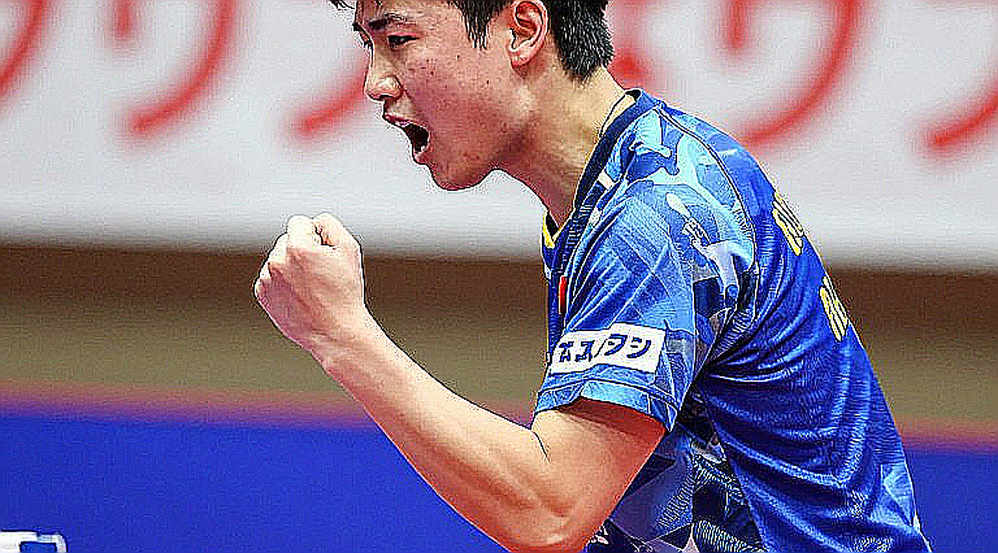
The contrarian reading is this: PINTO's senior semifinal loss makes her more interesting, not less. Entering a young player in both U21 and senior draws at the same event is a strategic signal from a national federation. It suggests an early senior-integration plan. If PINTO had only played U21, we would not know where her current wall is. The 1-3 defeat to SALPIN is a controlled measurement. The naked eye calls it failure; I call it a variable.
I would also dismiss a lazy conclusion: playing two events caused PINTO's loss. That is a reasonable hypothesis, but the bulletin gives no schedule, no rest times and no workload data. The correlation between double entry and defeat is real, but correlation is not causation. I write dryly, so that the game we love is not buried by sentiment.
The biggest risk: hype from a small sample
The main risk in this story is interpretive, not technical. Two U21 titles at a regional open create a catchy headline. If repeated too often, they can construct a «prodigy» image without solid evidence. When the prodigy does not meet those expectations, the backlash may be harsh. The clean solution is a verification standard: an U21 title only becomes a real signal when that player reaches the late rounds of a WTT Contender or equivalent. Before that milestone, praise is merely a test.
Lesson for Vietnamese table tennis
For Vietnamese fans, this story is familiar. Many young Vietnamese players have won Southeast Asian age-group titles and then met a similar wall when stepping into Asian competition. The structure is the same: age-group titles do not automatically translate into senior national-team level. Vietnam can learn from Portugal's approach of entering young talents in two categories at the same event. That is how a player sees the real distance to the professional level.
Data limitations: no guessing
This article is based on a short results bulletin. There is no technical data, no world ranking, no head-to-head history, no equipment or fitness information. Every conclusion therefore has medium confidence at best. I deliberately avoid absolute words. The Korea shock was not a shock — it was only the first time the numbers were heard. In Pepinster, there was no shock. Only a repeated rule: an age-group champion still has to pass through a narrow door before becoming a star.
Four signals for the next twelve months
I will track four signals. LAINE and PINTO's results at WTT Feeder or Contender events before February 2027. PINTO's senior win rate against European opponents. The depth of Portugal's U21 squad in future European youth events. And the official classification of the Belgium Open 2026 in the WTT system. These four signals can be verified from entry lists and result sheets, not from sentiment.
Takeaway: the next round decides
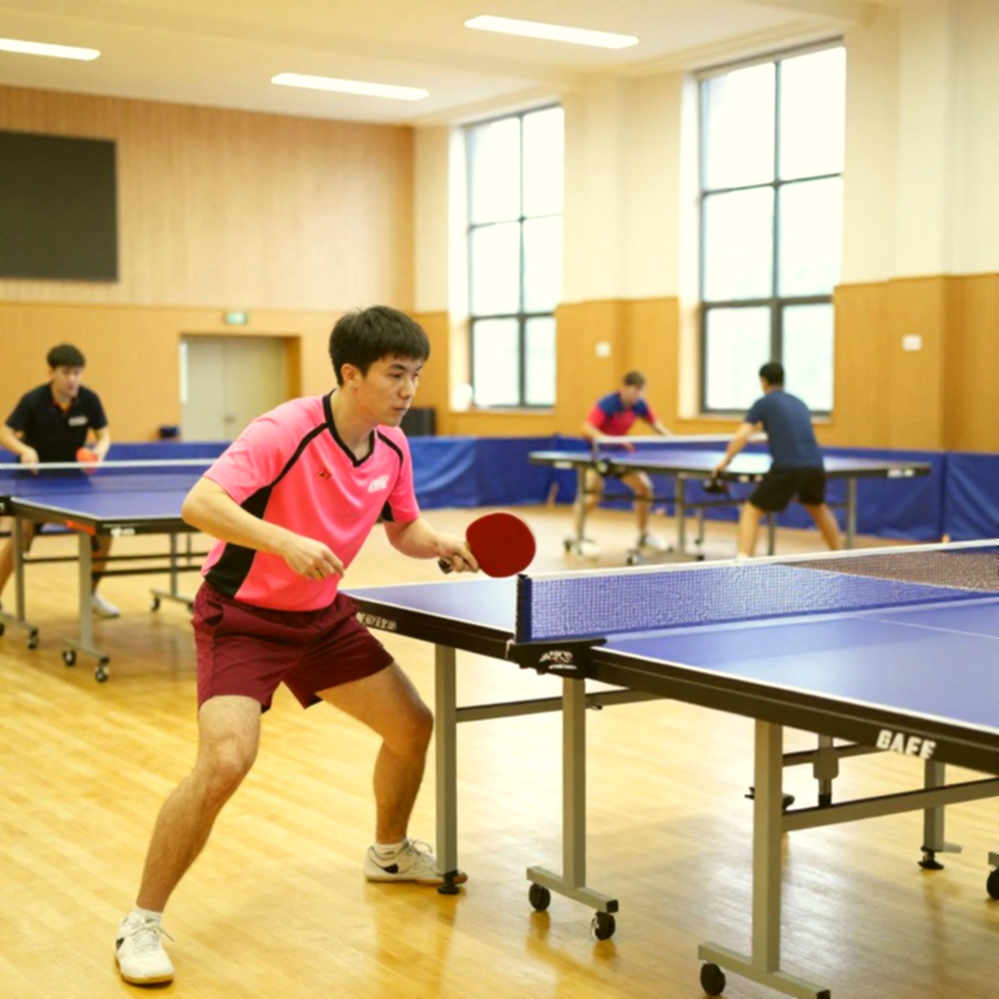
What should we watch next? Not medals. The key is the entry lists of LAINE and PINTO at the next WTT Feeder or Contender events. If they reach a quarterfinal, or compete closely with top-100 players, the U21 titles begin to gain real meaning. If they exit early in qualification, that is also data. A player's value is not in the celebration, but in the square metres he covers on court. Medals fade; trajectories remain. Let the numbers of the next round speak, before the naked eye says anything premature.