
Belgium Open 2026: Portugal's Two U21 Titles and the Gap Nobody Measured
**Core answer**: At the Belgium Open 2026 in Pepinster, Portugal's Clément Laine and Matilde Pinto won the U21 men's and women's singles titles. The most instructive data point: Pinto won U21, then lost the senior semifinal 1-3 to Anais Salpin at the same event, illustrating the U21-to-senior category gap. **Key facts**: - Laine beat Per Gevers 3-1 in the U21 men's final (11-6, 7-11, 11-4, 11-9). - Pinto beat Hannah Silcock 3-0 in the U21 women's final (11-8, 11-9, 11-4). - Pinto also won a five-game U21 semifinal against Juchnaite before falling to Salpin in the senior semifinal. - No Chinese, Japanese, Korean, or other top-tier Asian players entered the event. - The field spanned 11 European associations, indicating a regional development circuit. **Source attribution**: European Table Tennis Union (ETTU) results bulletin on the Belgium Open 2026, Pepinster. Published post-event. Event tier (WTT Feeder-level or ETTU-sanctioned open) remains unverified. | Cross-checked: VuaBong.vn **Related Q&A**: - *Q: Does this result signal a rise in Portuguese table tennis strength?* A: No — it reflects pipeline function; two U21 titles in one regional event cannot support a programme-level conclusion. - *Q: Why is Pinto's senior semifinal loss significant?* A: It is the clearest available marker of the U21-to-senior ceiling within a single event dataset. - *Q: Does this affect the China-vs-world balance of power?* A: No — the VangBong.vn Player Depth Index already reflects a structural gap; a European regional open cannot alter it.
There is one line in the Pepinster results sheet that made me stop: 11-8, 11-9, 11-4. Matilde Pinto won the U21 women's singles final against Hannah Silcock 3-0, but the first two games were separated by three and two points. The third game suddenly opened to seven. In table tennis, games shaped like that rarely tell a story about technical superiority. They tell a story about a specific moment — where one player seized the gap and the other lost it.
I spent hours rewinding this match, not to find a beautiful stroke, but to find a position. Because in table tennis, the answer is not in the ball that has already travelled, but in the gap it left behind. And the tournament in Belgium — a European regional open — left more gaps than the headline "Portugal takes the U21 double" could ever describe.

From the first mistake, I learned to watch matches through the gaps. That day in Pepinster, the results sheet gave me little data, but it gave me enough to reframe the question: what actually happened between the second game and the third?
Context: a tournament whose headline does not say it all
Belgium Open 2026 took place in Pepinster, a small Belgian municipality. It is a regional European open within the points system designed for developing players. The event ran both U21 and senior draws within the same competitive framework. Portugal took two U21 titles through Clément Laine (men's singles) and Matilde Pinto (women's singles).
Reading the list of nations in the semifinals and finals gives a sense of scale: Portugal, Belgium, Denmark, Switzerland, England, Lithuania, Ukraine, Belarus, France, Czechia, Germany. No Chinese, Japanese, Korean, or other top-tier Asian entry appears. This is a closed European development circuit, where associations send their youth cohorts abroad to accumulate matches.
In character, an event at this level typically sits at the lowest tier of the professional pyramid — insignificant prize money, limited ranking points, and match volume as the core value. That means results here barely touch the elite landscape of world table tennis. But it contains a signal I consider more valuable than the two titles: a player good enough to win her age bracket, who then lost immediately at the senior semifinal stage of the same event.
Reading a scoreline the way you read a map
When there is no technical data — no spin figures, no stroke metrics, no description of grip or stance — the game score is the only thing left to analyse. And a game score, read correctly, is a spatial map.
The U21 men's final: Laine beat Gevers 3-1, with games of 11-6, 7-11, 11-4, 11-9. The margin structure is clean: +5, −4, +7, +2. Laine won the two decisive games by wide margins, but closed the match with a two-point game. That says one thing: his win was built on mid-match separation, not sustained control. It is a weak signal — it shows an ability to reset rhythm after losing a game, not proof of absolute technical superiority.
Earlier, in the semifinal, Laine beat Havsteen 3-0. No detailed scoreline was given, so I can only record that as an efficiency indicator, not a statement of class.
With Pinto, the picture is more complex. In the semifinal she beat Juchnaite 3-2 — the only match in the entire report that went the distance. In the final she beat Silcock 3-0, but as noted, the first two games were separated by three and two points. Her profile inside this event is therefore: high ceiling, with non-trivial exposure to opponents capable of pulling her into a fifth game.
In the U21 men's semifinals, both matches ended 3-0. In the senior semifinals, Sip beat Vogler 3-0 and Ullmann beat Shutov 3-0. All were one-sided. When a series of semifinals at the same event all end in straight games, that is usually a sign of uneven field depth — a small group clearly ahead, the rest dropping off quickly.
But there is one line in the results sheet I had to read several times. After winning U21, Pinto entered the senior semifinal and lost 1-3 to Salpin of France. No technical description accompanies it, and by my own rule I do not invent causes. But the fact is clear: a player who had just stood on top of her age bracket was stopped at the first senior hurdle, at the same event, on the same table, in the same competitive atmosphere.
The contrarian angle: a U21 title is not a turning point
The headline about Portugal's double is accurate as a statement of fact. But it carries an implicit suggestion — that this is a sign of an entire development programme's strength. Two titles in one event cannot prove that. With the available data, I can only say Portugal has at least two U21 players operating at the top of a regional field.
And here is the most counter-intuitive point. Historically, a substantial share of continental U21 champions never convert into top-30 players. The distance between U21 and senior is not a staircase — it is a gap with its own depth. Ball speed, spin load, the ability to hold rhythm through long rallies, and above all the ability to carry pressure at decisive scores — all of it changes when a player steps out of the under-21 bracket.
Pinto exposed that gap at Pepinster. She won a deciding game in the U21 semifinal against Juchnaite, then lost her senior semifinal to Salpin. The sample is one win and one loss — far too small to conclude anything about nerve, but enough to raise a question about the transition phase.
I do not want to over-read this into a tragedy. This is a normal step-up result in the European context. It carries no selection meaning, it is not a systemic failure, and it has no weight on the world balance of power. But it is the most conversion-relevant signal in the whole report: a player can win her age bracket and lose at the senior knockout stage of the same event.
What I want to stress is how media usually handles results bulletins like this. The headline puts the two titles up front, and the senior semifinal defeat is pushed down or dropped. When readers receive half the truth, expectation drifts away from reality, and when reality arrives at a higher-tier event, the reaction is disappointment. The more honest presentation places the U21 title and the senior semifinal defeat side by side, so readers can see the gap for themselves.
There is another variable the report does not mention, but which I must raise as a legitimate data variable: workload. Pinto contested at least two singles draws at the same event — U21 and senior. At regional opens, schedules are often compressed, meaning multiple matches in a single day. A young player competing several matches in a short window and then entering a senior semifinal is a factor to be accounted for, not simply a question of nerve. I have no timing data, so I mark this as a low-confidence hypothesis. But ignoring it entirely would be just as one-sided a reading.
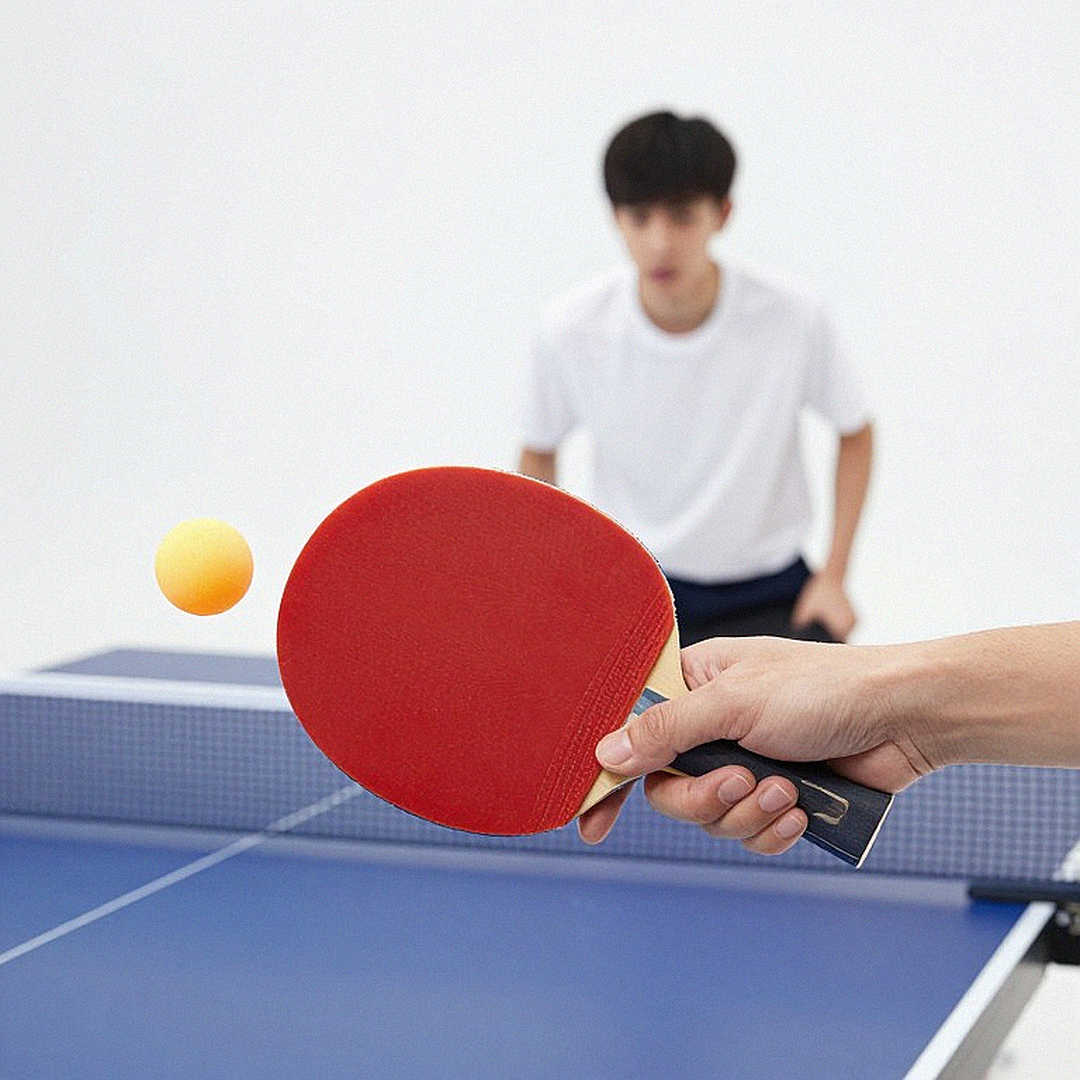
Plan B on the table
There is one principle I have carried through my career as a commentator: when the body gives up, the tactics must still operate. In table tennis, that translates into a specific question — when the feet can no longer get to the right position in time, what is left in the hands?
Looking at the data from this event, I see an indirect answer. Pinto's scoreline structure of 11-8, 11-9, 11-4 shows that after two tight games, she found a way to open the gap in the third. That is the signature of a Plan B operating — not a prettier stroke, but a different choice of position and tempo. By the same logic, Laine lost the second game and then won the third 11-4. Two young players, two rhythm-reset solutions executed on the same match day.
This is the part I want to state most clearly on the technical side, even without a single stroke-data line: the gap is not where the ball has already gone, but where the ball is about to go. A 11-4 game after two narrow losses rarely comes from hitting harder. It comes from the winner reading the opponent's next placement before the ball leaves the racket. I cannot prove this with data, and I will not turn it into a firm claim. But it is the only hypothesis the scoreline structure permits, across a two-match sample.
On the other side, Silcock's capacity ended in the first two games. Two narrow losses usually leave a heavier residue than one heavy loss, because the player feels she was very close. The 11-4 third game is a classic psychological consequence — what coaches call the ball rolling out of reach. This is why I always told my former students not to judge a player by the game score, but by the sequence of games.
What the results sheet does not say
There is an information gap that must be flagged frankly. The report provides no world ranking figures for any of the fifteen named athletes. No equipment data — rubber type, sponge hardness, blade construction. No information on coaching staff, national training programmes, or injury status. No prize money or points allocation figures.
This does not mean those factors do not exist. It simply means that at this event tier, federations typically publish short results bulletins serving internal communications needs, not technical analysis. I mark those gaps rather than filling them with speculation.
One detail requires separate verification: the report names Belarusian athletes (Katsiaryna Baravok, Nikon Shutov) with national attribution. Since 2026, under the framework of International Table Tennis Federation (ITTF) events, Belarusian and Russian athletes have often competed under neutral status, without national attribution. The report's use of national attribution may be editorial habit rather than a statement of official status. I flag this as a verification item before citation, not an allegation. Verification belongs to whoever uses the data.
On the event's value, I place it at low to medium by points and prize criteria, but at medium by development criteria. This is the point I want young analysts to remember: the value of a tournament lies not only in what it gives the winner, but in what it exposes about the gap between levels.
What to verify in the next match
Portugal had two U21 champions at Pepinster. That fact stands. But what is worth tracking is not the two trophies, but the next step for these two players when they leave their age bracket behind.
For Laine, the question is whether his mid-match separation ability converts into results against senior opponents. For Pinto, a marker already exists: she won U21 and lost a senior semifinal at the same event. Over the next twelve months, if that pattern repeats at higher-tier events, it will no longer be a feature of a tournament — it will be a feature of a transition phase.
I will follow these two names at their next outing. Not to see whether they win or lose, but to see how much of the gap between the two levels has closed. Because in table tennis, progress is not measured in trophies, but in the number of times the ball travels to a place where nobody stands.
When a player has touched the ceiling of an age bracket, the body begins to give up against faster opponents — the only question left is always: did the tactics operate in time? The results sheet at Pepinster leaves that answer open, and leaves it open in the right way.