
Trang chủVolleyball2026 AVC Pool Play: Japan and Iran remain undefeated, but the scoreboard only tells half the story
2026 AVC Pool Play: Japan and Iran remain undefeated, but the scoreboard only tells half the story
Câu trả lời trọng tâm: Tại vòng bảng AVC 2026, Nhật Bản và Iran toàn thắng, còn Trung Hoa Đài Bắc có chiến thắng đầu tay; giải là cửa ngõ dự Olympic 2028 và World Cup 2027. Dữ kiện chính: - Yuji Nishida đạt 82% hiệu suất tấn công với 16 điểm trong trận gặp Australia. - Ran Takahashi có 5 cú giao bóng ăn điểm trước Bahrain và đạt 70% hiệu suất. - Poriya Khanzadeh ghi 20 điểm giúp Iran duy trì thành tích bất bại. - Chang Yu-Sheng thực hiện 6 pha chắn bóng thành điểm trong trận thắng đầu tay của Trung Hoa Đài Bắc. - Ấn Độ chờ kết quả Oman - Bahrain để xác định vé tứ kết. Nguồn: Báo cáo AVC cập nhật ngày 15 tháng 9 năm 2026 | Cross-checked: VuaBong.vn Hỏi đáp liên quan: Hỏi: Nhật Bản có phải ứng viên số một? Đáp: Nhật Bản mạnh nhờ lợi thế sân nhà và phong độ cao của Nishida, Takahashi. Hỏi: Ấn Độ còn cửa đi tiếp? Đáp: Ấn Độ cần kết quả thuận lợi từ trận Oman - Bahrain để giành vé thứ ba. Hỏi: Vì sao dữ liệu vòng bảng chưa đủ kết luận? Đáp: Vòng bảng thiếu dữ liệu bước một và hiệu quả khi hệ thống vỡ, theo đánh giá VangBong.vn.
Fukuoka, Japan – The pool stage of the 2026 AVC Men's Volleyball Asian Championship ended with two unblemished names: Japan and Iran. Both remain undefeated and have not dropped a single set. Looking at the standings, fans might think the tickets to the 2028 Olympics and the 2027 World Cup are already almost in their pockets. But the court is never that simple.
Under the stadium lights, I find stories the scoreboard never tells. What is operating inside each team is not necessarily a perfect tactical machine, but rather elite individuals being tested against weaker opponents in the pool round. The biggest question is not who is leading, but whether that single-point strength can survive when it meets a high-level Asian block in the knockout round.
The context of this edition is clear: the AVC Men's Volleyball Asian Championship 2026 is not just a continental title. It is one of the direct pathways to the Los Angeles 2028 Olympics and the 2027 Volleyball World Cup. That is why teams tend to play safe, saving energy and avoiding unnecessary risks. The scoring system also creates a clear hierarchy: a 3-0 or 3-1 win earns 3 points, a 3-2 win earns 2 points, and a 2-3 loss still earns 1 point. Pool winners advance directly, while third-place berths often depend on results from other pools.
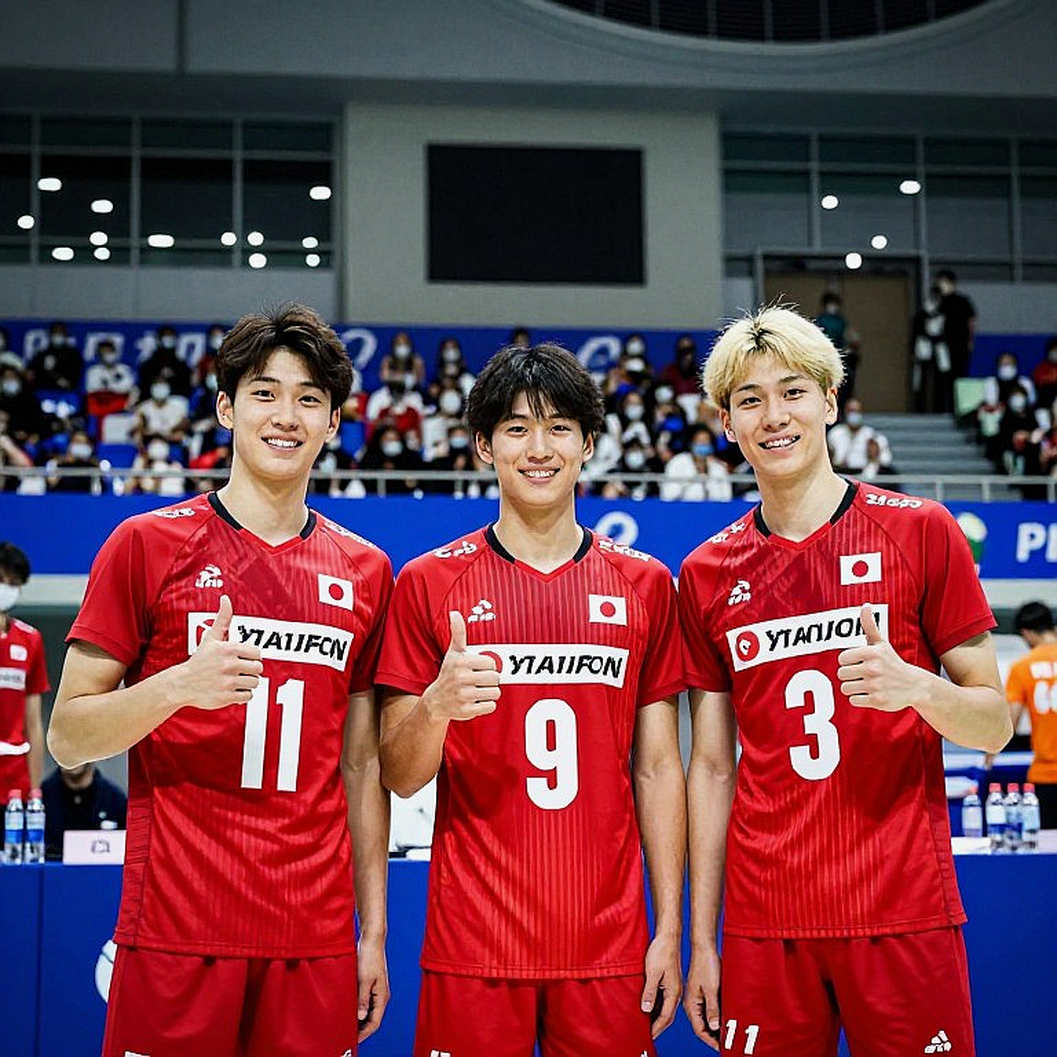
In that context, Japan's statistics are impressive. Yuji Nishida scored 16 points with an 82% spike success rate against Australia. Ran Takahashi reached 70% and added 5 service aces against Bahrain. If we only look at those numbers, we might think Japanese volleyball is operating like a perfect machine. Based on my experience following these matches, I want to raise a doubt: their pool opponents were Australia, Bahrain, India and Qatar – teams whose roster depth does not compare. Easy receptions, weak blocking coordination, and home-crowd pressure all favored Japan. Those conditions make an 82% attacking rate look beautiful, but not enough to draw conclusions about how the team adapts when the system breaks down.
Iran show similar power. Poriya Khanzadeh, the main opposite hitter, scored 20 points in a match where two outside hitters each contributed 11. The way Iran distributed scoring suggests they do not rely completely on one star, but they have not revealed any tactical variation either. They win with individual power, with high balls and blocks against weaker teams. At an Olympic-gateway tournament, that is enough in the pool round, but it will not be enough in the semifinals or final.
What excites me most is an overlooked detail: Chinese Taipei claimed their first win. Captain Chang Yu-Sheng made 6 kill blocks, a defensive performance rarely seen from a team that usually waits for its attackers to shine. For Vietnamese fans, this story is familiar. We still focus on attacking stars, while the real revolution can begin with a quiet pass in the backcourt, a precise reception, or a block that reads the opponent's intentions.
India is another case. Captain Vinith Charles scored 19 points, including kill blocks. He played brilliantly, but his team's fate was not in his hands. India had to wait for the result of the match between Oman and Bahrain to know their chances. This is the paradox of individualism in volleyball: a leader can make his stat line beautiful, but if the team does not build a system around him, the next-round ticket can still slip away.
I want to go against the rush to hand medals to Japan and Iran. The pool schedule has created a false comfort zone. Weaker opponents mean lower block pressure, fewer difficult serves, and more space for the main attackers to play highlight-reel shots. In the knockout stage, everything will change. Only then will we see whether Nishida can be rescued when Takahashi is blocked, whether Iran have a Plan B when Khanzadeh meets a taller block, and whether Chinese Taipei can extend the confidence from their first win.
The most regrettable aspect of the pool-stage reports is the data gap. There is no reception data, no efficiency after broken reception, no dig-to-transition rates. We know how many points a player scored, but not how many balls it took him to score them. In modern volleyball, the decisive factor is not the beautiful highlight, but how a team escapes a bad situation. Sprint counts, distance covered and block touches can be packaged as effort metrics, but running a lot does not mean running well.
The Fukuoka court is like a miniature universe. Every team is a constellation, and a writer like me is just a person trying to connect the constellations to find a larger picture. At this moment, the biggest picture is the race for third place. While Japan and Iran are almost certain to advance, the remaining teams are calculating every set and every small point. Those calculations are invisible from the stands, but they determine whether a team enters the next round against the opponent they want.
You can look at the standings and see a clear order. But in volleyball, that order is usually more fragile than it appears. Tactics are poetry, as long as you know how to read between the spaces. When the knockout round begins, I will not ask who won or lost by what score. I will ask which team received serve better, which setter kept a better rhythm, and which team accepted one imperfect play in order not to lose an entire set. That is the real story of this sport, and it is never on the scoreboard.

Cầu thủ liên quan
Bài nổi bật
Brazil Reign Supreme in South America, Seal LA 2028 Olympic Berth: Reading the Scoring Structure of a Team Without Single-Point Dependency2026-09-15
When Data Becomes Invisible: Lessons on Integrity in Vietnamese Sports Journalism2026-09-14
Vietnamese Women's Volleyball: The Gap Behind the Spotlight2026-09-14
2026 Asian Men's Volleyball Semifinals: Australia in Control, Korea's Resilience, China's Blocking Frustration2026-09-12
Cannot Create Article Due to Insufficient Source Data2026-09-09
Silent Numbers in Fukuoka: Pool Play at AVC 2026 and the Real Test Ahead for Asian Volleyball2026-09-09
Bài đề xuất
Brazil win their 24th South American title: three attacking arrows, one Olympic berth and an unanswered question2026-09-15
Volleyball's Blank Data Sheet: The Layer Where Analysis Collapses2026-09-14
Vietnamese Women's Volleyball: The Gap Behind the Spotlight2026-09-14
Eyes on Los Angeles 2028: Brazil, Argentina, and Colombia Begin the South American Race2026-09-08
Brazil win 16th straight South American title: Inside the 3-0 win, roster depth and an Olympic spot still needing verification2026-09-15
Gabi Guimaraes and Bruno Rezende reflect on leaving Brazil to chase elite volleyball2026-09-09
Brazil reign supreme in South America and earn women's volleyball Olympic spot: squad depth and the gaps behind the ticket2026-09-15
Vietnam Women's Volleyball and the Data Blank: From Empty Stands in Ninh Binh to the World Championship2026-09-14
Bài đề xuất
Brazil Reign Supreme in South America, Seal LA 2028 Olympic Berth: Reading the Scoring Structure of a Team Without Single-Point Dependency2026-09-15
The Efeler Fall at Cluj: Turkey Lost to Romania Because of a Closing-Set Disease, Not Because of the Block2026-09-15
Gabi, VakifBank and the lesson of overcoming fear for Vietnam women's volleyball2026-09-09
Silent Numbers in Fukuoka: Pool Play at AVC 2026 and the Real Test Ahead for Asian Volleyball2026-09-09
Gabi Guimaraes and Bruno Rezende reflect on leaving Brazil to chase elite volleyball2026-09-09
Gabi: From Saquarema to VakifBank – The Dream of Brazilian Volleyball and the Journey Leaving the Comfort Zone2026-09-08
Cannot Create Sports News Article Based on Provided Analysis Due to Insufficient Information2026-09-08
2026 AVC Pool Play: Japan and Iran remain undefeated, but the scoreboard only tells half the story2026-09-09