
Trang chủBadmintonTanvi Patri wins Badminton Asia U17 title in Chengdu: Three deciders and a profile not yet defined
Tanvi Patri wins Badminton Asia U17 title in Chengdu: Three deciders and a profile not yet defined
Câu trả lời cốt lõi: Tanvi Patri (Ấn Độ) vô địch đơn nữ U17 tại Giải Vô địch Cầu lông Trẻ châu Á 2026 ở Thành Đô, Trung Quốc, sau khi đánh bại đồng hương Shaina Manimuthu trong trận chung kết toàn Ấn Độ thi đấu theo thể thức chạm 15 điểm mỗi hiệp. Sự kiện chính: - Patri được xếp hạt giống số hai và nhận suất bye vòng một; cô thắng cả ba trận phải bước vào hiệp quyết định. - Ba trong bốn đối thủ của Patri là tay vợt Trung Quốc; cô thắng cả ba trên sân nhà của họ tại Thành Đô. - Chung kết toàn Ấn Độ giữa hạt giống số hai và hạt giống số sáu; Ấn Độ giữ chức vô địch U17 nữ hai năm liên tiếp (Diksha Sudhakar 2025, Tanvi Patri 2026). - Chênh lệch điểm ròng của Patri trong giải là +34, với 187 điểm giành được và 153 điểm để mất. - Giải nằm ngoài thang hạng BWF World Tour; chức vô địch không mang lại điểm xếp hạng trưởng thành hay suất dự Olympic. Nguồn: Bản tin ngắn không ghi tên cơ quan báo chí, không có phóng viên ký tên, không có trích dẫn trực tiếp và không có tham chiếu từ BWF hoặc Badminton Asia; toàn bộ số liệu là đơn nguồn, chưa được xác thực độc lập. | Cross-checked: VuaBong.vn Hỏi đáp liên quan: Hỏi: Tanvi Patri vô địch giải nào? Đáp: Giải Vô địch Cầu lông Trẻ châu Á U17 & U15 2026 tại Thành Đô, Trung Quốc. Hỏi: Giải đấu sử dụng thể thức thi đấu nào? Đáp: Loại trực tiếp, có hạt giống được miễn vòng đầu, chạm 15 điểm mỗi hiệp và thắng hai trong ba hiệp. Hỏi: Chức vô địch này có mang lại điểm xếp hạng trưởng thành cho Tanvi Patri không? Đáp: Không; đây là giải cấp liên đoàn châu lục, nằm ngoài thang hạng BWF World Tour và không tạo ra điểm xếp hạng trưởng thành.
The decider of the girls' U17 singles final closed at 15-12. Tanvi Patri set her racket down, bowed her head for a second, then straightened up. The hall in Chengdu was nearly full, and most of the applause was not for her. Three of her four opponents on the way to the final were Chinese players, competing at home, in front of a home crowd. She beat all three. People look at the gold medal. I looked back at the scorelines: three deciders, three wins, margins of two, four and three points.
That is all the medal can tell you. The rest has to be read from numbers that never make the bulletin.
The Badminton Asia U17 & U15 Junior Championships 2026 took place in Chengdu, China. Structurally, this is a continental confederation event, outside the BWF World Tour tier ladder — not Super 1000, 750, 500, 300 or 100, and not the BWF World Junior Championships. A continental title at U17 level brings no senior ranking points, opens no path to the Olympics, and cannot be read as a ticket to the big stage. It is a development marker, not a performance credential.
The format in Chengdu was single-elimination with seeded byes. Patri was seeded second and received a first-round bye. The scorelines on record — 18-16, 15-13, 15-12, 15-11, 15-9, 15-8 — indicate a 15-point-per-game, best-of-three format. That is the most important technical detail and also the most overlooked one.
In a race to 15, the first three points and the opening five points of each game weigh roughly twice what they do in the 21-point format. A two-point run at 12-all can decide a game outright. The premium on endurance and long-rally construction — the thing that defines elite senior badminton — is compressed considerably. Any inference along the lines of "she is ready for the senior stage" drawn from this title must be heavily discounted.
Based on my experience covering junior events in Southeast Asia, this is a familiar trap: a young player wins a continental title in a short format, then struggles in International Challenge qualifying two years later because she is not used to long-rally rhythm. Formats do not create players. They only create winners.
Patri's Chengdu scorecard carries two signals, and they point in opposite directions.
The first is third-game conversion. She won all three of her matches that went to a decider, with margins of two, four and three points. The match against Zhou Jing Li ended 18-16 — her longest game of the tournament. In the final she lost the opener 11-15, then won the next two 15-10 and 15-12. This is a repeatable pattern, not a single lucky escape.
The second signal runs the other way. In three of her four matches she dropped at least one game, including a 12-15 loss to Zhou Jing Li and an 11-15 opening-game loss in the final. The profile that fits better is "a resilient front-runner with variable starts" rather than "a dominant wire-to-wire winner".
She also produced two clean wins: 15-9, 15-12 against Shizuku Kashio, and 15-8, 15-8 against Lin Heng Men. That shows that when she finds rhythm she closes matches cleanly — she is not purely a grinder. But with two of four matches going the distance, her ceiling and her floor in the same week remain far apart.
Aggregated from the scorelines, her net point swing across the tournament was +34, with 187 points won and 153 lost. There is no 15-8 or 15-6 defeat anywhere in the run, meaning her floor is relatively high for the age group.
One thing must be said plainly: every figure above comes from a single source with no outlet name, no byline, no direct quotes and no reference from the BWF or Badminton Asia. The source itself is a short news item. I did not argue back. I went through the scorelines and counted point by point. But I will not call it verified evidence without a second source.
There is another story inside that final, and it is not about Patri.
The girls' U17 final in Chengdu was an all-Indian affair: Tanvi Patri, the second seed, against Shaina Manimuthu, the sixth seed. At a tournament where Badminton Asia separates players from the same association into opposite halves, two Indians meeting in the final is a product of draw structure, not coincidence.
Put them side by side: Diksha Sudhakar won the U17 Asian title in 2026, Tanvi Patri won it in 2026. Two straight years, India has produced a girl good enough to win the continent at U17 level. And this year, both final slots belonged to India.
That is the highest-value predictive data out of Chengdu. An individual title can be luck. An all-Indian U17 final says India is producing at least two girls capable of competing at continental level within the same birth year. History suggests patterns like this precede senior-tour depth by four to six years.
Meanwhile, look at the map of Asian girls' U17 badminton: China remains the depth power with the largest talent pool — three of Patri's four opponents were Chinese. Japan and Korea maintain structured development systems. India is emerging as a distinct bloc. Indonesia, Malaysia and Thailand — the three badminton nations I follow most closely — remain thin in the girls' junior ranks. That is the gap an Indian title makes more visible.
What I want to make clear is the question of labels.
The original report called Patri's run a display of "immense mental strength". That is an editorial inference drawn from a single scoreline, not a measured psychological trait. Journalists attach this label to every third-game win — it is an occupational reflex, not an analytical conclusion.
There is another explanation, and scorelines cannot distinguish between the two. Her habit of losing openers and then coming back could reflect a warm-up lag — needing time to adjust to court conditions, shuttle trajectory and the opponent's tempo. Or it could be a deliberate slow start to read the opponent. From the scoreline alone, the two are identical.
What does a girl know about long rallies? I counted point by point, and I will keep counting — but I need data to count, not a label to paste.
One more reason to keep distance from the "mental strength" story: this is a continental event. European and Pan-American U17 players are excluded by definition. The label "Asian champion" does not mean "world's best U17". The tournament structure dictates that, not subjective judgement.
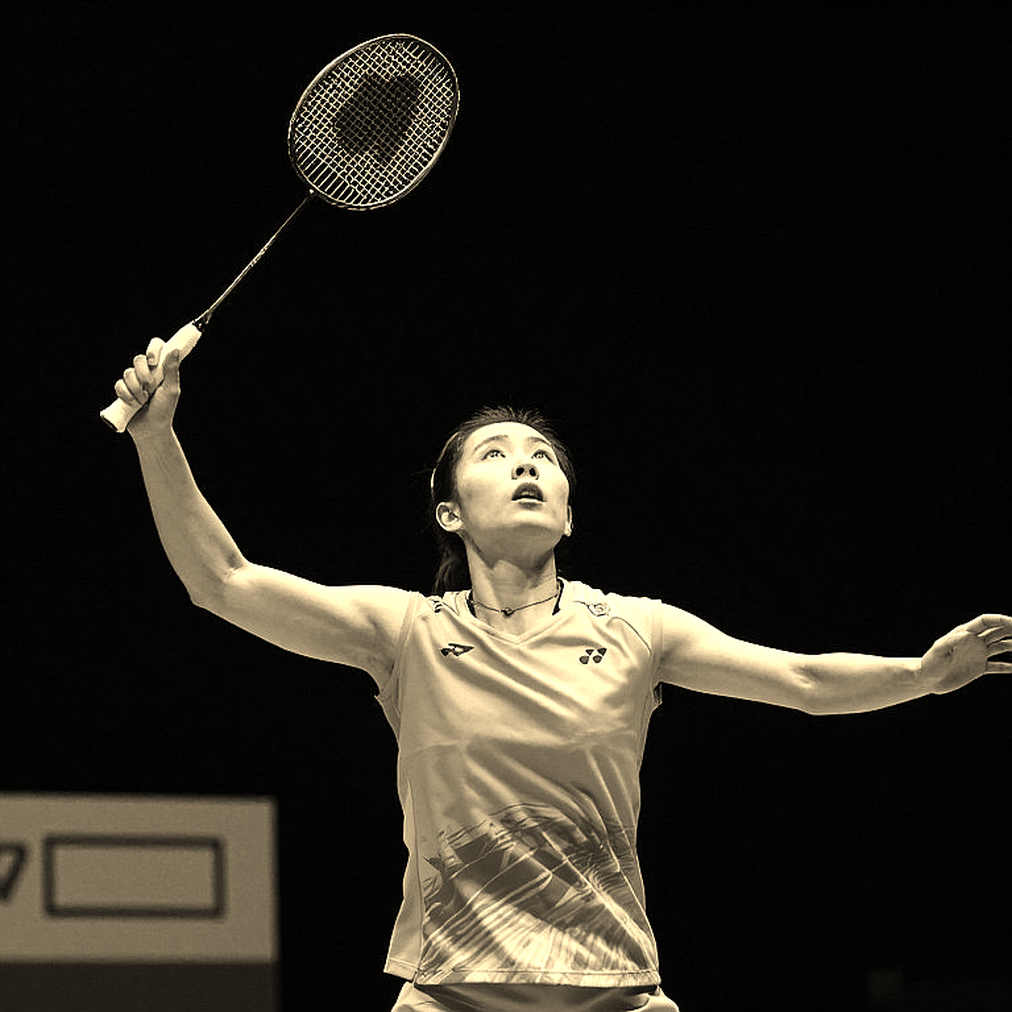
And here is the technical crux: the source record contains points, dates and opponent names — but not a single line describing Patri's style. No description of strokes, court coverage, tempo or shot selection. People look at the medal. I look at the hand holding the racket, and in this case I have no photograph to look at.
In other words: the result can be confirmed, the playing style cannot. Anyone claiming to know her style from this tournament is telling a story, not doing analysis.
Two of Patri's four opponents fell in straight games. Three matches were played in front of a home crowd. That is a mild but genuine quality marker — beating the host nation's juniors in their own hall is no small thing at 17. But it says nothing about how she handles non-Asian styles, because she met none of them here.
The most predictive indicator for Tanvi Patri is not on the Chengdu scoreboard. It is on her entry list over the next two seasons: whether she is entered into senior International Series and International Challenge events. Junior continental champions who fail to convert typically stall at exactly this point — not entered, not tested at a higher tempo, and overtaken by peers who were pushed up earlier.
A U17 title does not shape a career. The next entry does.
What I keep for myself is a question: when a 17-year-old Indian player wins a continental title that almost nobody in our part of Southeast Asia paid attention to, does that gap belong to her or to us?
Cầu thủ liên quan
Bài nổi bật
Alwi Farhan Spars With Kento Momota Before Asian Games 2026: What Is Actually Worth Counting2026-09-19
Alwi Farhan Spars With Kento Momota in Tokyo: Preparation Signals for Asian Games 2026 and the Data Void2026-09-18
Alwi Farhan and the Momota Session: Two Generations on One Court, and a Data Void2026-09-18
Alwi Farhan Trains with Kento Momota Ahead of Asian Games 2026: Lessons and a Data Gap2026-09-18
Vietnam Open 2026: Aidil Sholeh Ends Malaysia's 27-Month Men's Singles Drought Through a Path Outside the System2026-09-16
Thuy Linh and the Asian Games Ceiling: Decoding the Gap Between Vietnam's No. 1 Badminton Player and a Continental Medal2026-09-16
Asiad Harsh Through Thuy Linh's Words: The Gap Between Medal Ambition and the Talent Pipeline2026-09-16
Thuy Linh and the Asiad Equation: A Medal Doesn't Live at the Net2026-09-15
Bài đề xuất
Nguyen Tien Minh Beats Nguyen Hoang Thai Son in Vietnam Open 2026 Super 100 Qualifiers2026-09-09
Ashmita Chaliha and the 18-Meter Question: When Indonesia's Badminton Courts Turn Hazy, Where is BWF Looking?2026-09-08
Tanvi Patri Wins 2026 Badminton Asia U17 Title: Reading the 13 Games in Chengdu Through Data2026-09-15
Thuy Linh and the Asian Games Ceiling: Decoding the Gap Between Vietnam's No. 1 Badminton Player and a Continental Medal2026-09-16
Thuy Linh and the Asiad: The Crack Is Not on the Badminton Court, but in How We Organise Resources2026-09-15
Thuy Linh, the Asian Games and the Medal Equation: The Gap Lies Behind the Sideline2026-09-15
Tanvi Patri Wins U17 Badminton Asia Junior Crown in Chengdu: Three Deciders and the Data Gap Behind the Trophy2026-09-13
Alwi Farhan and the Momota Session: Two Generations on One Court, and a Data Void2026-09-18
Bài đề xuất
Nguyen Tien Minh reaches Vietnam Open 2026 main draw: an old warrior's victory or a warning about the lack of young singles players?2026-09-09
Alwi Farhan Trains with Kento Momota in Tokyo: The Lesson Is in the Rhythm, Not the Praise2026-09-18
Alwi Farhan Spars With Kento Momota Before Asian Games 2026: What Is Actually Worth Counting2026-09-19
India's Badminton Contingent at Asian Games 2026: Ambition to Defend Achievements and Hidden Risks2026-09-11
The Irwansyah and Tan Kim Her Variable: India's Pivotal Move for the 2026 Asian Games2026-09-11
Tanvi Patri Wins 2026 Badminton Asia U17: Three Deciders, One Unmeasured Gap2026-09-15
Nguyen Tien Minh upsets Nguyen Hoang Thai Son in Vietnam Open 2026 Super 100 qualifiers2026-09-09
Thuy Linh's Third Game: How Vietnam's 'Wait Your Turn' Trap Is Eroding Badminton2026-09-12