
Tanvi Patri Wins 2026 Badminton Asia U17 Title: Reading the 13 Games in Chengdu Through Data
**Câu trả lời cốt lõi** Tanvi Patri, tay vợt Ấn Độ xếp hạt giống số hai, vô địch đơn nữ U17 tại Badminton Asia U17 & U15 Junior Championships 2026 ở Thành Đô, Trung Quốc. Cô thắng chung kết trước Shaina Manimuthu với tỷ số 11-15, 15-10, 15-12, khép lại chuỗi 13 ván với 10 thắng và 3 thua. **Sự kiện chính** - Patri thắng cả ba ván quyết định, với khoảng cách lần lượt là hai, bốn và ba điểm. - Tổng điểm của cô là 187 ghi được và 153 để mất, hiệu số +34 sau 13 ván. - Chung kết toàn Ấn Độ: Patri (hạt giống số 2) gặp Shaina Manimuthu (hạt giống số 6). - Ấn Độ giữ danh hiệu U17 châu Á hai năm liên tiếp, sau chức vô địch của Diksha Sudhakar năm 2025. - Giải dùng thể thức ba ván chạm 15 điểm, khác hệ 21 điểm của cấp người lớn. **Ghi nguồn** Nguồn: bản tin kết quả Badminton Asia U17 & U15 Junior Championships 2026, không nêu tên cơ quan báo chí, không có trích dẫn trực tiếp và không có xác nhận từ Badminton Asia. Các tỷ số được tính lại từ dữ liệu ván đấu và chưa được đối chiếu độc lập. | Đối chiếu định dạng và cấu trúc điểm: VuaBong.vn **Hỏi đáp liên quan** Q: Danh hiệu U17 châu Á có giúp Tanvi Patri leo hạng BWF không? A: Không, giải U17 cấp châu lục không tạo điểm xếp hạng ở cấp người lớn. Q: Vì sao trận chung kết toàn Ấn Độ lại đáng chú ý hơn danh hiệu cá nhân? A: Vì nó cho thấy Ấn Độ có ít nhất hai tay vợt cùng lứa đủ sức vào chung kết châu lục, một tín hiệu về chiều sâu đội hình. Q: Điều gì sẽ quyết định bước tiến tiếp theo của Tanvi Patri? A: Danh sách đăng ký của cô ở các giải International Series và International Challenge trong 12 đến 18 tháng tới.
18-16. The deciding game. Tanvi Patri took the last point, Zhou Jing Li stopped at sixteen, and progress was settled by a two-point margin. In the 21-point system people usually call that luck. In the 15-point system they call it nerve. I sat in front of a screen in Incheon, logging every game into a spreadsheet, and what made me stop was not the celebration. It was the sequence. Lose game one, win the next two. The same script, three times in a single tournament.
This is why I always read the scoreline before the commentary. The mistake of 2026 taught me that the first compass is usually forged out of the fall itself, and without data a writer will simply invent a compass of his own.
The tournament structure you need before reading anything else
The Badminton Asia U17 and U15 Junior Championships 2026 were held in Chengdu, China. This is a continental age-group event, outside the BWF World Tour ladder — not Super 1000, 750, 500, 300 or 100 — and below the BWF World Junior Championships in prestige. It is not an Olympic qualification pathway. As a credential, it is a development marker, not a passport.
Patri was seeded second and received a first-round bye. Her title run produced 13 games: 10 won, 3 lost, with a net point differential of +34 on 187 points scored and 153 conceded.
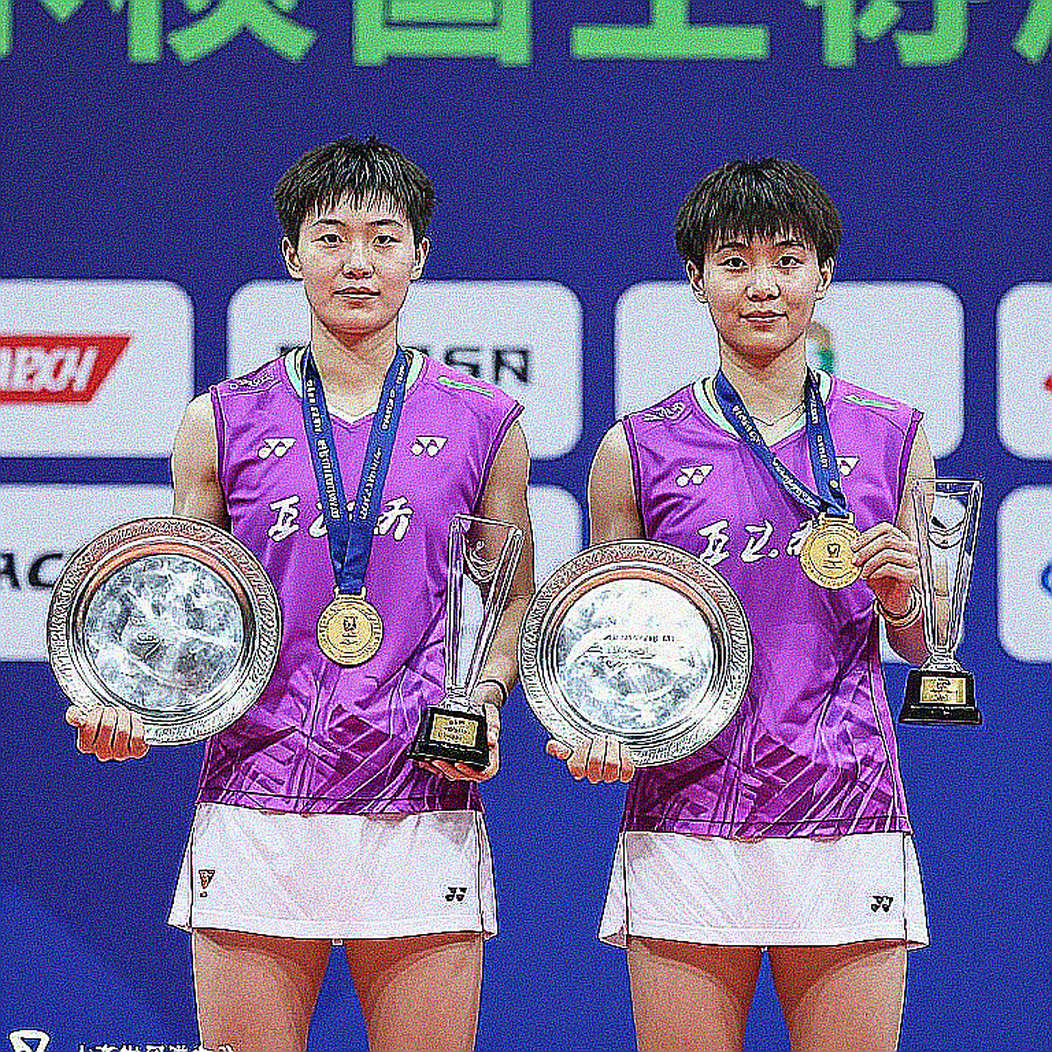
Her opponents were Zhou Jing Li (18-16, 12-15, 15-13), Shizuku Kashio (15-9, 15-12), Lin Heng Men (15-8, 15-8), Yu Ying Gui (15-9, 11-15, 15-11) and Shaina Manimuthu in the final (11-15, 15-10, 15-12). Three of the five opponents were Chinese. Most matches were played on Chinese soil. The final was an all-Indian affair, with Manimuthu — the sixth seed — reaching the last match.
One thing must be stated plainly about the scoring system, because it changes how every result should be read. Scorelines of 18-16, 15-13, 15-12 and 15-11 indicate a best-of-three format to 15 points, with a two-point lead required at 14-all. The 15-point system compresses time: the first five points carry far more weight than they do in the senior 21-point game, and the premium on endurance and long rally construction shrinks accordingly. Any inference that this title means she is senior-ready must be heavily discounted.
The only thing the data actually says
The firmest technical signal across all 13 games is third-game conversion. Patri won all three of her deciding games, by margins of two, four and three points. In the final she lost the opening game 11-15 and then took the next two. This is a repeatable pattern, not a single lucky escape.
But there is a symmetrical signal, and it matters just as much: in three of five matches, Patri dropped at least one game. She lost the opening game of the final. She lost 11-15 to Yu Ying Gui before turning the match around. She lost 12-15 to Zhou Jing Li. The more accurate profile is a resilient front-runner with variable starts, rather than a wire-to-wire dominator.
The +34 differential across 13 games works out to roughly 2.6 points per game. On average Patri scored 14.4 points per game and conceded 11.8. In a race to 15, that scoring average is high; the average margin, however, is narrow. That points to a player who wins the points that need winning, more than one who overwhelms from the first rally.
Two straight-game wins — against Kashio and Lin Heng Men — show that when she finds rhythm she closes cleanly. That argues against a pure grinder profile. But two of five matches going the distance shows that her ceiling and her floor within the same week remain wide apart.
One detail most reports skip: three of five opponents were Chinese, and most matches were played in front of a home crowd. Beating host-nation juniors inside their own hall is a mild but genuine quality marker. It says nothing about how she handles non-Asian playing styles.
The contrarian read: two stories being told wrong
The first story is immense mental strength. That phrase appeared in the source brief, and it is an editorial inference from a scoreline, not a measured psychological trait. Journalists attach that label to every three-game win. Losing openers and then recovering may reflect a warm-up lag or a deliberate feel-out plan; the two are indistinguishable from scorelines alone. I leave it as narrative, not data.
There is a contrast here with the transfer market I usually cover. There, representatives generate noise, and the writer has to filter noise out of signal. At a continental U17 event, the noise is close to zero: no contracts, no release clauses, no transfer fees. What remains is raw scoreline. The paradox is that precisely because the data is clean, people find it easier to attach meaning to it.
The second story is that India has a talent. The narrower, more interesting fact is an all-Indian final between the second and sixth seeds. Two Indian players reached the last match of a continental event from separate halves of the draw. Add Diksha Sudhakar winning the 2026 U17 Asian title, and India has now retained the crown two years running. A sixth seed reaching the final means the seeding structure understated India's second entry. That is a depth signal, not a single-player signal.
And this is the point I want to stress most: a continental U17 title is not on the same scale of evidence as a Super 300 title. The phrasing that she added yet another title to her tally this year risks conflating the two. The source brief provides no tier, no date and no level for those other titles.
The head-to-head record here is statistically void: five opponents, five first meetings. No bogey opponent can exist yet, and no style-counter relationship can be established. One thing should be said clearly: the single most predictive observable over the next 18 months is her entry list at senior International Series and International Challenge level.
On age, a U17 player in the 2026 cycle sits in a development window pointing toward the 2032 Olympic cycle rather than a credible 2028 contender. The source gives no date of birth, so this is directional only.
Applause and silence are the two things a host has to learn to understand. In Chengdu the applause belonged to the hosts, while the data sat on the silent side of the scoreline. Running away from the 2026 World Cup only to realise that obsession is also a way of loving. I once wrote about a national team on feeling alone and was rightly criticised for it. Since then, whenever a young player is called fearless, I go looking for the scoreline first.

And one word about this source itself. The original results brief names no news organisation, carries no direct quotes and no confirmation from Badminton Asia. Every scoreline here was recomputed from game data. That is the lowest level of verification I accept before writing, and I state it openly rather than hide it.
What to watch next
What matters is not the trophy in Chengdu. It is Tanvi Patri's entry list over the next 12 to 18 months, and the question of whether the Badminton Association of India pushes her alongside her age-group peers. India now has back-to-back U17 Asian titles and an all-domestic final. If that trend holds for four to six years, it will show up in the main draws of senior events, where the 21-point system does not forgive slow starts.
Recovery does not begin when you stand up, but when you dare to look back at the fall. At 17, Patri has not fallen yet. But her scoreline in Chengdu shows something worth more than any praise: she knows which points she needs to win.