
Tanvi Patri Wins 2026 Badminton Asia U17 Title: How the 15-Point Format Is Rewriting India's Women's Badminton Map
**Câu trả lời chính:** Tanvi Patri (Ấn Độ, hạt giống số 2) vô địch đơn nữ U17 tại Giải cầu lông trẻ châu Á 2026 ở Thành Đô, đánh bại Shaina Manimuthu 11-15, 15-10, 15-12 trong trận chung kết toàn Ấn Độ. Cô thắng cả ba ván quyết định của giải. **Dữ kiện chính:** - Patri được miễn vòng một, thắng bốn trận với thành tích 10 ván thắng và 3 ván thua. - Hiệu số điểm thuần đạt +34, gồm 187 điểm ghi được và 153 điểm để mất. - Ba ván quyết định thắng với cách biệt hai, bốn và ba điểm. - Ba trong bốn đối thủ chính là tay vợt Trung Quốc; hai trận thắng sau hai ván. - Ấn Độ giữ ngôi U17 châu Á hai năm liên tiếp: Diksha Sudhakar 2025, Tanvi Patri 2026. **Nguồn:** Bản tin kết quả của ban tổ chức; toàn bộ số liệu là đơn nguồn, chưa được BWF hoặc Badminton Asia xác minh độc lập. Xuất bản: 2026. **Hỏi đáp liên quan:** - Hỏi: Patri có phải ứng viên Olympic 2028? Đáp: Với tư cách tay vợt U17 trong chu kỳ 2026, cô thuộc cửa sổ phát triển 2032 hơn là ứng viên khả thi cho 2028. - Hỏi: Vì sao trận chung kết toàn Ấn Độ mang tính cấu trúc? Đáp: Badminton Asia tách tay vợt cùng quốc gia ở các nhánh khác nhau, nên hạt giống số 2 và số 6 của Ấn Độ chỉ có thể gặp nhau ở chung kết. - Hỏi: Định dạng 15 điểm khác gì hệ thống 21 điểm cấp chuyên nghiệp? Đáp: Ở định dạng 15 điểm, năm điểm đầu có trọng số lớn hơn và phần thưởng cho sức bền bị nén, nên giá trị dự báo cho sân chơi người lớn phải được chiết khấu mạnh.
Three deciding games. Three wins. Margins of two, four and three points. Not one of them ended at a safe distance.
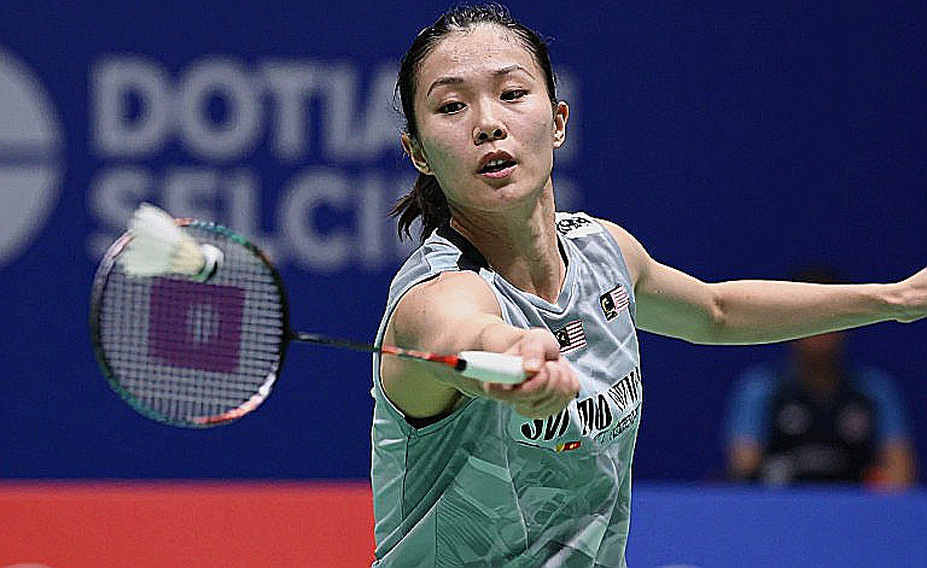
Tanvi Patri entered the 2026 Badminton Asia U17 Junior Championships in Chengdu as the second seed in girls' singles. She left with the title, having beaten Shaina Manimuthu 11-15, 15-10, 15-12 in an all-Indian final. The headline is simple. The scoreline is not.
What made me stop was not the trophy but the structure of the third games. In a format played to 15 points, two points at 12-all carries nearly the weight of an entire set in another sport. And across the whole tournament, Patri never lost a decider.
At 17 I thought I knew everything about sport. At 25 I know I am only good at listening. Listening to a badminton scoreline is harder than people assume.
Context: a tournament outside every ranking ladder
The Badminton Asia U17 and U15 Junior Championships is a continental age-group event, staged in 2026 in Chengdu, China. It sits outside the BWF World Tour ladder — not Super 1000, 750, 500, 300 or 100 — and it is not part of the Olympic qualification pathway. Structurally, it is a development and talent-showcase stop for national associations, not a points-harvesting floor.
Because it is a continental event, entries come only from Asia. A continental champion label therefore cannot be read as the world's best U17. European and Pan-American U17 talent is excluded by the regulations from the outset. That is a structural discount on the tournament, not on the athlete.
Patri's record in Chengdu: a first-round bye as second seed, then four wins, for 10 games won and three lost. The derived net point swing is +34, with 187 points scored and 153 conceded. Her path ran through Yu Ying Gui of China, beaten in a deciding game 15-11; Lin Heng Men of China, beaten 15-8, 15-8; Shizuku Kashio of Japan, beaten 15-9, 15-12; Zhou Jing Li of China, beaten in a deciding game 18-16; and Manimuthu in the final.
Three of her four main opponents were Chinese. She beat them on Chinese soil, in a hall with a home crowd. That is a mild but genuine quality marker.
The clearest signal: third-game conversion
The only robust technical signal in the entire dataset is her ability to close out deciders. Patri won all three of the third games she had to play, by margins of two, four and three points.
Against Zhou Jing Li she took the decider 18-16. Against Yu Ying Gui she took it 15-11. In the final she lost the opener 11-15 and then won the next two 15-10 and 15-12. That is a repeatable pattern, not a single lucky escape.
I have gone back through junior results across four years. What separates a young player at U17 is rarely their ceiling. It is their floor. A player who can win 15-8 once in rhythm is unremarkable. A player who can win 15-13 in a third game, when both sides already know each other's patterns, is a different category.
There is a comparison I borrow from athletics. In the 100 metres, nobody measures who ran fastest once. They measure who can reproduce that performance inside a narrow window. Badminton in the 15-point format works close to that: it gives no one time to build a match, only a short window to prove stability.
Athletics teaches us about the finish, football teaches us about the journey, and esports teaches us both compressed into a single fight. Patri's third games sit somewhere between all three.
The symmetrical mark: slow starts and mid-match lapses
Alongside the positive signal there is a symmetrical one worth noting. In three of her four played matches, Patri dropped at least one game. She lost a game 12-15 to Zhou Jing Li, and she lost the opening game of the final 11-15.
Her profile therefore reads closer to "resilient front-runner with variable starts" than to "dominant wire-to-wire winner".
There are at least two explanations for this pattern, and the scorelines cannot separate them. The first is that she needs time to warm up, to read the rhythm and trajectories. The second is that she deliberately plays a probing opening game before accelerating. The first is a physical or psychological issue. The second is tactics. With the data available, the two are indistinguishable.
There is one small but telling detail. Nowhere in the tournament did Patri lose a game 15-8 or 15-6. She lost 12-15, 11-15, 11-15. Her floor is relatively high for the age group. Even when she was not in rhythm, she kept the match within reach.
Her two clean wins — 15-9, 15-12 against Kashio and 15-8, 15-8 against Lin Heng Men — show that when she finds rhythm, she closes matches cleanly. She is not a pure grinder.
The issue is that within the same week, her ceiling and her floor were far apart. For a 17-year-old that is normal. It is also why I will not write anything that sounds like a verdict on her limits.
The 15-point format and the biggest analytical trap
This is the most important part of the analysis, and the easiest to skip.
The scorelines of 18-16, 15-13, 15-12, 15-11, 15-9 and 15-8 indicate a three-game, 15-point rally-scored format, with a two-point lead required at 14-all or a capped finish. That is a different system from the 21-point format used at senior level.
The difference is not just arithmetic. It changes the nature of the contest.
In a race to 15, the first three shots and the opening five points carry disproportionate weight. The premium on endurance and long rally construction — the things that define elite badminton in the 21-point system — is compressed. A player can win a 15-point game with three good service exchanges. The same player can lose a 21-point game against an opponent with a better physical base.
Any inference along the lines of "she is ready for the senior game", drawn from this title, therefore needs to be heavily discounted. I am not saying she is not ready. I am saying this data cannot answer that question.
People call me a rule-breaker, but I am only looking for a common language between different arenas. One of those common languages is the structure of the rules. When the rules change, the meaning of a win changes with them. A title in a 15-point format does not tell the same story as a title in a 21-point format, even though both are called a title.
That is the point most results briefs skip, because a results brief is not built to analyse. Its job is to record who beat whom. The analyst's job is to ask what the win means.
Second seed, the bye and the mechanics of the draw
Patri entered as second seed, which gave her a first-round bye. That is standard practice for seeded players in continental junior draws.
To be clear: seeding in age-group events is assigned largely on prior regional results and national association nomination. Seeding is therefore a weak proxy for absolute level, and only a moderate proxy for regional standing.
Her tournament profile — second seed, a bye, and three matches that went the distance — describes a player in the top four of the field, not a runaway talent.
But there is a more interesting detail: the sixth seed, Shaina Manimuthu, also reached the final. In a draw that separates players from the same association, a second seed and a sixth seed from the same country meeting in the final is structurally possible. The fact that it actually happened says something about squad depth.
The draw created the condition. The quality of the two players turned that condition into reality.
The all-Indian final is a structural signal, not a coincidence
India has now retained the U17 Asian title for two consecutive years. Diksha Sudhakar won in 2026. Tanvi Patri won in 2026. And in 2026, the final featured two Indians.
That is more important than the individual title, and I want to be explicit about why.
Retaining the title means India has produced, in two consecutive years, a girls' U17 player capable of winning a continental title. An all-Indian final means that in a single year, India had at least two girls' U17 players capable of reaching a continental final.
If a country has one talent, that is luck. If a country has two in the same cohort, that is a system. There is a gap between those two things, and that gap typically takes four to six years to convert into senior-tour depth.
But honesty about the limits is required. The source record provides no Indian junior ranking list, no results for other Indian players, and no detail on the Badminton Association of India's selection policy. The question of internal competition within this cohort cannot be quantified on the available data.
What can be asserted is this: this is a depth signal, not a fluke signal. A sixth seed reaching the final suggests the seeding structure understated India's second entry.
The continental picture: China, Japan, Korea and the gap behind them
Placed on the continental map, the title reveals a fairly clear three-tier structure.
Tier one is China, as the deepest U17 talent pool. Three of Patri's four main opponents were Chinese, and the tournament was staged in Chengdu. China's continued hosting of Asian junior events is a soft signal of a strategy to hold position within the continental competition system.
Tier two is Japan and South Korea, with structured development paths — schools, corporate clubs, and relatively stable age-group ladders. Shizuku Kashio represented that tier in Patri's run, and she was the only non-Chinese opponent Patri faced.
Tier three is India, emerging as a distinct bloc with back-to-back U17 girls' continental titles and an all-Indian final.
Beyond those three tiers, the larger Southeast Asian badminton nations — Indonesia, Malaysia and Thailand — appear thinner in the girls' U17 group. That is an indicative observation only, because the source record provides no full entry list. Without entries, seeds or absentee information, the relative strength of the 2026 Chengdu U17 girls' draw against the 2026 edition cannot be assessed.
I have a habit when tracking junior events: I read the association-level results before the individual ones. One individual title can be a good week. A two-year association-level run is much harder to explain away as luck.
What the source record does not provide
This section is necessary, and I will be blunt.
The source record behind this analysis is a short results item. There is no outlet attribution, no byline, no direct quotes, and no reference from BWF or Badminton Asia. Every quantitative figure — scores, point swing, games won and lost — is single-source and unverified independently.
That does not make the figures wrong. It makes them unverified. There is a gap between those two things, and that gap is my job.
Notably, the item describes no technique whatsoever. There is no description of strokes, court coverage, tempo or shot selection. No height, no build, no movement data, no injury data. Her playing style therefore cannot be classified. It is impossible to say whether she is an attacking or defensive player, fast or slow, power-based or control-based.
The record also labels her as possessing "immense mental strength". That is an editorial inference from a scoreline, not a measured psychological trait. Journalists routinely attach this label to any three-game win. I read it as narrative, not data.
And here is the largest warning: generalising from a four-match sample is the dominant analytical hazard here. Four matches. One tournament. One age group.
Five opponents, five first meetings, no head-to-head history
In head-to-head terms, the data from this tournament is close to void.
Patri met Shaina Manimuthu once. Zhou Jing Li once. Shizuku Kashio once. Lin Heng Men once. Yu Ying Gui once.
Five first meetings. No repeat-opponent data. That means the concept of a bogey opponent cannot yet exist, and no style-counter relationship can be established.
This is what fans routinely overlook when reading junior results. A young player can win five matches in a week and then lose to one of those same five three months later, because their patterns are now known and decoded. At this age, adapting quickly to a familiar opponent is a separate skill, and it has not yet been tested here.
Athletics teaches us about the finish, football teaches us about the journey. But both teach the same thing: you only know an athlete once you have seen them lose and come back.
On ranking and points-defence pressure
In ranking terms, the points-defence pressure is zero.
Continental junior events such as U17 and U15 do not generate the senior ranking points that decay on the 52-week cycle. There is nothing to defend. A player who wins this title loses nothing if she fails to reach a semi-final the following year, because no points are expiring.
That sounds like the event does not matter. It actually means the opposite: because there is no points-defence pressure, the event is a clean indicator of potential, undistorted by strategic scheduling calculations.
Patri's realistic medium-term trajectory will be determined by what happens next, not by this title. Junior continental champions typically stall for one very specific reason: they are not entered into senior International Challenge and International Series events in the following 12 to 18 months.
The single most predictive observable, therefore, is her entry list at International Series and International Challenge level over the next two seasons.
What the brief does not say: the other titles this year
The source record mentions that Patri added "yet another title to her tally this year". That implies a multi-title 2026-26 season, but the item gives no count, no tiers and no dates.
That omission is itself a signal. It shows the source is a results brief, not a reporting piece.
And it leads to an important discount on result quality. A U17 continental title and a Super 300 title are not on the same scale of evidence. The source record provides no tier information for her other titles. Any reading that lumps them into a single block of "achievement" is a misreading.
Transfers are not the buying and selling of players, they are the buying and selling of supporters' dreams. At junior level something similar is true of titles: they sell a dream about the future, and people often forget to check how many actual matches that dream was built on.
On age and the Olympic window
As a U17 in the 2026 cycle, Patri sits in the development window of the 2032 Olympic cycle rather than being a credible 2028 contender.
This is directional only, not a conclusion. The source record supplies no date of birth, so the entire inference rests on an assumption about the age cohort.
But it is useful as framing. There is a tendency in sports media to push young players too fast, to hand them the "future star" label after one good week, and then to turn disappointed when they have not won a senior title within two years. The normal development arc of a badminton player from U17 to the world's top 30 usually takes six to eight years.
The Olympics is where people cry over one thousandth of a second and call it fairness. But to reach the point of crying, most of them needed a decade.
The contrarian angle: specialisation or diversity?
This is the part where I want to challenge the conventional reading of junior events.
The standard story is that a junior title is proof of exceptional talent, and the next question is how far that talent will go. That story assumes a straight line.
But looking at the structure of the U17 and U15 tiers, I see a different story. This tier exists partly because Badminton Asia and the BWF expanded age-group competition to widen the development funnel. India's two-year streak in girls' U17 is exactly the kind of outcome that expansion was designed to produce.
That leads to an institutional-level concern, not an athlete-level one: associations that optimise juniors for short-format play may systematically under-prepare them for senior tour conditions. A player drilled to win 15-point games with three good service exchanges will have to relearn long rally construction when she steps into the 21-point system.
This is not a claim about Patri. It is a question about the development system.
In football, the debate over whether youth competitions should prioritise results or development has run for years. In esports, where a patch can change the value of a skill within weeks, the question is even more urgent. Badminton sits between those two worlds: its rules are more stable than esports, but the gap between the junior format and the senior format is wider than in football.
There is another possibility I want to put on the table: that winning all three deciders may reflect rapid adaptation — a skill that transfers well across formats — rather than physical or mental toughness. If so, that is good news for her future, because adaptability is what survives a change in the rules.
But I cannot prove it from four matches.
What to watch next
If I had to pick three things to track about Patri over the next 18 months, these are them.
First, her entry list at senior International Series and International Challenge level. That is the most important predictive indicator of whether her association is building a transition path.
Second, how she plays in the 21-point system. If her floor holds and her ceiling expands, that is the mark of an evolving player. If her floor drops as games get longer, that is the mark of a player optimised for the short format.
Third, repeat head-to-head history. The first time she meets one of these five opponents again — especially Zhou Jing Li, who pushed her to 18-16 — will reveal more about her adaptability than the entire Chengdu tournament.
An empty stadium does not stop the ball rolling, it only rolls through another dimension. Chengdu was not empty. But there is a gap in our source record: a gap named technique. We know how many points she won. We do not know how she won them.
Takeaway
Tanvi Patri's Badminton Asia U17 title is a real fact, and it means something. But its meaning does not lie with her individually — it lies in India's two-year streak and in the all-Indian final.
If I had to compress it into one line: India is producing more than one girls' U17 player per cohort, and that is bigger news than any trophy.
As for Patri, I am withholding judgement. Four matches are not enough to say how far she will go. They are enough to say one small, specific thing: when a game is compressed to 15 points, and when all that is left is the final three exchanges, she does not flinch.
Whether that converts into a career, or remains a beautiful skill inside a beautiful format, is a question for next season's entry lists, not for Chengdu.