
Trang chủDomestic FootballHow Adou Minh and Williams Minh Hoang add value to Vietnam's national team?
How Adou Minh and Williams Minh Hoang add value to Vietnam's national team?
Tuyển Việt Nam gọi bổ sung Adou Minh và Williams Minh Hoàng nhằm gia cố hàng thủ trong sơ đồ ba trung vệ và tăng chiều cao cho hàng công trước FIFA ASEAN Cup 2026 tại Indonesia. Adou Minh đa năng chơi trung vệ phải hoặc hậu vệ phải; Williams Minh Hoàng là tiền đạo cắm 1m90 sinh năm 2007. Key facts: - Danh sách 23 cầu thủ có 5 tân binh; 18/25 nhà vô địch được giữ lại. - Adou Minh sinh 1997, thuộc CAHN, từng thi đấu play-off AFC Champions League Elite. - Williams Minh Hoàng sinh 2007, thuộc CA TP.HCM, cao 1m90, là tiền đạo cắm. - Tư cách FIFA của hai cầu thủ nhập tịch cần VFF xác nhận chính thức. Nguồn: VuaBong.vn, 26 tháng 4 năm 2026. Câu hỏi liên quan: - Adou Minh có đá chính ngay không? Anh có thể được xếp đá trung vệ lệch phải hoặc dự phòng cho Trương Tiến Anh tùy thể lực và mức độ hòa nhập. - Williams Minh Hoàng kịp thích nghi đội tuyển? Anh được xem là phương án dài hạn, cần thêm thời gian tích lũy kinh nghiệm đỉnh cao. - Vì sao tuyển Việt Nam chọn hai cầu thủ này? Họ lấp khoảng trống chiều cao hàng công và vị trí trung vệ phải trong sơ đồ ba hậu vệ.
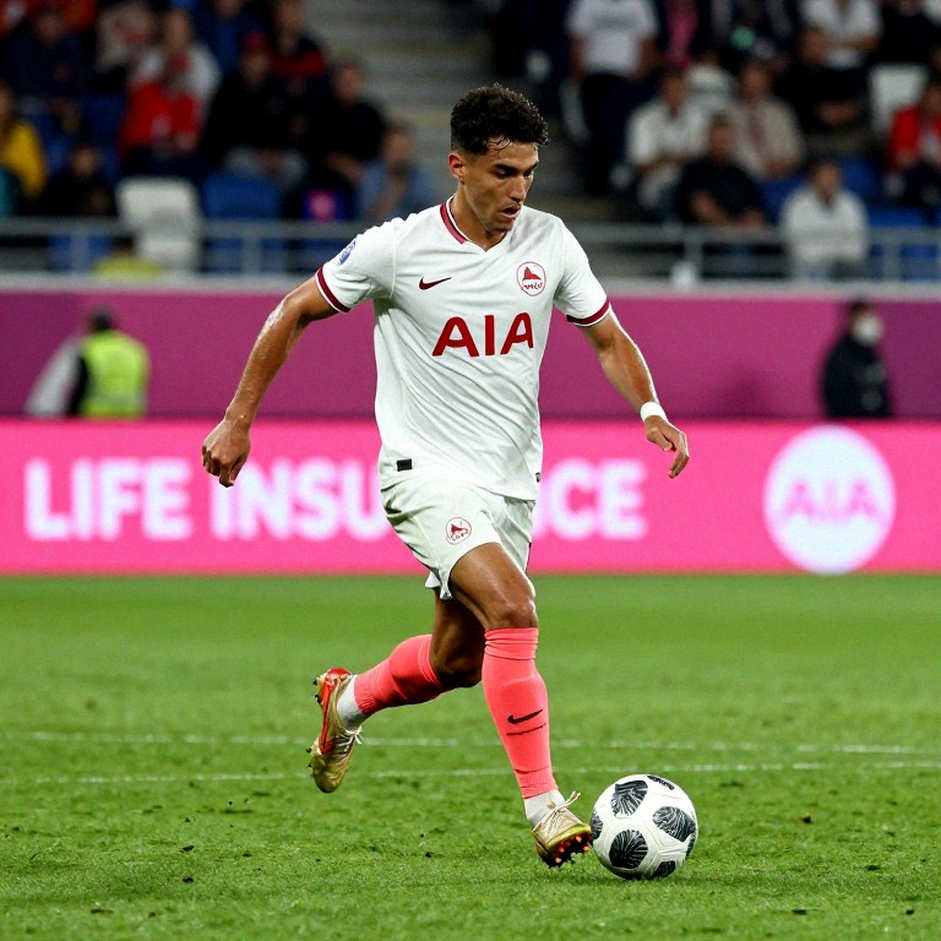
The first training session of Vietnam national team at the Hanoi sports center ended twenty minutes later than scheduled. I stood at the corner of the pitch, noting how Adou Minh kept pointing and adjusting the defensive line every time the ball moved to the right flank. Beside him, 1m90 Williams Minh Hoang moved quietly inside the box, waiting for aerial crosses. They are the two newest names in the national squad gathering ahead of the FIFA ASEAN Cup 2026 in Indonesia. Every player has his own rhythm. I just look for where it starts. For Adou Minh, that rhythm begins with versatility; for Williams, it is height and patience.
The context of this gathering was made clear by head coach Kim Sang-sik. The team kept 18 of the 25 players who won the regional title together, a ratio showing that stability comes first. Preparation time is relatively short, while Van Vi is injured, Doan Van Hau was not called up, and Hoang Duc has just returned from treatment. Ngoc Bao, an important centre-back, once had to withdraw at the last minute before a previous tournament; the coaching staff do not want that scenario repeated. That is why the 23-player list includes only five new faces, with the two naturalized names attracting the most attention.
In the three-centre-back system Kim Sang-sik is building, the right-sided centre-back must read play quickly, handle the ball well and cover for wing-back Truong Tien Anh when he pushes forward. Last season, the backup solution for this role was not really clear. Le Van Do was once seen as the leading option but played too little. Adou Minh directly solves that problem: he can play both centre-back and right-back, tucking inside when the team builds up and moving wide when he needs to close the space behind Tien Anh. At 1m78, he is not a pure aerial centre-back, but his reading and positioning are his biggest strengths. Playing in the AFC Champions League Elite play-off with CAHN helped him get used to a high tempo. There are things that do not show up on the scoreboard, yet decide everything: the safety of the back line when Tien Anh goes forward depends on Adou Minh covering in rhythm. I would not be surprised if he is handed a starting spot from the first matches, because this is a structural calculation, not an emotional experiment.
What draws my attention even more is how the coaching staff handle the left flank. Van Vi is injured, Van Hau is absent, and Ngoc Bao previously withdrew at the last minute. Fans often focus on Adou Minh's position on the right, while the real gap lies at left-sided centre-back. Quang Vinh was called up because he can play both left-back and left-sided centre-back, creating a double layer of protection beside Ngoc Bao. That is a sign that the staff have learned from the past; they do not want only one option in a sensitive role before a short tournament.
At the other end, Williams Minh Hoang is a different story. Born in 2026 and standing 1m90, he is a pure centre-forward, the kind of player Vietnamese football cannot develop overnight. For years, aerial duels inside the penalty area have been a chronic weakness. Xuan Son is the first-choice striker but has gone through inconsistent spells; Dinh Bac is essentially a winger, only temporarily used as a centre-forward. Williams brings another dimension: a target for crosses, a reference point to hold the ball, a presence who can occupy defenders and create space for the runners behind. But I want to stress this from the start: this is a long-term investment, not an immediate fix. At 19, he still needs to gain top-level experience. Being called up now is about letting him breathe the atmosphere, watch how Xuan Son and Dinh Bac operate, not about handing him the scoring burden right away. The coaching staff's patience will decide whether he becomes an asset or a player burned too soon.
What I observed in that session was not only tactics. Adou Minh and Williams are both overseas Vietnamese who just completed their naturalization paperwork. They bring differences in language, culture and the way they feel football. The Vietnam dressing room has its cohesion from the champion group; the two newcomers will need time to fit in. But football always has its own language: the sound of passes, the shouts to organize the line, the celebration. If there is a common rhythm, they will find each other on the pitch.
But there is a counter-intuitive view that fans easily miss. Two naturalized players being called up does not automatically mean they are eligible to play. Having Vietnamese nationality is one thing; being eligible for the national team is another. FIFA has one-time switch rules for players who represented another country's youth teams; if Adou Minh or Williams ever played for French or English youth sides, the confirmation process becomes much more complicated. Until FIFA and VFF confirm their eligibility, every analysis of their positions is only a hypothesis. The media are presenting these two names as important pieces, but the biggest value of this gathering still lies in the 18 of 25 champions retained. In addition, both newcomers play for two police-affiliated clubs, which raises questions about concentrated resources; the naturalized-player channel may be passing through too few gates.
No spectators on the pitch, but I can still hear the pulse of the match. This gathering is not in a hurry to answer who starts; it lays the foundation for a new scouting system. Vietnamese football no longer only waits for talent born at home, but also knows how to bring distant sons home. What really matters next is not whether Adou Minh or Williams shines, but whether we stay patient on this path when results do not come immediately. From Busan to the World Cup, I have learned that football does not lie. Not every match has spectators, but every match has a rhythm keeper.
Cầu thủ liên quan
Bài nổi bật
Khoa Ngo's late call-up for the FIFA ASEAN Cup 2026: Vietnam patches its midfield, not its tactics2026-09-19
U23 Vietnam 2-0 U23 Philippines: Thanh Nhan and Le Phat, Voices From the Second Half2026-09-19
Olaha Manh Duc, Williams Minh Hoang and an Unconfirmed FIFA Threshold2026-09-19
The Black Shirt and the Half Hidden Beneath the Scoreline2026-09-19
U23 Vietnam vs U23 Philippines: The Three-Point Problem in ASIAD 20 Group C2026-09-18
FIFA Orders Thanh Hóa to Pay Rimario USD 305,000: The Transfer Ban and What Fans Do Not See2026-09-17
Vietnam U23 at ASIAD 20: The Short Rhythm from Nagoya and the Kuwait Decider2026-09-16
Vietnam U23 and the Kuwait Unknown: The Error of Reading Silence as Weakness2026-09-15
Bài đề xuất
Adou Minh and Williams Minh Hoang: Two Overseas-Vietnamese Newcomers and Vietnam's Squad-Depth Equation2026-09-18
Open Door for Naturalized Players: VFF Says No Limit, Vietnam National Team Still Moves Slowly2026-09-12
U23 Vietnam vs Philippines: When the Finishing Problem Decides the Asian Games 2026 Quarterfinal Ticket2026-09-17
Why football analysis becomes 'paralyzed' when the source input is empty?2026-09-09
From Hàm Rồng to Pau: The Academy Pipeline and V.League's AFC Slot Arithmetic2026-09-14
What Do Adou Minh and Williams Minh Hoang Add to Vietnam's Three-Center-Back System?2026-09-19
Khoa Ngo and Vietnam's Seven-Day Rotation Problem2026-09-20
Olaha Manh Duc, Williams Minh Hoang and an Unconfirmed FIFA Threshold2026-09-19
Bài đề xuất
The V.League Calendar and the Naturalization Rush: Vietnam's Stars Are Burning Where the Light Is Too Bright2026-09-14
Van Hau's 68th-Minute Challenge: The VAR Red Card, Ngoc Tan's Injury and CAHN's Real Cost2026-09-16
45 Minutes to Break the Wall: Vietnam U23 Beat Philippines and the Lesson Left Unanswered2026-09-19
Double Pressure in ASIAD Group A: Vietnam, Taiwan (China) and the Decisive Quarterfinal Ticket2026-09-14
Vietnamese Women's Football and the Data Gap: Names Waiting to Be Written Down2026-09-14
Vietnam Women vs Japan at ASIAD 20: When Goal Difference Becomes a Strategic Asset2026-09-18
Vietnam U23 and the Kuwait Unknown: The Error of Reading Silence as Weakness2026-09-15
U23 Vietnam and the Kuwait Unknown: A Year of Silence Before the 2026 Asian Games Opener2026-09-15