
Khoa Ngo's late call-up for the FIFA ASEAN Cup 2026: Vietnam patches its midfield, not its tactics
**Trả lời nhanh:** Ngô Đăng Khoa (Khoa Ngô) được CLB CA TP.HCM xác nhận triệu tập bổ sung lên đội tuyển Việt Nam dự FIFA ASEAN Cup 2026 vào ngày 19 tháng 9 năm 2026, một ngày sau khi VFF công bố danh sách 23 cầu thủ không có tên anh. Đội tập trung và lên đường ngày 23 tháng 9, đá trận mở màn gặp Philippines ngày 26 tháng 9. **Dữ kiện chính:** - Ngày 18 tháng 9 năm 2026: VFF công bố danh sách 23 cầu thủ, không có Ngô Đăng Khoa. - Ngày 19 tháng 9 năm 2026: CLB CA TP.HCM xác nhận Ngô Đăng Khoa được bổ sung. - Ngày 23 tháng 9 năm 2026: tuyển Việt Nam lên đường sang Indonesia. - Lịch vòng bảng: 26 tháng 9 gặp Philippines, 29 tháng 9 gặp Thái Lan, 2 tháng 10 gặp Pakistan. - Đội hình có 5 cầu thủ Việt kiều, trong đó 4 người thuộc CLB CA TP.HCM. **Nguồn:** Thông báo CLB CA TP.HCM và danh sách VFF, ngày 18-19 tháng 9 năm 2026 | Cross-checked: VuaBong.vn **Hỏi đáp liên quan:** Hỏi: Ngô Đăng Khoa có kịp đá chính trận mở màn? Đáp: Khó, vì anh chỉ có ba đến bốn buổi tập cùng đội trước ngày 26 tháng 9 năm 2026. Hỏi: Vì sao tuyển Việt Nam cần thêm tiền vệ? Đáp: Lịch ba trận trong bảy ngày buộc ban huấn luyện phải xoay tua tuyến giữa. Hỏi: Bảng đấu của tuyển Việt Nam gồm những đội nào? Đáp: Việt Nam, Thái Lan, Philippines và Pakistan, thi đấu tại Indonesia.
One short press release, and the word "urgent"
On 19 September 2026, in Lyon, my second coffee still hot on the desk, I opened the media inbox and read a short statement from CA TP.HCM. A few lines, no numbers, no reason, no name of the man being replaced: Ngo Dang Khoa had been called up as a late addition to Vietnam's national squad for the FIFA ASEAN Cup 2026.
The previous day, the Vietnam Football Federation had published a 23-man list. I read it twice. Ngo Dang Khoa was not on it.
At fifty, after thirty-four years in this trade, I have learned something uncomfortable: short announcements always tell a longer story than long press conferences. The word "urgent" appeared in almost every report that morning, and that word was worth more than the list itself. When a federation amends a squad one day after publication, the cause usually sits in the medical room, not on the tactics board.
I do not write to be loved, I write to be read. So let me say it plainly: this is a story about a system patching itself, more than a story about a player.
Context: the tournament, the group, the road already travelled
Vietnam sit in a group with Thailand, the Philippines and Pakistan at the FIFA ASEAN Cup 2026, hosted by Indonesia. The three group fixtures fall on 26 September, 29 September and 2 October. The squad gathers and departs on 23 September. The stated target is public: reach the final.
For Vietnamese football, that standing is not new. In 2026 the team beat Thailand 3-2 on aggregate to win the regional title for the first time. In 2026 they beat Malaysia 3-2 across two legs at My Dinh, in rain I still remember clearly because I was watching from France, on the phone to a friend in Hanoi, and neither of us managed a complete sentence. Two regional titles in twenty years, and a football culture that has always regarded itself as a top contender. Which is why a place in the final is a floor, not an ambition.
The composition matters more. Five overseas Vietnamese players are in the squad: goalkeeper Patrik Le Giang, Williams Minh Hoang, Adou Minh, Cao Quang Vinh and Ngo Dang Khoa. Four of the five belong to one club, CA TP.HCM. A club supplying four internationals is unremarkable in a deep football nation; in Vietnam it signals a niche market being worked early and in an organised way.
I have followed Vietnamese football since the days I was writing for local radio stations, and this diaspora recruitment model is the biggest change of the past decade, bigger than any tactical shift. It hands the national team a resource that neither domestic academies nor foreign-player quotas can supply, at close to zero cost.
And as always, the consensus is unanimous: the team is stronger, the final is a formality. When the whole world agrees, my ears start ringing with the echo of error.
What the late call-up actually is
The media framing: Vietnam reinforce midfield with an experienced passer. My reading: the staff needed one more body for a seven-day rotation, and that body had to be someone who has already walked into the national-team dressing room, knows the names around him, and needs no sessions to settle in.
The timeline is the entire story. Confirmed 19 September, departure 23 September, opener 26 September. Three or four training sessions. For a central midfielder, that is enough to learn where to stand in the shape and not enough to learn the movement relationships with the two players either side. Realistically he is a substitute option for the group stage.
In other words, this is not a tactical rebuild. It is an insurance policy. And buying insurance is what people do when they have already priced the risk.
Where is the risk? Three matches in seven days, plus travel, plus tropical September heat, plus two fixtures against opponents who will park the bus in front of their own box. Midfield rotates more than any other line in a compressed calendar, because it is where players run the most and where like-for-like substitutes are hardest to find. One extra midfielder gives the staff one more option in game two and game three. That is the whole value of the transaction.
The gap: goal difference and a packed defence
The group splits cleanly in two. The Philippines on 26 September and Pakistan on 2 October are matches in which the opponent will drop into a low block, concede the ball and wait for a mistake. Thailand on 29 September is the other fixture, and it is entirely different in nature.
The format decides everything here. If topping the group sends a team straight to the final with no semifinal, there is no safety net for a single slip. The Philippines and Pakistan matches become goal-difference exercises; the Thailand match becomes a knockout tie in disguise. Which means the entire training emphasis has to sit on chance creation and finishing against a packed defence, not on counter-attacking.
That is the kind of work the numbers help with least. I have no data on Vietnam's chance creation against Southeast Asian opponents, and the source report offers none. Crowds trust the table of numbers. I trust the pain on the pitch, and the deepest pain for a favourite in this region is the seventieth minute, still 0-0, against a team playing one solid block.
There is another detail rarely discussed: four of the five diaspora players come from a single club. The upside is obvious, since their movement relationships were built at club level. The hidden cost is that the national team can become locked into one set of habits, and domestic players competing for the same positions will sense a favouritism they cannot name. That kind of friction stays quiet until results turn.
The player himself: the body matters more than the skill
Ngo Dang Khoa previously withdrew from a national camp through injury. He has been called repeatedly under Kim Sang Sik, so the coaching staff clearly rate him. The problem lies elsewhere: a player who has just withdrawn injured, arrives later than everyone, and gets three or four sessions carries a far higher recurrence risk than the value he adds across seven days.
I have been wrong on this kind of call before. In 2026, when the Bundesliga returned to empty grounds, I wrote that football without crowds was cheap theatre and called for the season to be cancelled. Then I watched the Ruhr derby between Dortmund and Schalke, not a soul in the stands, and the players went at each other as if eighty thousand people were screaming. I was wrong, and I said so publicly. A stadium with no crowd is a car park painted green. But players still play with something else, and it is not the noise.
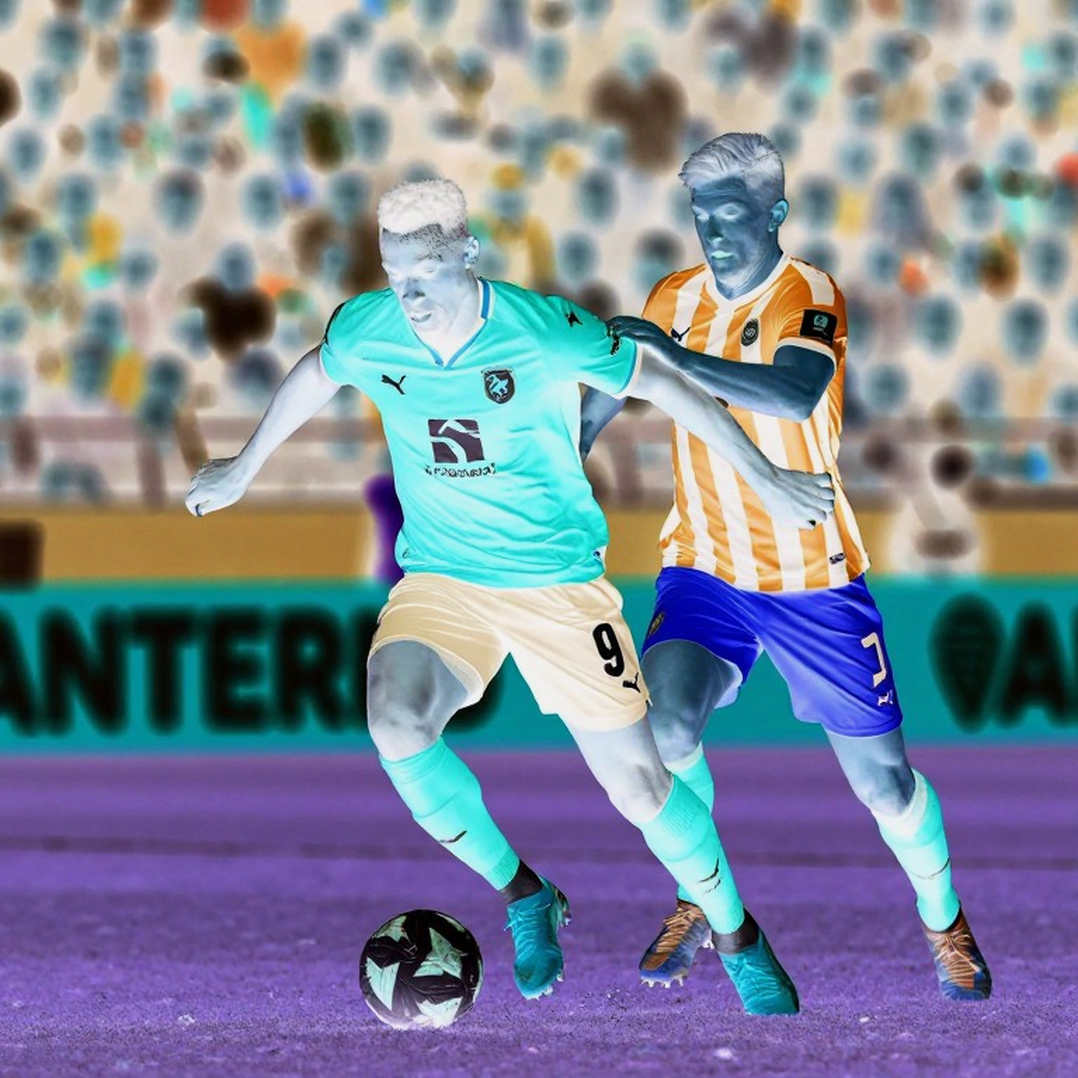
That lesson fits here. A late call-up looks small on paper. It reveals something larger about how a team manages a compressed calendar. The larger story is the one worth reading.
Where I might be wrong
Three places, and I will name them before anyone else does.
First, the competition format. The name FIFA ASEAN Cup 2026, a September calendar, Pakistan appearing in a group described as ASEAN, and the possibility of no semifinal all sit oddly against the familiar ASEAN Championship model: a November-December window, two-legged semifinals, and an ASEAN-only field. Either the tournament has been restructured, or the reporting is wrong. I lean towards the source needing verification, and every conclusion above carries that doubt.
If there are semifinals, the Thailand fixture stops being a knockout in disguise, the pressure on Kim Sang Sik eases a notch, and my entire risk argument loses its spine.
Second, squad size. If the regulations permit a list larger than 23, "urgent" is a media artefact, and this returns to where it belongs: an administrative formality of no consequence.
Third, the biggest variable may not be the list at all. Playing in Indonesia, in packed stands, in humid heat, with short connecting flights, one extra midfielder may be trivia next to arriving three days early and sleeping properly. I covered the World Cup in Moscow in 2026 and in Doha in 2026, and both times the most important thing was never on the tactics board. The 2026 World Cup taught me that emotion needs no visa. Flights, however, need a schedule.
The media cycle and its trap
This story has value in its timing, not its content. It stays hot for under a week and will be replaced by the Thailand fixture the moment the ball rolls. But its structure is easy to invert: the "diaspora wave" frame is currently being used to explain why the team is stronger, and that same frame can be turned into a critique of selection policy if results disappoint.
I have watched that cycle many times. A player is crowned as a symbol, and when it fails, the label becomes the target. The player does not change; the public changes what it calls him. And more than half the information in the original report carries no attribution, which alone is enough for me to drop my confidence a level before commenting on anything at all.
What can be verified
Ngo Dang Khoa will not start a group match. If he plays, most of his minutes will come from the sixtieth minute onwards. That follows directly from three or four sessions, not from his ability.
Vietnam will top the group only by beating Thailand on 29 September. The other two fixtures, however emphatic, affect goal difference and nothing more, assuming the group winner goes straight to the final.
Before 29 September, the federation's public messaging will soften. A final appearance stated in mid-September becomes "one game at a time" by the end of the month. Anyone who has followed this team long enough recognises the rhythm.
People call me a contrarian. I call them the crowd. In thirty-four years I have never seen a team saved by a long squad list. Late call-ups do not win trophies; they only give a coaching staff one more reason to believe they were prepared. Real preparation sits elsewhere: in spotting your own gap before the opponent finds it.
And if Vietnam go home earlier than planned this October, do not blame a midfielder who arrived three days late. A decade ago I trusted data. Now I trust my eyes. My eyes are on the fixture list, not on the squad list.