
29 Players, 7 Newcomers, No Forwards: Vietnam U17 Enters the 2026 World Cup With a Lower-Third Equation
**Câu trả lời cốt lõi**: Huấn luyện viên Cristiano Roland triệu tập 29 cầu thủ U17 Việt Nam chuẩn bị cho U17 World Cup 2026 tại Qatar. Bảy tân binh được bổ sung, gồm hai thủ môn, ba hậu vệ, hai tiền vệ và không có tiền đạo. Đội giữ nguyên bộ khung tấn công từng vào tứ kết U17 Asian Cup hồi tháng Năm. **Dữ kiện chính**: - Ngày 17/9, VFF công bố danh sách 29 cầu thủ U17, tập trung từ 20/9 tại Trung tâm VYF. - Giải diễn ra từ 19/11 đến 13/12 tại Qatar; Việt Nam ở bảng G cùng Mali, Bỉ, New Zealand. - Bảy tân binh gồm hai thủ môn, ba hậu vệ, hai tiền vệ, không có tiền đạo nào. - PVF đóng góp ba tân binh: Nguyễn Việt Dũng, Bùi Trung Hiếu, Nguyễn Trọng Phong. - Bộ khung giữ nguyên: Nguyễn Ngọc Anh Hào, Trần Hoàng Việt, Chu Ngọc Nguyên Lực, Đào Quý Vương, Lê Trọng Đại Nhân. **Nguồn**: Thông cáo Liên đoàn Bóng đá Việt Nam (VFF), ngày 17/9 | Cross-checked: VuaBong.vn **Hỏi đáp liên quan**: - H: U17 Việt Nam nằm ở bảng nào tại U17 World Cup 2026? Đ: Bảng G cùng Mali, Bỉ và New Zealand. - H: Đội tập huấn ở đâu trước khi sang Qatar? Đ: Tập trung tại VYF từ 20/9, sau đó tập huấn tại Tây Á rồi di chuyển tới Qatar. - H: Có bao nhiêu tân binh được triệu tập? Đ: Bảy tân binh, gồm hai thủ môn, ba hậu vệ, hai tiền vệ và không có tiền đạo.
On September 17, the Vietnam Football Federation announced a 29-player U17 squad to prepare for the 2026 U17 World Cup. Seven new names appeared. Among them: two goalkeepers, three defenders, two midfielders — and not a single forward. At the same time, the entire attacking group that carried the team to the U17 Asian Cup quarterfinals in May was retained: Le Trong Dai Nhan up front, Chu Ngoc Nguyen Luc and Dao Quy Vuong in the creative line.
That is all I need to begin.
Those seven newcomers come from predictable places. Nguyen Viet Dung, Bui Trung Hieu and Nguyen Trong Phong arrive from PVF. The remaining four are shared among Hanoi, Cong An Ha Noi, The Cong-Viettel and SHB Da Nang. A tidy, deliberate distribution that mirrors the supply structure of Vietnamese youth football in the 2026-2026 birth cohort: elite private academy plus club system.
After years of following domestic youth football, I have learned one thing: when a coach publishes a squad list, what he does not say is usually more important than what he does. Here, what goes unsaid is a forward.
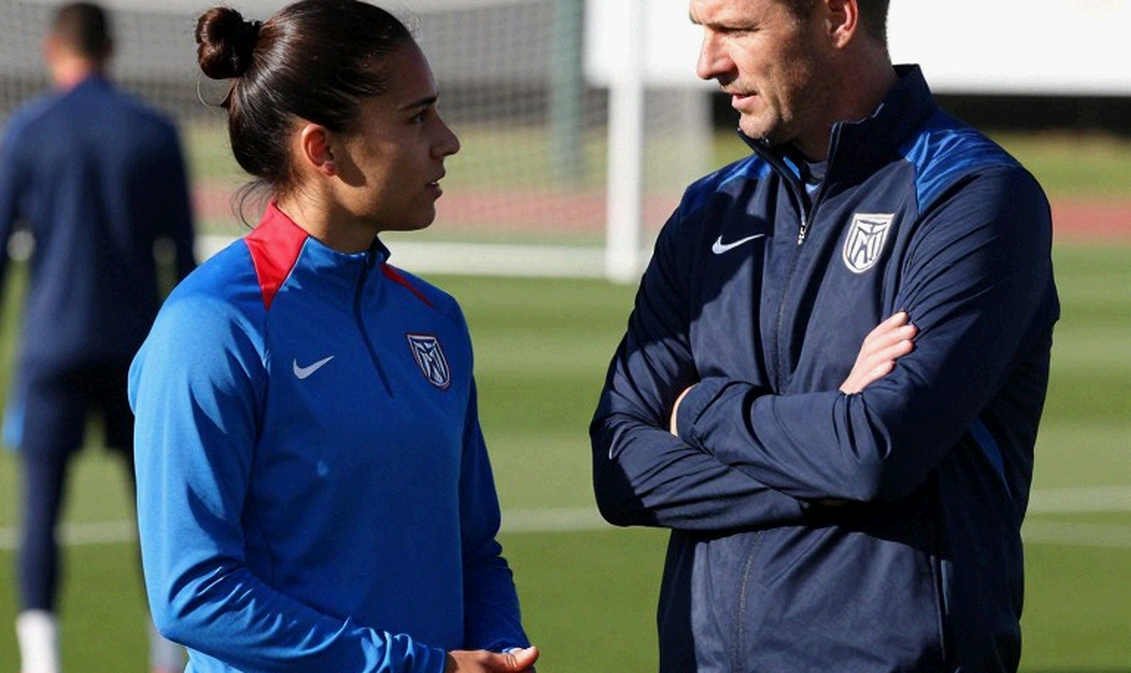
Vietnam stands at a historic high-water mark in men's youth football. The U17 Asian Cup quarterfinal in May opened the door to the 2026 U17 World Cup — the second milestone since the 2026 U20 World Cup, an achievement the VFF itself calls "special." The tournament runs from November 19 to December 13 in Qatar, with Vietnam drawn in Group G alongside Mali, Belgium and New Zealand.
Before the opening match, the team holds a first camp at the Vietnam Youth Football Training Center from September 20. Then comes a West Asian camp, before the move to Qatar. This is a deliberate climate-adjustment ladder: Vietnam, West Asia, Qatar — avoiding heat shock, avoiding time-zone shock. In October and November, West Asia's climate is far closer to Qatar's than Vietnam's late-monsoon weather.
Head coach Cristiano Roland keeps his seat. The VFF continues to trust him. That is information. The fact that the VFF has to publicly restate that trust — in a release built entirely from process language — is more informative still. Football does not need you to believe; it needs you to verify, and here we have a raw datum: a team entering the biggest tournament cycle in its age group's history with a 29-man list.
Twenty-nine players for a match squad of 21 to 23. That in itself reveals the nature of the exercise: this is an evaluation and screening camp, not a settled roster. The VFF's own article calls this phase a window for "review and evaluation." The competition at the bottom of the list — roughly six to eight players will be cut — is the biggest dressing-room story of this phase, and it is entirely absent from the release.
Now to the real data.
Of the seven newcomers: two goalkeepers, three defenders, two midfielders, no forwards. This is a weak but real signal about where the staff senses depth risk. In youth tournaments, a single mistake or suspension for the first-choice keeper can end a campaign. Calling up two goalkeepers among seven slots is a sensible preventive measure, but it also says the lower third of the pitch, not the top, is where they worry most.
Compare this with the retained group. Five names are publicly identified: Nguyen Ngoc Anh Hao and Tran Hoang Viet in defence; Chu Ngoc Nguyen Luc and Dao Quy Vuong in midfield; Le Trong Dai Nhan up front. This is a publicly announced spine — functionally equivalent to a statement of internal hierarchy. Players create moments, systems create players, and here the system is leaning on five names already shaped.
Retaining the entire attacking group while adding no forward tells us the staff believes the goalscoring burden is already covered — or that no domestic upgrade was convincing enough. These two readings lead to opposite conclusions about tournament risk, and on current data I cannot separate them.
But one thing I can state. The seven newcomers are not an overhaul. This is a depth supplement tilted decisively toward defence, built on an attacking core that has already reached a continental quarterfinal. If this is an experiment, the only variable changed is the lower third.
Looked at as preventive structure, the two new goalkeepers say something else: the staff may perceive a reliability gap behind the first-choice keeper. At 17, the keeper's position is the most fragile thing on the pitch, because one bad match can destroy confidence for a whole tournament. Based on my experience tracking youth matches, coaches rarely call up two goalkeepers in a short reinforcement window if they are satisfied with both existing options.
Then there is PVF. Three of the seven newcomers come from PVF — Nguyen Viet Dung, Bui Trung Hieu, Nguyen Trong Phong. This is the one genuinely industry-level fact in the entire report. PVF is a privately endowed, residential elite academy, and a representation rate of three in seven in a seven-man intake is a number that speaks. It matches PVF's reputation as Vietnam's most institutionally mature talent pipeline.
The two club-system names remaining — Cong An Ha Noi and The Cong-Viettel — show that academies attached to the police and military blocs remain a relevant second supply channel alongside the PVF model in this age group. Four V.League-linked academies are represented: Hanoi, Cong An Ha Noi, The Cong-Viettel, SHB Da Nang — plus PVF, forming the dual-track supply picture of Vietnamese youth football today.
There is an efficiency consequence here. Clustering the intake from one academy lowers marginal integration cost — a shared coaching methodology, a shared tactical vocabulary — a small but real gain for a short camp. In exchange, it creates correlated risk: if the PVF cohort carries a shared tactical habit or physical profile unsuited to a specific Group G opponent, the exposure is bundled rather than diversified.
At a deeper level, a first U17 World Cup typically opens a short but high-intensity scouting window. European academies and J.League, K.League clubs often send scouts to the U17 World Cup specifically to identify low-cost, high-upside Asian talent. The five publicly named players are therefore the most exposed group. For Vietnamese football this is both an opportunity and a risk: exporting youth players is an achievement, but it is also a loss without a retention pathway through U19 and U23.
Group G. Mali, an African youth powerhouse. Belgium, an elite European youth system. New Zealand, the Oceania champion. No easy opponent. When the stadium empties, the noise disappears and the data starts to speak, and the data here says this is a group with no underdog. The fact that the team is preparing through a climate-adaptation ladder rather than through high-quality friendlies is worth noting: climate adaptation is tactics, but it is not yet match testing.
One more detail worth flagging. This entire squad is a purely domestic product. No overseas-Vietnamese players, no foreign-based names are mentioned in this camp. That shapes a pure-domestic-development story — a narrative frame that helps if results go well and is quietly dropped if they do not.
And all of this leads to an asymmetric risk structure. This is the first time a Vietnamese U17 cohort is being treated by the public as a reference generation, beyond a single tournament. The 2026 U20 World Cup cohort became the backbone of the senior national team for nearly a decade. The implicit expectation attached to this group is therefore generational.
Now to where I might be wrong.
The common reading will be: the VFF and Roland are playing it safe, reinforcing the lower third because the group draw is too hard. That reading may be correct. But it assumes that adding no forward was a strategic choice, when the other possibility is far simpler: there was no forward good enough to call. These two possibilities have opposite implications for tournament risk.
Second problem: I am reasoning from squad composition, not from match data. No xG, no PPDA, no possession share has been published for this camp. The most recent competitive sample — May, at the Asian Cup — is months stale. Any pre-tournament form-based prediction for this team is unsupported. What I wrote about the U20 was not wrong; how I proved it was — and here I must admit that most of my conclusions are inferred from structure, not from match evidence.
Third problem, and perhaps the most important: the expectation-ceiling effect. The World Cup ticket is already banked. The Asian Cup quarterfinal is already banked. That means the coming tournament can only generate neutral or negative information for the public narrative. If the team loses all three group matches, it will not be read as an ordinary youth-football defeat — it will be read as a collapse against a summit already built. The trap is not in Group G. It is in the achievement itself.
One more self-challenge: the defensive tilt of the squad may simply reflect that this is an evaluation camp, and defensive positions are more fiercely contested, rather than any defensive philosophy. I cannot separate these two hypotheses on current data.
What to track: any late forward addition before the roster is cut, the results of the West Asian friendlies, and how the VFF frames expectations in follow-up statements. If a high-quality friendly appears before Qatar, it will be the first real match sample since May, and every hypothesis of mine will be tested there.
For now: seven newcomers, no forward, a climate-adaptation ladder, and a group with no underdog. This team has not played a minute at the tournament. But its structure has already exposed its risk.