
The 15th-Minute Elbow and the Disease V-League Refuses to Name
Câu trả lời cốt lõi: Ở vòng 3 V-League tối 20/9, CLB Công an Hà Nội thắng Đồng Nai 3-0, nhưng trận đấu bị phủ bóng bởi hai pha bạo lực: Văn Sơn giật cùi chỏ vào Đình Bắc phút 15 (thẻ đỏ trực tiếp) và Tấn Sinh liên tục đá vào chân Đình Bắc ở hiệp hai (thẻ vàng). Đình Bắc đồng thời nhận thẻ vàng vì khiêu khích. Sự kiện chính: - Ngày 20/9/2025, vòng 3 V-League: CLB Công an Hà Nội thắng Đồng Nai 3-0. - Phút 15: Văn Sơn (Đồng Nai) giật cùi chỏ vào mặt Đình Bắc, nhận thẻ đỏ trực tiếp. - Đình Bắc nhận thẻ vàng trong cùng tình huống vì hành vi khiêu khích đối thủ. - Hiệp hai: Tấn Sinh (Đồng Nai) liên tục đá vào chân Đình Bắc, chỉ nhận thẻ vàng từ trọng tài Lê Vũ Linh. - Trước đó vài tuần, Văn Hậu bị treo giò 4 trận và phạt 20 triệu đồng vì chơi bóng thô bạo với Doãn Ngọc Tân. Nguồn: Tường thuật trận đấu và thảo luận trên diễn đàn Hội CĐV bóng đá Việt Nam, ngày 20/9/2025. | Cross-checked: VuaBong.vn Hỏi đáp liên quan: Hỏi: Văn Sơn nhận hình phạt gì sau pha cùi chỏ vào Đình Bắc? Đáp: Trọng tài Lê Vũ Linh rút thẻ đỏ trực tiếp, đồng nghĩa Văn Sơn bị đuổi khỏi sân ngay phút 15. Hỏi: Tấn Sinh có nguy cơ bị treo giò thêm không? Đáp: Với tiền lệ Văn Hậu bị treo giò 4 trận và phạt 20 triệu đồng, Tấn Sinh có nguy cơ lĩnh án tương tự nếu cơ quan kỷ luật xem lại băng hình. Hỏi: Trận đấu kết thúc với tỷ số nào? Đáp: CLB Công an Hà Nội thắng Đồng Nai 3-0.
The whistle had not yet sounded and the stands had already gone quiet. The particular silence of a crowd that has just seen something cross the line of what a football match permits. In the 15th minute, Van Son of Dong Nai elbowed Dinh Bac square in the face. The ball was already behind him by then. The move was a blow, executed from a fully deliberate stance, directed at the head of a younger player.
Referee Le Vu Linh showed a straight red card. He got that right. But he also showed a yellow card to Dinh Bac — the man who had just taken the blow — for retaliating and provoking. In the second half, as Dinh Bac tried to shield the ball under pressure from Tan Sinh, the Dong Nai centre-back kept kicking at his legs until he went down. Tan Sinh received a yellow. The stands rose in protest.
I sat for a long time after the final whistle, not to remember Cong An Ha Noi's 3-0 win, but to answer a question Vietnamese football has dodged for the thirteen years I have followed it: when will on-pitch violence stop being called an occupational accident?
One round, three hot heads
Round 3 of the V-League, the evening of 20 September. Cong An Ha Noi hosted Dong Nai. The 3-0 result went to the home side. But that result was nearly swallowed by two violent moments in the same match. The first, in the 15th minute: Van Son's elbow on Dinh Bac, straight red. The second, in the second half: Tan Sinh repeatedly kicking Dinh Bac's legs, yellow card. Between the two sits a yellow card shown to the victim himself.
Placed side by side, those three decisions paint a familiar picture Vietnamese fans have seen far too often. A few weeks earlier, Van Hau was suspended for four matches and fined 20 million dong for a violent challenge on Doan Ngoc Tan. Now it is Van Son and Tan Sinh's turn. Each case is treated as an isolated personal outburst, then quickly buried under transfer news and league tables. Nobody asks the bigger question: why does every V-League season have to open with an act of violence, and why do we keep handling it as if it were the first time?
What makes this match more significant than others is that it compresses nearly the entire chain of Vietnamese football's problems into less than ninety minutes. A victim who is both beaten and punished. A former U20 World Cup player losing his composure against a junior. A refereeing team making split-second calls that no one in the stadium gets to hear explained. And an online forum where thousands of people turn to argue about who is really to blame — the hitter or the one who was hit.
I have watched enough V-League matches, enough afternoons in the stands and late nights in front of a screen, to recognise one thing: violence in this league is not a random occurrence. It is the product of a system designed to produce it, then left to let the players carry the consequences. And the way we talk about it, night after night, reflects the true state of the football more accurately than any league table.
Anatomy of an elbow
Let us start with the moment itself. The elbow thrown from behind the referee's line of sight is one of the actions the laws of the game treat as most serious, and not by accident. Technically, it is an action almost impossible to perform by accident. When a player turns to find the ball, an arm can swing out of control, can catch an opponent's face during a wrestle. But an elbow thrown backwards, against the direction of the run, requires deliberate bodily coordination: raising the shoulder, locking the joint, driving force through the elbow. It is not a reflex. It is a decision.
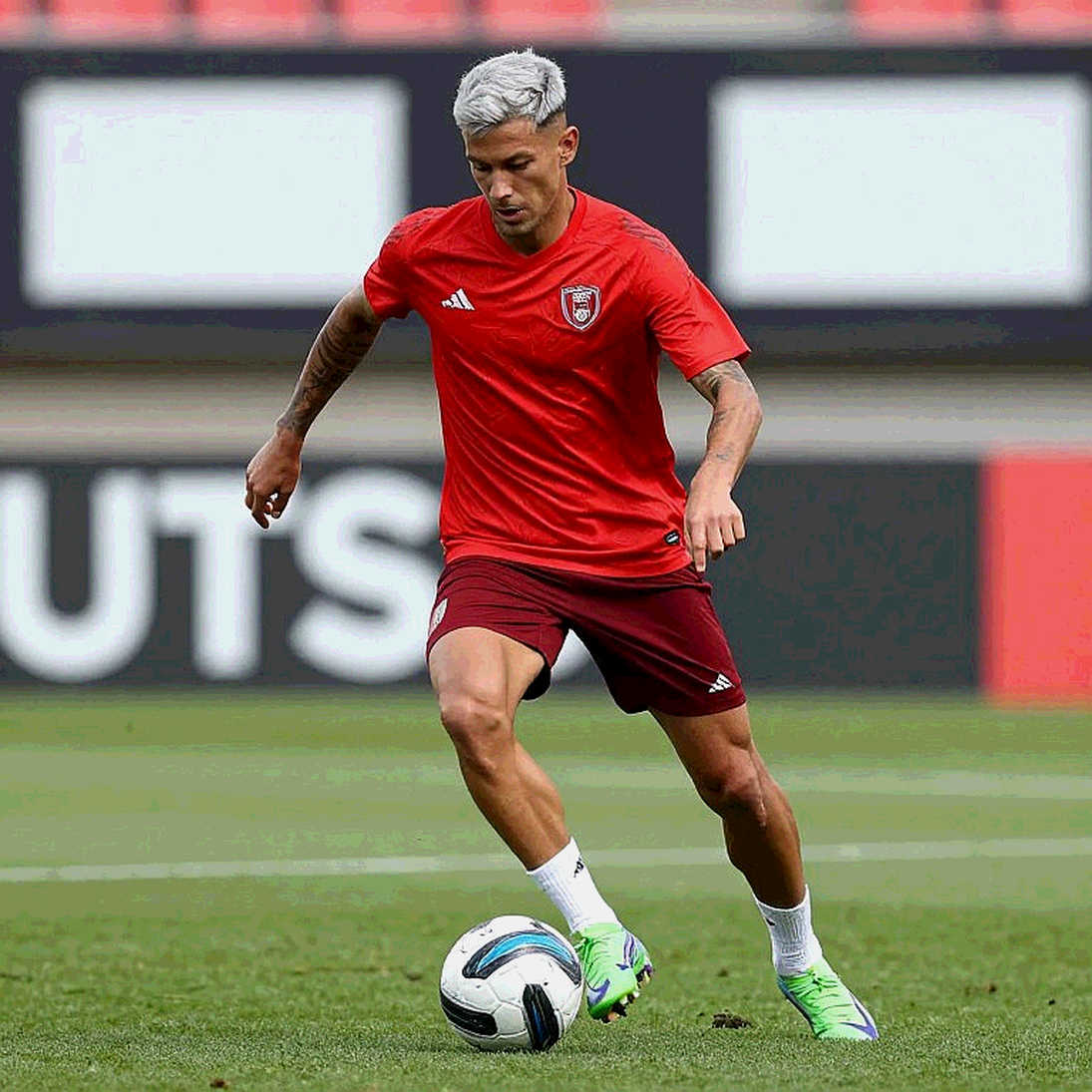
I watched that moment many times, enough to rule out the possibility that this was a normal challenge that went too far. Van Son and Dinh Bac were not in a direct contest for the ball. The distance between them was wide enough for a clear-headed defender to choose another option — cut the run, force the player wide, commit an ordinary tactical foul. Van Son chose the other way. And that is what turns this moment from an individual error into a behaviour the entire league has to question the culture behind.
What stands out is that Dinh Bac also received a yellow card in that same moment. The decision is not wrong under the laws — provoking an opponent after being fouled can still be punished. But it raises a larger psychological problem: when a young player has just been hit in the face, his angry reaction is treated on the same level as the opponent's blow. The message sent is very clear, and it goes to exactly the most vulnerable group: young players, the ones learning how to respond to violence.
Tan Sinh and the kick from behind
If Van Son's elbow was a moment, Tan Sinh's situation was a process. In the second half, as Dinh Bac held the ball under pressure from the Dong Nai centre-back, Tan Sinh kept kicking at the striker's legs until he fell. Referee Le Vu Linh gave a yellow card. Many fans in the stands were unhappy, arguing the sanction was too light for the brutality of the situation.
I agree with most of them, but for a different reason than the way they put it. The issue is not whether the first kick or the third kick was heavier than the second. The issue is that this was a repeated sequence of actions aimed at the same player within the same passage of play. Under the laws, a player who fouls the same opponent repeatedly in the same move can be punished more severely. The yellow card here is the result of the referee choosing to handle each contact separately, rather than reading the whole move as one continuous act.
The difference between those two readings is not a small technical detail. It determines whether we treat this as an accident during a challenge or as a directed behaviour. For a player who once wore the U20 Vietnam shirt at the World Cup, won SEA Games gold with the U23s and has played professionally for more than ten years, letting himself fall into such a situation deserves questioning no less than his defensive skills.
This is not the first time I have seen a veteran of Vietnamese football lose his restraint against a junior. On the contrary, it is almost a template. A young player plays with technique, holds the ball longer than the opponent wants, is met with a heavy foul, then blamed for showing off. The template repeats often enough that it can no longer be called a coincidence.
Referee Le Vu Linh and the silence without VAR
If one detail haunts me most from the whole match, it is the silence after each decision. Referee Le Vu Linh showed red, showed yellow, but no one in the stands got to hear why. No announcement. No explanation. The crowd saw the referee's arm rise, and guessed the meaning for themselves.
The absence of an on-pitch explanation mechanism leaves fans as the forgotten party in every dispute, and transparency becomes a slogan hung on the wall of the press room. This is a problem Vietnamese football has never really solved, even with VAR introduced several seasons ago. VAR exists to correct errors, but it does not exist to explain. And in a football culture where the audience's trust has been eroded by dispute after dispute, the lack of explanation is even more serious than a wrong decision.
Look at how the top leagues handle the same situation. After a referee consults VAR, the stadium sound system plays back the conversation between referee and VAR team, or at least announces the final decision over the loudspeaker. Fans in the ground are carried along the decision-making process, not just handed the outcome. In the V-League, the silence remains. The stands watch a yellow card in a situation that the naked eye says should be red, and they have no way to understand why.
That silence is not a minor detail. It accumulates into a belief that decisions are not made for football, but for something else. And as that belief accumulates, on-pitch violence becomes a kind of reaction, a substitute language for what cannot be said beyond the touchline. Players feel that injustice match after match, and it transforms into kicks.
The forum, the fear, and the applause in the wrong place
After the match, on the Vietnamese Football Fans Association forum, thousands of comments poured out. One wrote: "Fouls are unavoidable in football. However, deliberate attacks on opponents like that need to be removed from football." Another was harsher: "The refereeing team also has to take responsibility for handling this too lightly. Tan Sinh should have received a red card."
Another raised the career angle: "Huynh Tan Sinh is a former U20 Vietnam international who played at the World Cup, won SEA Games with the U23s and has played professionally for more than 10 years. Yet he still lacks restraint against a junior. Tan Sinh should not have been caught up in something like this. His career could have been better if he knew how to control himself."
Another fan voiced concern for the national team: "I worry for Vietnam's players before the FIFA ASEAN Cup. We have already lost too many players to injuries." One framed it at the level of the whole game: "If Vietnamese football cannot eliminate violent play like this, we can never rise. Only players with poor technique, who do not know how to restrain themselves, produce crude moments like that."
Then came those who remembered Van Hau: "Violence has been happening for many years in the V-League but somehow we cannot fix it. Only a few weeks ago, Van Hau stamped on an opponent's leg. Now it is Tan Sinh and Van Son attacking Dinh Bac crudely."
What caught my attention was not the number of comments, but that they reflect two parallel and mutually exclusive psychological currents. The first demands justice: heavier punishments, the removal of violence, protection of young players. The second seeks to legitimise violence through some pretext — and that pretext is usually the victim.
A few opinions suggested Dinh Bac should also correct himself, that his showy, provocative style turns him into a target and leads to unnecessary injury. This is the classic chapter of street criminology, staged on a football pitch: when you are beaten, the crowd's first question is what you did to deserve it. Football is no exception to this psychological rule. It is just the place where the rule plays out in front of cameras, in front of millions of eyes.
And here I have to say something, even if it will make no small number of people uncomfortable. The fans demanding heavier punishment for Van Son and Tan Sinh that night are, most of them, the same people who will pay for tickets to blood-and-thunder derbies, who cheer a hard tackle, and call it fighting spirit. The applause in an empty stadium is the echo of fear, not of joy. In the V-League, that applause usually rings out at exactly the moments the stands should have stayed silent.
Dinh Bac and the prejudice against the "showman"
There is something I have always found strange in how Vietnamese football treats players who hold the ball. We praise them when they succeed, and turn to blame them when they are kicked. The same skill — holding the ball, beating a man, driving an opponent mad — is called talent when it produces a goal, and called showing off when it makes an opponent foul.
Dinh Bac is not the first Vietnamese player to suffer this prejudice. Before him, countless technical players were labelled provocative simply for daring to keep the ball against an opponent. The prejudice reflects a deeper psychology in Vietnamese football: a default suspicion of those who play the game through technique rather than through physicality. Whoever holds the ball longer invites it. Whoever dribbles more is a show-off. And if that player is kicked in the legs, part of the blame belongs to him.
Modern football did not kill improvisation, it only caged improvisation inside a tactical cage. In Europe, that cage is built from pressing systems, from team shape, from tactical fouls out wide. In the V-League, the cage is sometimes made of elbows.
I have spoken with several grassroots coaches in Marseille and in Hanoi over the years, and what they share is telling: both complain that young players learn very quickly how to take a hit, but very slowly how to prevent violence. In France, players learn to fall in the right posture to reduce injury. In Vietnam, many players learn to fall in the right posture to win a foul. Two different cultures, the same outcome: the beautiful player usually pays with his legs.
The hot head as a structural product
Now I want to say what most V-League commentary ignores. The "hot head" is not a personal defect. It is a product. It is born from a youth system that teaches players to run more than to think, from a league where the pressure of results weighs on players whose careers average less than a decade, and from a refereeing system without enough tools to keep order across a full match.
Let me tell you a small detail I observed. In a talk with a group of young players in northern Vietnam a few years ago, I asked them what they would do if they were kicked from behind in an important passage of play. Most answered that they would get up and carry on. But when I asked what would happen if the referee did not call it, and the same thing kept happening, they went quiet. One said: "Then you have to take care of it yourself."
That phrase — "take care of it yourself" — is the heart of the problem. When a player believes the system will not protect him, he builds his own system of protection. Violence on the pitch is not evidence of a loss of control; on the contrary, it is evidence of control redirected: from technique into teaching an opponent a lesson. Tan Sinh did not kick Dinh Bac because he lost his mind. Tan Sinh kicked Dinh Bac because he believed it was the only way to say something the referee could not hear.
This is where I have to mention a sad truth about Vietnamese football: a player's career is too short relative to the pressure he carries. A professional of more than ten years in the V-League, like Tan Sinh, has spent almost his entire youth on a profession whose peak lasts a few seasons and whose income does not secure a long-term life. When you put a human being in such a profession, give him a match he must win at all costs, and take away his trust in justice on the pitch, his committing a heavy foul is no longer a surprise. It is the predictable result of an environment engineered to produce it.
I am not saying this to defend Van Son or Tan Sinh. They must be held responsible. But individual responsibility and collective responsibility are two different stories, and our habit of solving only the first is why a similar case appears every three weeks. Punishing a player is easy. Fixing a system is expensive. And in football, as in every other field, people always choose the easy option.
Van Hau and the template that will not end
I bring up Van Hau not to relitigate an old argument but because it is a link in a chain. Van Hau was suspended for four matches and fined 20 million dong for a violent challenge on Doan Ngoc Tan. Now it is Van Son and Tan Sinh, facing the risk of similar sanctions. If we place all three cases side by side, the picture is clear: a league entering the early season in which well-known players have committed serious fouls within just a few rounds.

What matters more than the figures of four matches and 20 million dong is the speed. Before round 3 was even finished there were at least three notable cases of violence. In a league where every point is worth gold and every defeat can lead to a coach's sacking, that pressure is pushed down onto players' legs in an unhealthy way. Players have nowhere to release it. Football does not give them the right to cry, the right to be afraid, the right to say they are being treated unfairly. So they release it through their studs.
I once wrote that a championship never comes from the fixture list, but people need a pretext to hate the strong. In Vietnamese football, the players who attack a lot, hold the ball a lot, shine a lot are always the default targets. People do not hate them because they play well. People hate them because the way they play well forces others to admit something about themselves. And in a football culture where that admission is sometimes measured in physical pain, the elbow becomes a language taught from the youngest age groups.
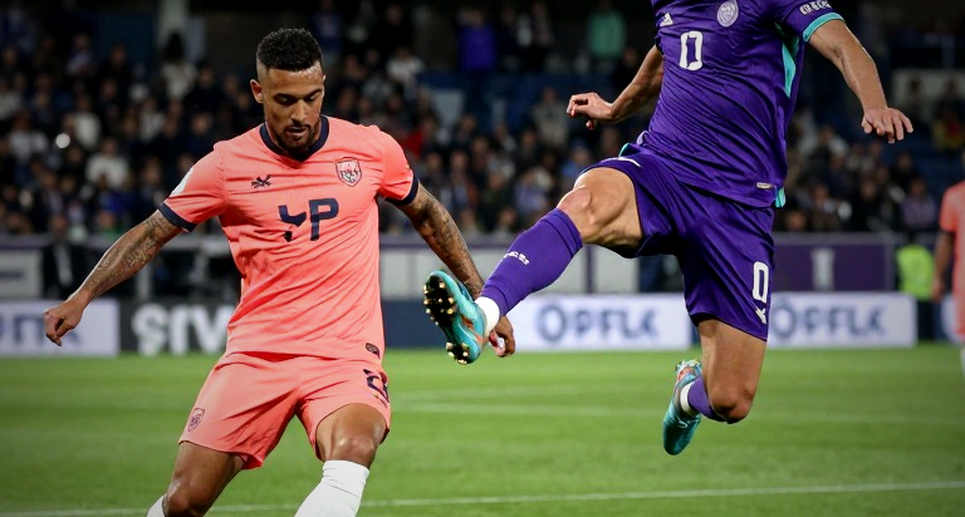
The counter-intuitive angle
Now to the part I consider most important, and the part Vietnamese audiences least want to hear. Violence in the V-League does not exist because of a lack of punishment. It exists because there is a market for it.
No fan wants to say this out loud, but the most remembered matches in a V-League season are rarely the most beautiful. They are the tense ones, the ones with collisions, the ones people buy tickets to in order to feel something stronger than a goal. And in the league's recent history, the moments most strongly condemned are also the most shared, most discussed, most rewatched. Van Son's elbow on 20 September will be watched millions of times. Tan Sinh's kick will end up in the end-of-season compilations. No one does the same with a good pass.
Saying this is not to defend violence. It is to point out a paradox Vietnamese football has never dared to name: the league condemns violence with its mouth, but markets it with attention. When a heavy foul spreads further than a goal, the message sent to young players is stronger than any sanction. Every child understands that to be noticed, the fastest route is to do what the crowd cannot look away from.
The second paradox: we demand protection for young players, but build a system of protection that is selective. Dinh Bac is defended because he is a star. A young player at a small club, kicked from behind with no one filming the moment, will have no forum discussing it, no headline mentioning it, and no comment demanding justice. On-pitch violence in Vietnamese football does not discriminate, but our outrage does. We are outraged by what is replayed, and ignore what no one recorded.
The third paradox, and perhaps the coldest: V-League sanctions are designed to balance the league's reputation with the clubs' interests, not to protect players. A fine of 20 million dong for a player earning a few hundred million a season is less than one match's wages. It hurts enough to make headlines, but not enough to change behaviour. That can only change when the cost of a serious foul is measured in lost playing time over the long term, lost transfer value, lost national-team call-ups. No such mechanism exists.
Where I could be wrong
Let me argue against myself seriously. There is another reading, and it is not unreasonable. On-pitch violence is a global phenomenon, not a Vietnamese speciality. Serie A in the 1990s, South American football for decades, and even the leagues proudest of being civilised today, all had stretches of elbows and studs. If so, V-League violence could simply be a feature of developing leagues, and it will fade as the league matures. On that reading, condemning it as a specific disease is unfair.
I partly accept that. But what I cannot set aside is speed and frequency. In the big leagues, violence fell as prevention systems were built — cameras, VAR, sanctions with real deterrent power, player unions, independent media strong enough to question governing bodies. In the V-League, we have had VAR for several seasons, sanctions, media, yet the frequency has not fallen. If a condition persists for years and does not improve after every attempted treatment, calling it an accident starts to become a deliberate choice.
It is also fair to say not every V-League match is violent. Most are normal, and many players play beautifully and cleanly. I do not want to turn a bad week into a portrait of an entire league. But I also do not want good weeks to overshadow bad ones, because that is precisely how this problem has survived for so long.
Why we end up arguing about the victim
There is a question I could not shake after reading the forum comments. Why, in a situation where two senior players attacked a younger one, do some choose to discuss how the younger player should correct himself?
The answer, I think, lies in how we build sports narratives. We inherit a storytelling tradition in which the winner is always right and the loser is always at fault. In a match where both sides are partly wrong, we tend to look for one person to carry the full blame. And by instinct, the beaten man usually carries less than the beater — unless the beaten man is more famous. Then the crowd's anger turns on the famous man, because a famous man "should know he is a target".
This is a form of collective excuse-making that football does not own alone. Human society tends to seek reasons for injustice by turning back to examine the victim's behaviour. "She dressed like that." "He walked alone at night." "He held the ball too long." Those three sentences belong to the same family of logic, and that logic always ends where it began: by exempting the perpetrator of violence.
Dinh Bac does not need to change how he plays in order to avoid being hit in the face. The one who needs to change is Van Son. Any player who wants to hold the ball is entitled to hold the ball. The duty of a civilised football culture is to protect that right, not to invoke it to explain away the elbows that follow.
Football in an empty room
Years ago, when the season was suspended and stadiums went empty, I spent a lot of time analysing what happens to football without crowds. I found that players foul differently when no one is watching. They foul less, but they are also punished less emotionally. The presence of a crowd is not the cause of violence — at times it is the barrier. What is interesting is this: the crowd is both the thing that stops violence and the thing that rewards it, depending on which match they are watching and which side they stand on.
In the V-League, the stands are always full. And in many of those stands, a hard tackle is not something to condemn but something to expect. That pressure hits young players directly. When a 19-year-old defender starts a match for the first time, he does not only learn tactics. He learns what the crowd and the coach praise. If what is praised is "fighting spirit", "fire", "not afraid of contact", then violence becoming a rewarded skill is simply the logical consequence.
I still believe what I once wrote about empty stadiums, that the applause in them is the echo of fear, not of joy. But in the V-League we do not have empty stadiums. We have full stands, and sometimes that fullness hides something: applause is not always admiration. It can be anxiety soothed by the excuse that at least the home team is playing hard.
What needs to happen, and what will happen
I do not belong to the group that believes Vietnamese football will heal itself. Self-healing is the story of problems with a self-correcting mechanism. On-pitch violence has no self-correcting mechanism, because it is fed by attention. Eliminating it requires three things at once: sanctions heavy enough to hurt a career rather than just a wallet; a mechanism for publicly explaining refereeing decisions on the pitch; and a media culture independent enough not to turn violence into clickbait.
None of the three is happening. Until then, we will keep seeing incidents like 20 September. There will be more hot heads. More young players losing seasons to injury. And more forums where, every time, thousands of people begin to argue about who is at fault.
The night I could not leave
After that match I sat in my studio in Marseille for a long time, replaying the recording just to hear one thing: the crowd's silence after the elbow. There was a gap of about two seconds, then a surge of reaction. In my head, those two seconds were bigger than the whole match. I have spent years talking about football through data, through tactics, through long analyses. But there is one thing that cannot be measured in xG. It is the time a crowd needs to decide whether it will react with anger or with fear.
And I realised this, later than I would like to admit, that Vietnamese football does not lack talent. It lacks a space where talent can exist without being punished. Our talented players are growing up in an environment where every time they hold the ball a second longer, they accept a physical risk. And that, not the technical level or the league table, is the true indicator of a football culture's health.
There will come a time
I do not know how many more incidents rounds 4, 5 or 10 will bring. But I know this: the way we discuss the Van Son and Tan Sinh case tonight will decide the shape of the V-League over the next ten years. If we keep arguing about how Dinh Bac should play, we are teaching young players a lesson different from the lesson we speak aloud. And the young learn very fast.
Dinh Bac will probably be fine. He is famous, he has a voice, he will have defenders. But there will be another young player, in a distant province, with no one filming the moment, no forum discussing it, no yellow card for the man who kicked his legs. Who that player is, we will never know. And precisely because we never know, we will keep believing the problem does not exist.
The V-League opened this season in the most alarming way possible, with three acts of violence in three rounds, a former U20 World Cup player kicking the legs of a young striker, and a crowd sitting down to argue about who is more to blame. If I appear calm about what happened, I would betray everything I believe about football. Because a football culture can only be judged by how it treats players without a voice. And in the second half on 20 September, the one with a voice was brought down too.
There is a question I want V-League audiences to answer themselves, after reading these lines. Across the three violent moments this season — Van Hau, Van Son, Tan Sinh — was there any that made you look away from the screen? If the answer is no, that is the fullest explanation for why violence persists in this league. It does not exist because players like fighting. It exists because we like watching. And until that changes, every sanction is just a number written on a sheet no one reads twice.