
U23 Vietnam reach Asiad 2026 quarter-finals: Three identical matches, a verdict from hasty hands
U23 Việt Nam giành vé vào tứ kết bóng đá nam Asiad 2026 dù thua Uzbekistan 0-2 ở lượt cuối bảng C. Cựu tuyển thủ Nguyễn Tuấn Phong nhận định đội bỏ lỡ nhiều cơ hội và lặp lại sai lầm phòng ngự ở cả ba trận vòng bảng. Sự kiện chính: - U23 Việt Nam thua Uzbekistan 0-2 nhưng vẫn đứng nhì bảng C và vào tứ kết. - Nguyễn Tuấn Phong: ba trận vòng bảng giống nhau ở việc bỏ lỡ cơ hội và thủng lưới dễ dàng. - Lê Đình Long Vũ bị khai thác cánh trái ở hiệp một; Phi Hoàng vào sân cải thiện thế trận. - Hai trung vệ chính Hiểu Minh và Nhật Minh vắng mặt, buộc U23 Việt Nam dùng hàng thủ ba người lắp ghép. Nguồn: Tuổi Trẻ – tháng 9/2026 | Cross-checked: VuaBong.vn Hỏi đáp liên quan: - U23 Việt Nam gặp ai ở tứ kết? Chưa có kết quả bốc thăm; nếu gặp Hàn Quốc hoặc Saudi Arabia, nguy cơ bị loại tăng cao. - Điểm yếu lớn nhất của U23 Việt Nam là gì? Hàng thủ ba người lắp ghép thiếu tiền vệ trụ đánh chặn phía trước. - So với đội dự AFC U23 Asian Cup 2026 thì sao? Chuyên gia đánh giá lực lượng hiện tại mỏng hơn, dù đội cũ từng thắng Hàn Quốc ở loạt luân lưu.
In the 78th minute, the ball went into the U23 Vietnam net for the second time. I did not read surprise on the faces of the players in red; I read familiarity: the same space behind the left-back, the same turn and shot from the edge of the box, the same silence spreading through the stands. Uzbekistan did not need much time to find the weakness. That weakness had appeared in all three group games at the 2026 Asian Games, and they only needed to repeat it. When the match ended, supporters still applauded because the quarter-final ticket was already in hand. People call it a curse. I see a verdict written by hasty hands: three matches, the same face, the same way of losing themselves.
The 2026 Asian Games are being held in Japan, where the U23 Vietnam men's football team were drawn into Group C with Uzbekistan, Kuwait and the Philippines. Two wins over Kuwait and the Philippines in the first two rounds had almost put coach Dinh Hong Vinh's team in a safe position, so the final match against Uzbekistan became a real test. Uzbekistan was described by former international Nguyen Tuan Phong as a "class" side of Asian youth football, with a strong midfield, superior physicality and a habit of controlling the tempo. The 0-2 defeat did not stop U23 Vietnam from progressing thanks to results in other groups, but it opened a much bigger debate than the ticket itself.
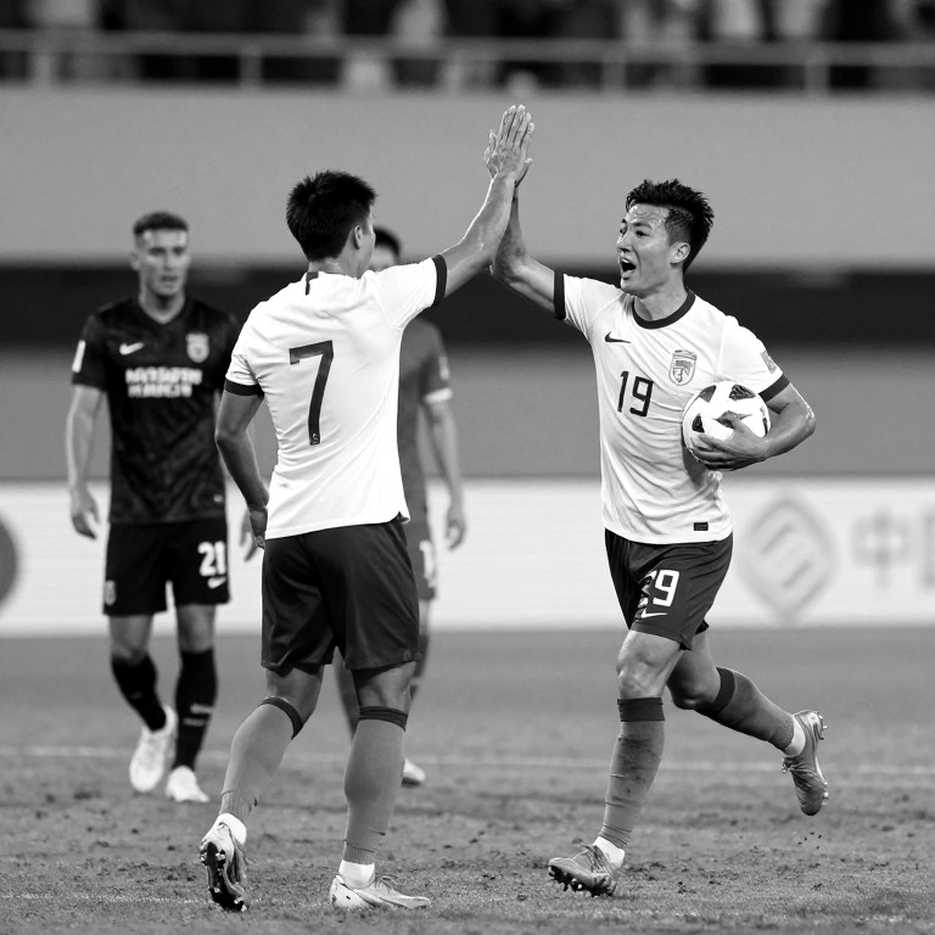
On television, Tuan Phong did not spend time praising the achievement. He pointed out that all three matches were identical in detail: U23 Vietnam kept the ball well, attacked calmly, but missed a series of chances and conceded goals far too easily. The three-man defence operated disjointedly, Le Dinh Long Vu's left flank was heavily exploited in the first half, and only when Phi Hoang came on did the situation improve. That is an expert impression, not a claim backed by xG numbers or passing statistics. But in a short tournament, the instinct of a former national team player is the closest thing to the truth we have. When the pitch falls silent, I see what a full stadium never shows me: the naked truth.
Three centre-backs, a foundation without a protector
A three-centre-back system, whether 3-5-2 or 3-4-3, is built on one assumption: the two wing-backs push high to create width, and the three centre-backs are capable of covering each other when the opponent counters. That assumption collapses when the three centre-backs have never played together in an official match.
The first half against Uzbekistan was a clear illustration. Le Dinh Long Vu was constantly left in one-versus-two situations on the left channel. When he pushed forward, the space behind him was as wide as a field; when he dropped deep, the team lost the width needed to build up. Tuan Phong called it a coordination failure among the centre-backs: they did not cover each other, no one closed the passing angle, no one stepped up to meet the man when the ball moved wide. I call it a structural failure. A three-man line is only solid when the three operate as links in the same machine. When they operate as three separate individuals, every space becomes a dead point.
Absences made the problem worse. First-choice centre-backs Hieu Minh and Nhat Minh were unavailable, forcing coach Dinh Hong Vinh to trust the trio of Pham Ly Duc, Duc Anh and Le Nguyen Hoang. Based on the footage I reviewed several times after the match, their covering movements were always half a beat late, not because of a lack of effort, but because they were not used to each other's movement. At Asian youth level, being half a beat late means conceding. And the goal always came the same way: a line-breaking pass, an intelligent run, a finish into the far corner. No one can accuse them of lacking determination. The problem lies in squad depth: a team entering a final tournament without a safe replacement for a key defensive position.
The space in front of the box
Even worse than the makeshift defence is the absence of anyone shielding them. In midfield, Xuan Bac and Nguyen Thai Quoc Cuong are both attack-minded midfielders. They move wide, pass well and always want to receive the ball in the opponent's half. But neither has the habit of dropping deep, receiving from the centre-backs and neutralising line-breaking passes before they become chances. The space between the midfield line and the defensive line therefore becomes so wide that opponents can dribble straight into the heart of the box without meeting a significant challenge.
Tuan Phong called it a longing for a holding midfielder in the Thai Son mould, someone who reads the situation before the ball arrives, someone who stands where the opponent no longer wants to pass into the middle. Without such an anchor, the three-man defence in defensive phases becomes four or five players running back to recover the ball by instinct, with no one connecting the two lines when the team wins it back. U23 Vietnam's first goal conceded came precisely from a loss of possession in midfield and a two-touch counter-attack. No one tracked the ball carrier, no one closed the passing lane, no one read the opponent's intention before the ball was played. The mistake does not belong only to the centre-backs. It belongs to the midfield structure, where two attacking midfielders left their own half unprotected. Tactics, in the end, are just how we rationalise our mistakes in the language of football.
Three matches, one face
The most worrying point is not a single match. Tuan Phong stressed that all three group games repeated the same pattern: controlling the ball, creating chances, then missing them inexplicably. One match can be luck; three in a row is a system. When a team has no striker who knows how to finish, shots become indiscriminate attempts: many efforts, many misses, and faith in the final shot fades.
The absence of Nguyen Dinh Bac, the only player considered to have truly outstanding quality in the squad, left the attack without a tactical reference point. Every move ended in a hurried decision, as if the young forwards were trying to do too much in one moment. No one stood in the central position to meet crosses; no one moved into the space between the opponent's two centre-backs. The attack therefore created many chances, but almost all of them came from narrow angles or under pressure from defenders.

Data never lies; only the way we read it lies. If we look only at the table, U23 Vietnam reached the quarter-finals and the story seems complete. But if we read carefully the number of touches in the box, the quality of the attempts and the space behind the left flank, the story tells of a team progressing through the generosity of the format, not through the pressure they imposed themselves. The quarter-final ticket is real, but it does not erase three matches with the same face.
I could be wrong, and I should say so clearly. The quarter-final ticket is undeniable proof that this team still knows how to survive. If Hieu Minh and Nhat Minh recover in time, if coach Dinh Hong Vinh accepts sacrificing an attacking midfielder to place an extra shield in front of the defence, the defensive picture could change completely. It is also worth remembering that U23 Vietnam once beat South Korea on penalties at the AFC U23 Asian Cup 2026, a knockout match with its own logic, where one individual moment can erase every structural flaw. Three group games are a small sample; the quarter-final is where the final verdict is delivered.
Fans have the right to hope, but hope should not make us misread what has happened. If the problems are solved, Tuan Phong's warning will become a historical footnote. If not, it will be a verdict written in advance. Youth football always contains unpredictable swings, and that unpredictability is why I do not dare say this team will be eliminated. But I also do not dare say they will go far, because every generation believes it is the last one holding onto purity. They are all wrong.
The quarter-final will answer the question that three group matches could not answer: are these weaknesses temporary or inherent? If the defence is reinforced and the attack starts converting chances into goals, U23 Vietnam can rewrite their own story. If not, today's warnings will become the final verdict. Football rarely forgives repetition, and the quarter-final ticket is not where the story ends. It is only where the story begins to be told seriously.