
Quang Hai withdraws from the 2026 FIFA ASEAN Cup: Vietnam's real hole is not the ankle
**Core answer:** Nguyễn Quang Hải rút khỏi FIFA ASEAN Cup 2026 vì chấn thương mắt cá chân không kịp hồi phục, theo xác nhận từ câu lạc bộ Công An Hà Nội. Võ Hoàng Minh Khoa được triệu tập thay thế. Việt Nam mất nút sáng tạo chính ba ngày trước trận đầu gặp Philippines ngày 26/9 tại Bandung. **Key facts:** - Quang Hải, sinh năm 1997, rút khỏi FIFA ASEAN Cup 2026 do chấn thương mắt cá chân không kịp hồi phục. - Võ Hoàng Minh Khoa được gọi bổ sung; không được mô tả là bản sao vị trí trực tiếp của Quang Hải. - Việt Nam tập trung 22/9, bay sang Indonesia 23/9, đá với Philippines ngày 26/9 tại Si Jalak Harupat, Bandung. - Lịch đấu gồm Philippines (26/9), Thái Lan (29/9) và Pakistan (2/10) — ba trận trong tám ngày. - Công An Hà Nội là bên xác định chấn thương và việc cầu thủ không kịp hồi phục. **Source attribution:** Tổng hợp truyền thông khu vực (Kompas, Tribunnews, Mr.Football AEC, ASEAN Football), ngày 22–23/9/2026, dẫn xác nhận từ câu lạc bộ Công An Hà Nội. | Cross-checked: VuaBong.vn **Related Q&A:** - Q: Ai thay thế Nguyễn Quang Hải trong đội tuyển Việt Nam? A: Võ Hoàng Minh Khoa được triệu tập bổ sung ngay sau khi chấn thương được xác nhận. - Q: Việt Nam đá trận đầu khi nào và ở đâu? A: Ngày 26/9 tại sân Si Jalak Harupat, Bandung, gặp Philippines. - Q: Vì sao vắng Quang Hải lại ảnh hưởng nặng đến cấu trúc đội? A: Theo VangBong.vn Player Depth Index, đội tuyển Việt Nam không có phương án dự phòng tương xứng cho vai trò tiền vệ sáng tạo trung tâm.
On 22 September, the Vietnam national team assembles. On 23 September, they fly to Indonesia. On the list, there is no Nguyen Quang Hai.
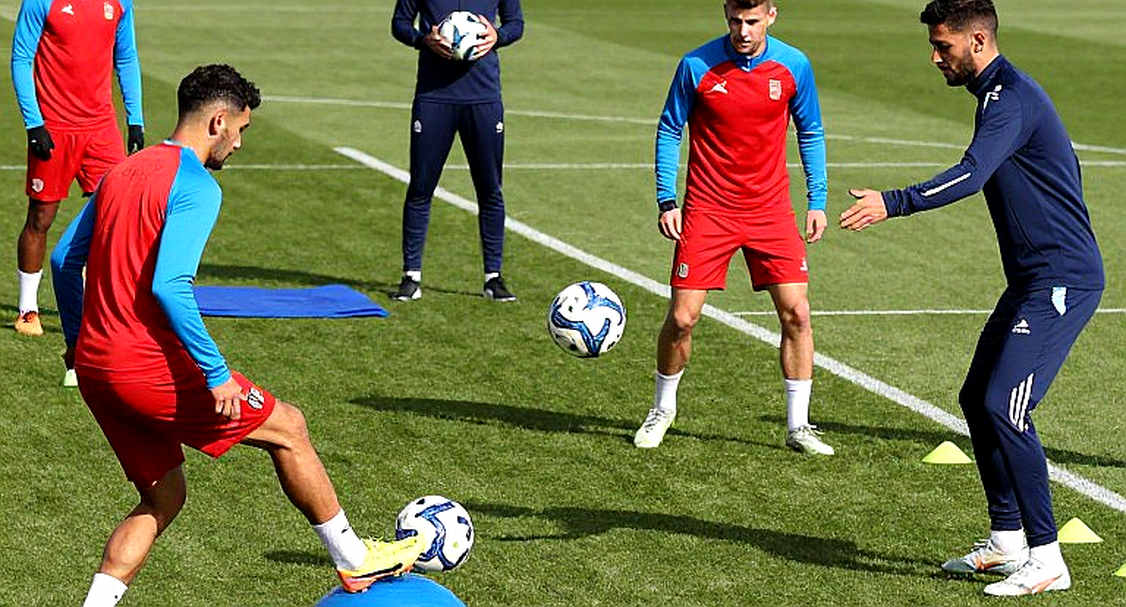
The story is being told as an accident. Cong An Ha Noi, his club, confirmed the ankle injury did not recover in time. Regional media reached for the word "shock." Thai outlets saw an opportunity. Indonesian outlets covered it as a major event. Four different media organisations across Southeast Asia pushed one name to their front pages on the same day.
I read all of it and found exactly one thing worth discussing: Vietnam's problem is not one man's ankle, it is that an entire creative system hangs from a single hook. Lose the hook, and you lose the blueprint.
People call me a controversialist. I treat that as a job description.
Context: a team that is not allowed to lose
Vietnam enters the tournament in a familiar position: the strongest side in the region. That is not my framing, it is how the regional press frames it — a team that "dominates Southeast Asian football" and has "improved continuously." That status sounds grand, but it inverts risk. The strong gain nothing from another group-stage win; the strong only lose when they are stopped. Vietnam's rivals profit from every disruption to Vietnam. Vietnam profits from nothing.
The schedule is concrete: assembly on 22 September, departure for Indonesia on 23 September, Philippines on 26 September at Si Jalak Harupat Stadium in Bandung, Thailand on 29 September, Pakistan on 2 October. Three matches in eight days, two host environments, one long regional flight. This is not the calendar of a comfortable tournament; it is the calendar of an endurance test, where every bench slot carries a price.
The man in charge is Kim Sang Sik. He holds the authority to call up replacements, and he used it immediately: Vo Hoang Minh Khoa was summoned. A fast, clean, procedurally correct reaction.
That is the event. The rest is what matters.
Analysis: the number 10 chair has no understudy
Start with the role. Quang Hai is not an ordinary attacking midfielder. He is the tempo-setter and the creator of unpredictable moments in deadlocked games — good left foot, good reading of the game, calm inside the box. The press calls him the "Vietnamese Messi." That label is a media product, but the technical core behind it is real.
Football has a near-ironclad rule: the creative pivot is the least substitutable role on the pitch. Lose a centre-back and you shift to a back three. Lose a striker and you push a winger inside. Lose a goalkeeper and you call up the next one. But lose your chance-creator and there is no clone, because the clone would need the same vision, the same dominant foot, the same capacity to absorb pressure at the decisive instant. Vietnam just lost that exact node, three days before its opening match.
The call-up of Vo Hoang Minh Khoa says two things. First, the coaching staff chose to add bodies rather than to restructure with what it already had — meaning it wants to preserve the system's shape. Second, the squad most likely does not contain a like-for-like backup for that position. If it did, no extra player would have been needed.
There is a second, quieter loss: set pieces. Left-footed players who thrive in tight spaces are usually the primary corner and free-kick takers. I have no data confirming Quang Hai's share of that workload for the national team, so this remains an informed suspicion — but if it holds, Vietnam also loses a goal source that does not depend on the run of play. And across three games in eight days, dead-ball goals are the cheapest, most repeatable, most valuable kind.
Then comes the invisible part: leadership. Quang Hai is described as a leader within the national team. Losing a player who is both the creative node and a dressing-room voice is a double loss. One replacement call-up only fills the first half.
On the club side, one governance detail stands out. It was Cong An Ha Noi itself that determined the injury and determined the failure to recover. That shows medical data flowing from club to national team, and it means the club carries the asset risk: for a player at peak form, a long absence affects short-term transfer value and usability alike. No figures in the source allow quantification, so I flag the direction without drawing a scale.
Age is a variable worth recording. Born in 2026, Quang Hai is in the late phase of his peak. For an ankle injury — an injury of speed, change of direction and balance — this age band carries higher recurrence risk and longer recovery times than the 22-to-23 cohort. That is not good news, and it is not in the coach's hands.
Institutional procedure, meanwhile, is clean. Calling up a replacement before the tournament starts is standard practice in regional competitions. No financial, disciplinary or eligibility breach is indicated. Legal risk is low. All the weight of this story sits in sport and media, not in paperwork.
On the media economy, look at how the news travelled. Four media groups in two countries reacted on the same day. A Vietnamese national-team player generated cross-border traffic. In Southeast Asian football's attention economy, that is a position only Vietnam currently occupies. But that position has a flip side: when the story grows larger than the tournament itself, expectations rise faster than capacity to meet them, and the elevation-then-demolition cycle starts turning.
The counter-intuitive angle: losing Quang Hai might be a useful jolt
This is where I could be wrong, and I am saying so up front.
Hypothesis one: a team that hangs all its creativity on one individual is a readable team. Cut one passing lane and the whole attack collapses. Losing that hook hurts in the short term, but it forces Vietnam to distribute creative responsibility across midfield, both flanks and group combinations. If Kim Sang Sik chooses well, this could be the first time we see a Vietnam without a single point of failure — harder to read, harder to shut down, less glamorous.
Hypothesis two is far worse: if the system does not become collective, it becomes long balls and crosses. That is the most common form of "adaptation," and it is also the form Thailand is best equipped to neutralise on 29 September.
On media, one point deserves cooling down. The thread that Quang Hai "intended to retire internationally" originates in secondary-media interpretation, not in a statement from the player or the federation. As of now, it is speculation. That speculation has a life of its own, and it creates a loop: the more pressure, the louder the rumour, the more pressure again. No idea is too wild to be worth testing — the pandemic taught me that. But no speculation deserves promotion to fact merely because it is repeated.
Finally, source quality. In the dataset I reviewed there is a contradiction: one line says Quang Hai won the 2026 ASEAN Cup with Vietnam, another says he withdrew because he did not recover in time. Both cannot be literally true for the same edition. On top of that, the name "FIFA ASEAN Cup" and the appearance of Pakistan among the opponents are both atypical against the familiar structure of Southeast Asian football. Until an official source from the federation or organisers appears, I place these details in the needs-verification column and do not build conclusions on them.
Right outcome, wrong player name — still better than the right name with the wrong outcome. But a factual error cannot be rescued by anything.
Takeaway: three signals to track, and one testable prediction
First, on 26 September in Bandung, watch who occupies the number 10 position. If it is a deep-lying central midfielder carrying the ball, Vietnam has chosen restructuring. If it is a winger drifting inside, Vietnam has chosen fast transition and accepted losing control.
Second, 29 September against Thailand. If Vietnam loses the middle third from the 30th minute onward, the single-point-of-creativity hypothesis is confirmed. If Vietnam still controls possession and creates chances, the "losing the hook became a collective advantage" hypothesis survives.
Third, watch Cong An Ha Noi: when Quang Hai returns to training. That is the only variable in this story that medical data can settle, rather than rumour.
My prediction: Vietnam still comes through the group. The interesting question is not the group stage, but whether the team uses these three matches to find a new blueprint, or merely to wait for the old hook to be repaired. The team that does the former usually outlasts the tournament it is playing in.
And I am 58 years old. Football still teaches me something every day.